"God is our refuge and strength, a very present help in times of trouble." Psalm 46:1

Month: October 2026

Complacency: satisfaction through inaction…

Proverbs 1:32  “For simpletons turn away from me—to death. Fools are destroyed by their own complacency.”

Last week I talked a bit about apathy, but today I would like to talk a little bit about its not too distant cousin, complacency.  Apathy is being disengaged with the surrounding world and circumstances whereas complacency is being satisfied with less than the surrounding  world and circumstances have to offer.  

Complacency is settling for less than what we should because we have a false sense of contentment.  It makes us sit back on our hands instead of forging ahead in our spiritual lives.  Unfortunately, complacency is the disease that everyone denies having.  As we all know, however, the first step in getting well is admitting we have a problem.

Complacent Christians have the idea that they have arrived.  In America this is an especially easy state of mind to fall into.  We have it pretty easy compared to the rest of the world.  Why should we get callouses on our knees praying when we have almost all we want and more.  Unfortunately, when we lack any feeling of need or desperation, we get sloppy in our worship.   

Barna Research reports that since the nineties, Americans have become more spiritually complacent. 40% of born again Christians do not attend church or read the Bible in a typical week, 30% are not “absolutely committed to the Christian faith” and 70% are not involved in a small group that meets for spiritual purposes. The percentage of adults who can be classified as “born again” rose from 35% from the early 90s to 41% in the early 2000s. However, participation in 4 key behaviors declined and have continued to decline in this century; Bible reading (down from 45% to 37%); church attendance (from 49% to 42%); volunteering at church (from 27% to 20%); and adult Sunday school attendance (from 23% to 19%).   The Covid crisis did not helped matters.  It was found that many of the people who got in the habit of not attending due to Covid did not return after Covid.   

There is a story of a tool company that manufactured drill bits. Faced with financial losses, company executives gathered to discuss the problem: a declining demand for drill bits. The CEO challenged his men: “How can we revive the bit market?” After an embarrassing silence, one member of the team dispelled the fog: “Sir, the market isn’t for bits–its for holes!” This simple truth illustrates what the church needs to recognize.  Complacent people feel fulfilled because they don’t feel needy. People are not in the market for spiritual activity because they don’t see a need for spiritual activity.     When someone needs to drill a hole he will think about buying a drill bit and when someone needs to fill a hole in his life he will look for a place to fill it.   In this time the church needs to be that place for unbelievers and believers alike.


There is the story of three demons who were exchanging ideas to bring about the downfall of man.  The first said, “Let’s tell them there is no God.”  The second said, “Let’s tell them there is no Hell.”  The third said, “Let’s tell them that there is no hurry.”  It seems to me that they settled on the third suggestion.

Revelation warns us about this complacency in the future.  “I know your deeds, that you are neither cold nor hot; I wish that you were cold or hot. So because you are lukewarm, and neither hot nor cold, I will spit you out of My mouth. Because you say, ‘I am rich, and have become wealthy, and have need of nothing,’ and you do not know that you are wretched and miserable and poor and blind and naked,”  (Revelation 3:15-17)  Is that the future or has the future arrived?   God warns us of being lukewarm because it is more dangerous than being hot or cold.  It has just enough heat to make us believe that we are okay.  That kind of deception is a favorite ploy of Satan and many in the church seem to be falling for it.
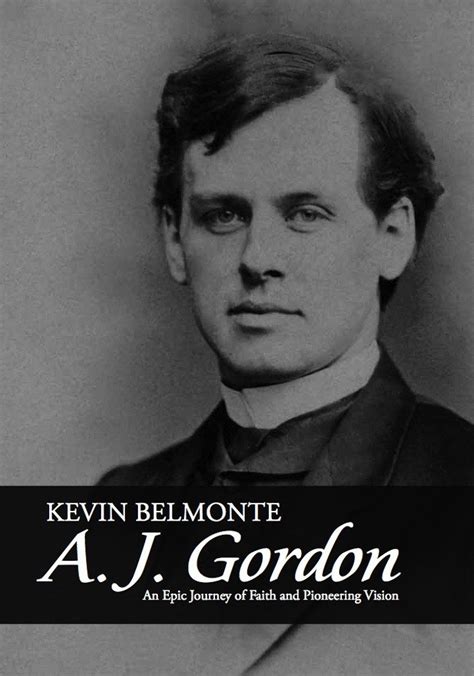
There is a great story about the famous, fiery English pastor, A.J. Gordon, who became the pastor at a large, well-established, but cold Boston church.  After just a few weeks many of the senior members of the congregation moved to oust him because of his bold condemnation of the lifelessness of the church.  After about a month, right before the axe was about to fall he gave a sermon called “The funeral of the Church.”  It was a no-holds-barred, tell-it-the-way-it-is, God’s-Word-is-His-Word sermon.   The theme was that the church was a casket and like a casket there was no room for converts because coffins are built for only the dead.  He warned them of impending disaster if they did not repent.  It was an hour of truth.  Toward the end of the sermon the doors in the back of the church swung open and six solemn-faced pall bearers carried a casket up to the front.  Pastor Gordon lifted the lid and challenged the congregation to file past the coffin to view the deceased on the way out.  In the coffin, you guessed it, a giant mirror.

It seems to me that too many of us today need to look in the mirror to see if our complacency is leading unto death.  Paul tells us,  “Test yourselves to see if you are in the faith; examine yourselves! Or do you not recognize this about yourselves, that Jesus Christ is in you–unless indeed you fail the test?”  (2 Corinthians 13:5)   It is hard to change others, but we can start with ourselves.  Have we become “fat and sassy” in our christian lives?  Are we going through the motions because that is all it takes anymore?  Do we put more time into the needless and neglect the needful?   We need to be cautious so that we don’t fall into the trap that Paul warns us of in Corinthians,   “Therefore let him who thinks he stands take heed that he does not fall.”  (1 Corinthians 10:1)


So it is time for the church put on its big-boy pants.  It is hard to put pants on someone else, so we should worry about our own legs first, but we shouldn’t be shy about pointing out lack of fervor in the Body of Christ.  It is time to take our spiritual lives seriously even if things are going so well that it seems we don’t need God.  That is, of course, facetious.  No matter how it seems, we need God.  We should not be fooled.  The demons have lied.  There is a hurry and those around us could use our hurriedness on their behalf.

Worrisome? Worry less…

“Rejoice in the Lord always; again I will say, Rejoice. Let your reasonableness be known to everyone. The Lord is at hand; do not be anxious about anything, but in everything by prayer and supplication with thanksgiving let your requests be made known to God. And the peace  of God, which surpasses all understanding, will guard your hearts and your minds in Christ Jesus.”  Philippians 4:4-7

Our verses for today are familiar ones, but like many verses, need to be revisited quite often because worry often gives small things a big shadow and that big shadow can blot out today’s sunshine.  Worry is faith in reverse.  Instead of freeing us, it imprisons us, and most often about things that might not even be real.

There was a woman who constantly worried about burglars and never got a night’s sleep anticipating a nightly break-in.  Finally, after her husband had gone downstairs night after night to investigate normal sounds and invisible burglars, he actually came upon a man who had sneaked his way into the house.  “Well, hello there,” the husband exclaimed, “I am pleased to meet you.  Would you mind coming upstairs to meet my wife.  She has been waiting ten years to meet you.”  That is often what worry is all about.  Anticipating what may not happen at the expense at what does.

Worry often extracts interest on trouble before it comes due.  Like someone wise once said, “I’ve had a lot of trouble, most of which never happened!”  God calls us to turn over our cares to Him, but that is easier read than done.  God knows that we will still worry because we are fretters by nature.  Our sin nature has bred worry into us because faith is intentional while anxiety is natural.   Worry is a useless pursuit because it never gets us closer to a goal and on the contrary it slows our progress.

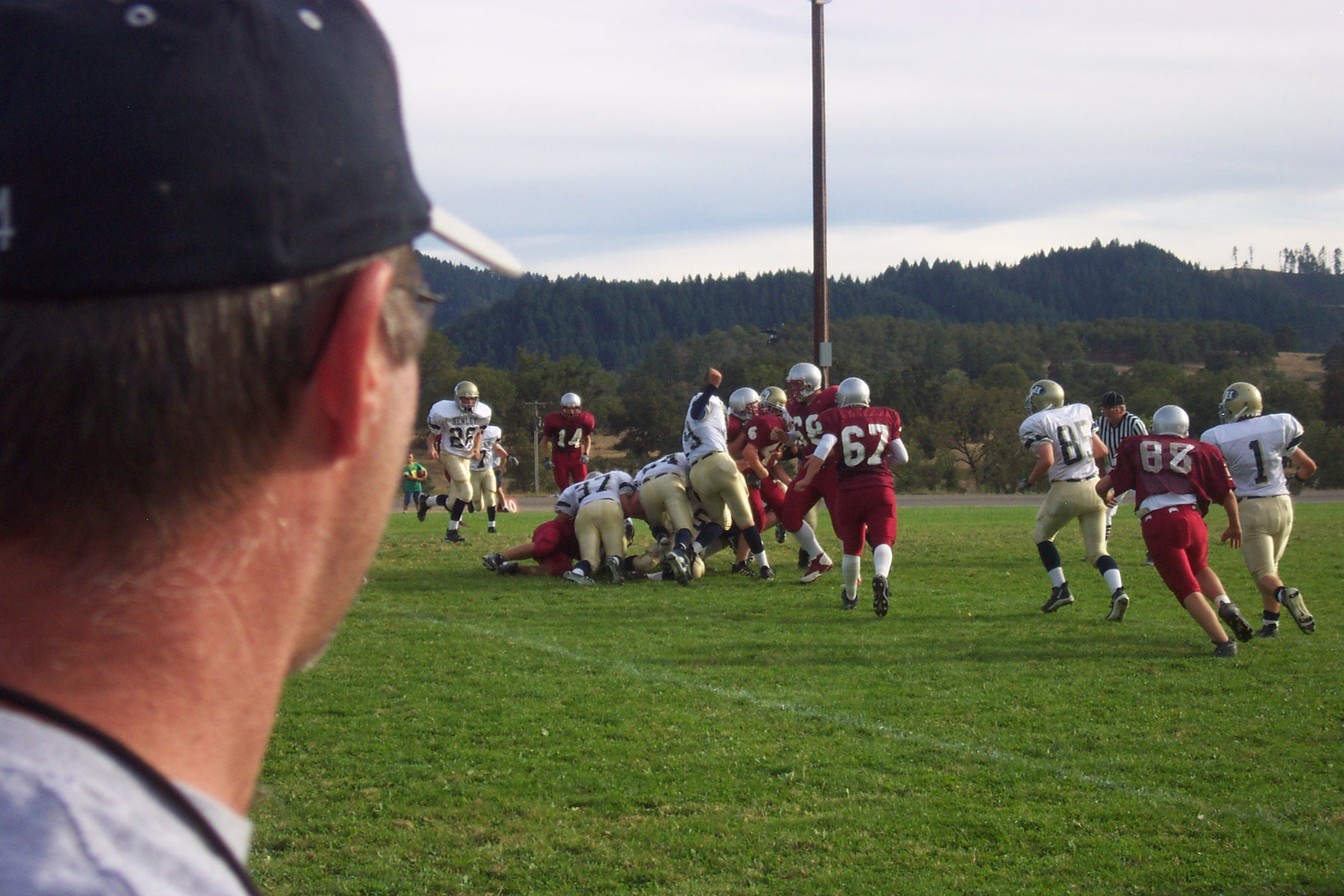
When I used to coach I told the players to learn their assignments so well that they did not have to worry about what they were going to do (that would just slow them down),  and consequently, they could just go out and do.  That is what we should strive to do- turn our worries over to God so that we can just do. David tells us, “When my anxious thoughts multiply within me, Your consolations delight my soul.” (Ps 94:19) If we don’t nip our worries in the bud, they will flourish into a weedy garden that will take all our time to work. We will spend more time on worry than worship and more time being anxious than active.

In these verses, God gives us several commands:  Always rejoice.  Be reasonable.  Never worry.  Come to God with your requests about everything.  These are not empty words like we so often hear from friends in times of need.  “Hang in there,” and “Tomorrow will be a better day,” and “Just put it out of your mind,” are all well-intentioned, but powerless statements.  They give the end without the means.  It is almost like giving someone the infamous Bermuda Triangle of directions, “You can’t miss it.”

How to “hang in there” is just as important as how to “get there.”  The how-to-dos are more important than the what-to-dos.

So God tells us how to negate the worries that assail us.  If we pray, if we rejoice, if we turn our requests over to Him, and if we are thankful, it will be hard to remain anxious.  Somewhere in that process, the worry will begin to melt.  Most of what we worry about is not worth the time investment anyway.

There was a man who decided to make a Worry Wednesday.  He would set aside his worries until Wednesday and worry about them then.  The funny thing was that by the time Wednesday rolled around, most of the worries he had were not worries any longer.

One thing we can do to cut back on worry is to be prepared.  When I give a speech, I don’t worry if I have truly taken the time to prepare (only the people I am speaking to are worried).  It is the same for us in life.  Paul says, “Be watchful, stand firm in the faith, act like men, be strong.”  (1 Corinthians 16:13) If we are in the Word, think upon God, and surround ourselves with godly influences, we will be prepared to handle what others might just worry about.  With preparation we will set aside much of what the world worries about.

We need to eliminate those things that will never happen.  There is an old Scottish saying “What may be, may not be.”  We have a tendency to worry about what might be even though it will, under all measurements, probably never be.  When ebola hit the US, some people spent so much time worrying about the disease, that it probably took more time off their lives than ebola ever could.  The Covid Crisis a few years past presented the same challenge to thousands who might have been “worrying themselves to death.”  That kind of worry is like being afraid to eat food because it might have chemicals in it and then starving to death.  It is said that 40% of what we worry about has no real chance of ever touching us.  Let’s eliminate those first.  We never want to worry too much about things over which we have no control at the expense of things we can control.

The next worry we should get rid of is things that have already past. In coaching I always said that the only important play is the next one.  If we allow the failure on the past play to affect our performance on the next we have given it more power than it deserves.  Here is the scenerio: a pitcher makes a good pitch and we swing, miss, and look silly in the process.  If we don’t shake that off and instead let that pitch affect our next swing, we have given the pitcher credit for what she has not earned.  The previous one pitch controlled us twice.  That should never be.  If we spend time in our daily lives worrying about the past, it will affect our present. We should not give more power to what is gone than what is yet to come.  I am retired now and it seems I am paying taxes on the same money I have already paid taxes on a couple of times before.  When it comes to worry, we should not spend energy on worries that we have already paid on before.

Finally, eliminate those worries about untrue criticism that comes from others.  If it is true criticism, listen to it, make changes, no worries.  If it untrue, ignore it, no worries. Not everything that people bring to our attention is worth keeping there. Some of the things that people criticize us for cannot be changed anyway.  If I worry about people who don’t like how short I am, that is a waste of time.  My last growth spurt was fifty years ago.  I am not holding my breath.  Some criticism is that foolish.

So, once we have eliminated those things that won’t happen, have already happened, or don’t matter if they happen, what do we do with the approximately 8% that is left.  Those are the legitimate worries that we need to take to God as He has instructed and the peace of God which surpasses all understanding will become ours.

Admittedly, it is easier to complain than rejoice, be bitter rather than thankful, and panic than pray, but those are useless endeavors.  In Africa there are people who rely on witch doctors rather than real doctors and we think that is foolish.  But we are doing the same thing if we think complaining, bitterness, and panic are more effective than rejoicing, thankfulness, and prayer.  I had a friend once that complained about always having peanut butter sandwiches for lunch.  I told him that he should have his wife fix something different, but he told me he fixes his own lunches.  It doesn’t make sense to complain about that we have control over any more than it makes sense to worry about things we shouldn’t.

It is so wonderful that the promises in our verses today are being delivered by a great God.  God welcomes us to bring our worries to Him.  I think it is our responsibility, however, to run them through a strainer first.  We can take every single worry to Him, but some should not be worries in the first place.  Our vice principal was talking to me years ago about how some teachers send him students for not bringing a pencil to class or doodling during a lecture.  Those are not heavy-duty discipline issues.  Those should be handled by the teacher.  Well, God expects us to look at our worries with discernment and take care of some of those before we send them to the office.

A while back I gave a lecture on router use in my shop class.  I said if the machine misbehaves, the first thing they need to do is turn it off.  A student ask me, “Shouldn’t we ask you first?” and I told him that I would just tell him to turn it off, so he can eliminate the middleman and do what I would tell him to do anyway.  If I am worried about my weight, God will probably tell me to exercise and eat right.  I can go right to those things without worry.  If I am worried about the way people see me, maybe I should treat people the way God’s Word instructs.  That might take care of a lot of worry.

Christian author John Blanchard has said it well, “So he supplies perfectly measured grace to meet the needs of the godly. For daily needs there is daily grace; for sudden needs, sudden grace; for overwhelming need, overwhelming grace. God’s grace is given wonderfully, but not wastefully; freely but not foolishly; bountifully but not blindly.”

God said it even better, “Peace I leave with you; my peace I give to you. Not as the world gives do I give to you.  Let not your hearts be troubled, neither let them be afraid.”    (John 14:27)

© 2026 HE HAS OUR BACKS

Theme by Anders Noren — Up ↑