
"God is our refuge and strength, a very present help in times of trouble." Psalm 46:1

Author: Rick (Page 27 of 36)

Creation…amazing!

“For what can be known about God is plain to them, because God has shown it to them. For his invisible attributes, namely, his eternal power and divine nature, have been clearly perceived, ever since the creation of the world, in the things that have been made. So they are without excuse. For although they knew God, they did not honor him as God or give thanks to him, but they became futile in their thinking, and their foolish hearts were darkened.” Romans 1:19-21

This is a wonderful time of year. The grass is green and the trees still have their blossoms. Every time I drive to or from Camas I am taken by the beauty of the fields, hills, and ravines. This morning as I was driving I was listening to two men having a debate. One was an atheist and the other was a Christian who believed in theistic evolution. It was a strange conversation to listen to because I didn’t agree with either man. While I was looking at the absolute beauty of life around me, I was listening to two men discussing how that beauty came about over millions and millions of years of defects and rejects, culminating in thousands of different kinds of plants and animals.  As I listened to what the men were saying while at the same time seeing what was around me, the words and the sights seemed in conflict to each other.


When I got to school I spent two hours judging projects at the Science Fair and got another huge dose of the wonders of the world. Exhibits on plants, animals, and the environment filled the gym. They outlined how detailed and functional and precise our world is. I thought back at the men’s arguments I had just heard and could just not accept the creation of the world through random acts of fineness. The complexity of the smallest organism all the way up to our largest animal begs for a designer. Our own bodies are testament to design. The function of the skeletal system, the muscular system, the cardiovascular system, the digestive system, the Endocrine system, the nervous system, the respiratory system, the lymphatic system, the urinary system, the reproductive system, and the integumentary system (which holds everything together) work together in perfect harmony for millions upon millions of people everyday. The miraculous existence of  living things is a testament to the incredible handiwork of God. Yet, many believe there is not enough evidence for God.

Some see the wonder of creation but neglect the idea of a creator. Paul wrote the above words to the Christians in Rome in an attempt to show how many had  replaced the creator with the creation as an object of worship. Those words are as relevant today as it was in Paul’s time. Actually, since the culture is degrading with time, it is probably even more relevant today than it was in those years following Christ’s death. Some people worship nature and some their own bodies, but worship of anything other than God is a misdirection of adoration.

When we look at the intricate details of the smallest things in nature up to the huge and complex design of the whole universe, our only conclusion is there must be a designer (if we are objective).  We who live here in Oregon can easily find ourselves in the  predicament of worshipping creation.  It is so wonderful here we can lose sight of Who has made things so wonderful here.  Even as I sit here typing it is wondrous how my eyes see the page, my mind creates a thought and my fingers (slowly) type some words. The function of the human brain cannot be matched by anything man can make. Amazingly, other animals, be they less sophisticated, have brains, too. Every time we begin an activity hundreds, upon hundreds of messages are shooting through our bodies to bring about a desired outcome. It is almost beyond belief and to believe that nothing plus time brought this all about. Life is incredible whether it is plant or animal.

I have often hear the phrase, “I am spiritual, but not religious. If I want to connect with God I go to the (insert favorite nature place here… river, mountain, camp, hike).” And who can blame us? There are so many places that are so serene and can give us such a variety of emotions- from peace to excitement. But what we can never forget is this- although these might be places for worship, they should not be places to be worshipped.

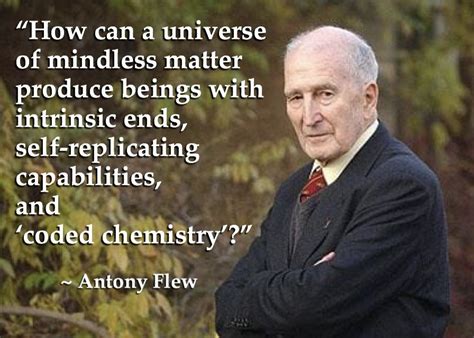
Every time we sit beneath a sky (like I did last night) it becomes a reminder, a lesson so to speak, about who God is. That reminder is what changed British Professor and Philosopher Anthony Flew in 2004. He was regarded by many as the world’s most acclaimed atheist and when he renounced his atheism in favor of theism, it rocked the world of science as much as the church would have been rocked if Billy Graham suddenly renounced his Christian faith. What was the basis of Flew’s conversion? The evidence around him. He became fatigued by having to ignore the undeniable design of what he saw in the creatures and nature around him, in favor of a fortunate stroke of good luck that brought this altogether so nicely. He finally relented to the undeniable fact that there must be a designer.
We should always be in awe of the world around us. We should never take its beautiful design for granted. But we must also remember why it is here – to point us toward God. Although nature points to Him, it should not be confused with Him. Paul says this when he writes, “Claiming to be wise, they became fools, and exchanged the glory of the immortal God for images resembling mortal man or birds or animals or reptiles (Rom 1:22-23).” Creation represents the greatness of God, and without Him it would not exist. Let’s never degrade God by putting His creation above Him.  Check out the sky tonight and the trees tomorrow and thank Him for the wonderful signposts He has made that emphatically, undeniably, and unquestionably point to Him.


“Delight in the Lord”

“Take delight in the Lord, and he will give you desires of your heart.” (Psalm 37:4)

Today’s verse is one of the most beautiful, most quoted, and misunderstood in the Old Testament. It has become the battle cry of the misguided but ever-growing prosperity movement and a go-to verse for those counseling someone who is going through tough times. But as is the case with many verses in the Bible, this verse needs to be examined textually and contextually if we are going to determine its real meaning. If we do not do that, we will find our faith in God sorely tested when we don’t get “everything we want.” After all, this verse seems to be pretty clear- God can and will give us the desires of our heart. The only criteria- take delight in Him. It all sounds pretty simple.

This Psalm is written by David when he is an old man. By this time, he has experienced wondrous events and heartbreaking events. He certainly was not the one to write that God gives a person everything he wants, every time he wants it. David’s family problems are well-documented. His sins and their consequences are used as examples of things to be avoided. His many children from many wives led soap opera lives resulting in rape, premature deaths, and murder. Eventually, all this family intrigue led to the unraveling of the kingdom of Israel that he had so delicately woven together. These certainly could not have been the desires of David’s heart.

There was a father and son swimming at a river when the young boy saw a blackberry patch on the other side. The boy begged his father to let him swim across to get some. The father hesitated because the boy was not a great swimmer, but it was a short distance. Finally, the father gave in and the boy got halfway across, tired, was pulled under and swept downstream. Later when the father was explaining it to the police, he said, “He just wanted to go over there so badly, I didn’t want to tell him no.” I think the boy wished his dad would have told him no. God knows when to tell us no or to let us go. We need to tune into that great knowledge.

It has often been said, “It is a great deal easier to do that which God gives

OLYMPUS DIGITAL CAMERA

us to do, no matter how hard it is, than to face the responsibilities of not doing it.” I think that is the case with the verses in Psalms 37:1-7. Here are the things we are told to do in these verses: fret not, trust in, delight in, commit to, and rest in. In doing these things, we will know God better, when we know God better, the desires of our hearts will mirror the desires of God’s heart. In obedience to Him we will not only see what our desires are, but what they should be. We will realize that every want is not a need and every desire does not reflect the heart of God.

When David wrote these verses, he certainly had not forgotten his desire for a woman on a neighboring rooftop which led to adultery, which led to pregnancy, which led to murder, which led to punishment. God allowed David to act on the desires of his heart, but those were contrary to the will of God.  If David would have turned to God, God would have turned David away from his sin.   Obviously, what the verse in Psalms is telling us is that if we delight ourselves in the Lord, our desires will be aligned with His. The desires of our flesh are evil. If God were to give us our fleeting desires for fame, riches, and power, He would be no more than a genie in a bottle granting wishes without regard to consequences. But God cares about us and in this verse He is saying that if we delight in Him he will protect us from our own desires and replace them with desires that match His will.

David tells us first of all to “Trust in the LORD, and do good.” (Psalm 37:2a). If we trust God, we will look to Him for direction. We will run the desires of our heart past God first to see if they conflict with His will. David did not do that. He knew that his escapade with Bathsheba was wrong, but he did not “trust in the Lord.” He felt that his own wants should be satisfied, even if they conflicted with the nature of God. He did not trust and he did not do good.

OLYMPUS DIGITAL CAMERA

How could a man “after God’s own heart” do such a thing? Because our hearts are “desperately wicked” and if we don’t run all desires through God first, we will choose to what is wrong.

“Delight thyself also in the LORD; and he shall give thee the desires of thine heart.” The word delight means to soften, to be pliable, to submit. This is the first step in understanding our desires. I might desire more money, which might lead me to make decisions that will hurt me and my family. Only God can see ahead at the consequences of my decisions, so I should submit to His authority through a careful study of His word. I should want to tap into His wisdom. My delight should be in the Lord and His wonderful omnipotence, not my own short term wants.

“Commit thy way unto the LORD;” (Psalm 37:5a) I should commit myself to follow God’s directives. He is a powerful and loving father and will know what is best for me better than I do. One of my favorite poems (I have quoted it before) is the prayer of the unknown confederate soldier. I think it illustrates so well that believe we know what we want, but only God knows what we need.

I asked God for strength, that I might achieve;

I was made weak, that I might learn humbly to obey.

I asked for health, that I might do greater things;

I was given infirmity, that I might do better things.

I asked for riches, that I might be happy;

I was given poverty, that I might be wise.

I asked for power, that I might have the praise of men;

I was given weakness, that I might feel the need of God.

I asked for all things, that I might enjoy life;

I was given life, that I might enjoy all things.

I got nothing that I asked for, but everything I hoped for.

Almost despite myself, my unspoken prayers were answered.

I am among all men most richly blessed.

David tells us in Psalm 37:7a to “Rest in the LORD, and wait patiently for him:” We often want what we want and we want it right now. There is a story about a man who asks the right fielder in a little league game the score. The boy says 18-0. The man said,”Wow, you must be discouraged,” and the boy answered, “Why should I be? We haven’t batted yet.” Now that is patience. Being patient in God is one way we can show our trust in HIm. There is rest in patience. We can rest in God by listening to God. There is no peace in doing “our own thing” outside the will of God. We must be patient because God not only knows what we need, but when we need it. Like the soldier in the poem above, if we involve God in our wants He will reveal our needs. Our desires should be trusting God, committing ourselves to Him, and resting in Him.  Only then will our true desires be met.

There are those who stand behind the pulpit and say that 37:4 means that if we desire something (like a new car) and we ask for it, we should receive it. But if our desire is outside the will of God, it will not turn out well. This is the bottom line. If we desire something outside of God’s will, we better hope He doesn’t give it to us. He is all-knowing, we are all-desiring. We need to pray that He will sometimes stand in the way of our prayers and not give us everything we want. I think in eternity if we get a chance to ask God why he didn’t give us something we wanted and He tells us why, we will say, “Thank you so much.” If we delight in God we will ask Him to give us what we should have, not what we would have. If He gives us what we would have instead of what we should have, we will later wish that He would have given us what He should have given us (you may have to read that a few times). If we ask God to give us what we should have, he will give that to us. That is the love of a Father.  He wants to give us good things, but without Him we just don’t always know what is good!

Don’t take calls from fear,,,

“Now when they saw the boldness of Peter and John, and perceived that they were unlearned and ignorant men, they marvelled; and they took knowledge of them, that they had been with Jesus.” Acts 4:13

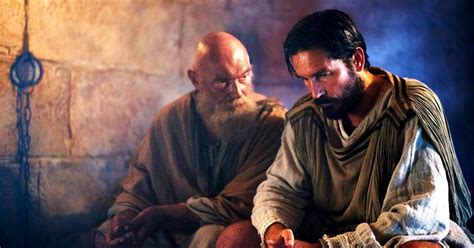
We are going through the book of Acts in our seasoned learners Sunday school class.  I like to watch  some of the movies based on the book.  Some are very accurate; some not so much. Even though the fishermen on the screen do not match the fishermen of my mind,  I am reminded why Luke’s book of Acts is such a wonderful record  of the beginnings of the church.

After the seeing the risen Christ and receiving the Holy Spirit, the apostles showed courage reserved for few in history. In Acts 4:13 Peter and John are examples of what should happen when we meet the risen Christ and are indwelled with the Holy Spirit. The Apostles had walked with Jesus for three years and had seen His many miracles. They had seen His compassion and wisdom. They had seen His strength and His resolve. Yet, they still did not understand Him.

That is one of the things that I enjoy the most about the Bible. Its pages are filled with flawed men who are strong and weak, wise and foolish, fearless and fearful. One might think that “fake” book of scripture might be filled with sterling characters whose minor flaws are quickly excused by pointing out the tough circumstances and questionable people around them. This certainly wasn’t the case with the Apostles who spent much of the time they were with Jesus being scared and confused.

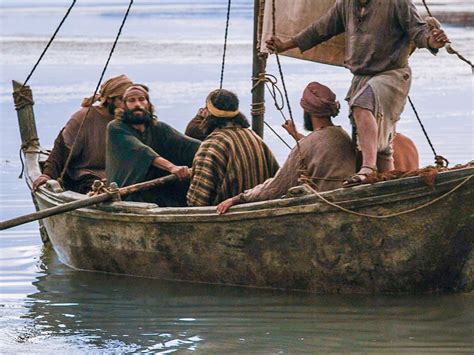
When Jesus was arrested, they ran. When He was being tried they hid. When Peter was confronted, he denied. After Jesus was crucified, they were discouraged. They talked about the good run they had had, but it was time to go back to fishing. Of course, these are some of the same emotions we all struggle with throughout our lives, and I am sure that the apostles felt as justified as we do.

But then something amazing happened. Christ rose from the dead and presented Himself to them. Suddenly, these men who were hidden in an upper room discussing their return to normal life began to be strengthened. They saw the risen savior and touched Him. They received the Holy Spirit and were filled by Him. They suddenly had more wisdom and courage. They went from hiding to preaching boldly, and all but John would go on to be martyred for their message.

The apostles behavior, attitudes, and priorities changed.  It reminds me of a message I heard was on someone’s answering machine. “I am not available right now, but I thank you for caring enough to call. I am making some changes in my life. Please leave a message after the beep. If I do not return your call, you are one of the changes.” It is though the apostles old acquaintance fear called them and they refused to return the call.

We should be able to do the same things the apostles did. We have seen the risen Christ through His Word and many other evidences. We have received the Holy Spirit. We know who Jesus was (and is) and what He means to this world. We should boldly step from hiding to the open proclamation of Him. We have had the same supernatural experiences as the men who walked with Him; we should have the same boldness. People should marvel that we have been changed and in us, they should now see Him.

Let’s not talk about how great it was that the disciples were changed; Let’s change who we are and talk about how great Christ is. Let the world marvel that we of lowly positions (most positions are lowly), seem to speak like we have some special knowledge and boldness- because we do.

One More Look at the Nones…

Over the last couple of weeks we have taken a look at the rise of the nones in this country.  If you have not read the last two devotions you might want to just to get the context of today’s devotion.  We have been comparing the ministries of Peter and Paul in the book of Acts.  Peter’s audience was familiar with the Old Testament scriptures, so he used their knowledge in his presentation of the gospel.  Jesus, the greatest evangelist, Stephan and Phillip and others did the same thing.  On the other hand, Paul spoke to those who had very little understanding of the God of the Old Testament.  Paul tailored his gospel accordingly.

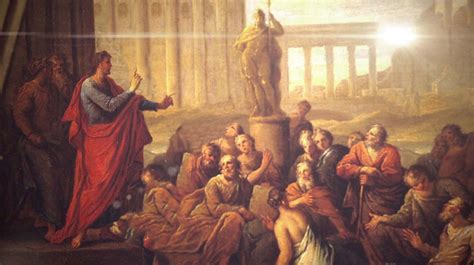
In Acts 17 Paul was waiting in Athens for Timothy and Silas to help him deliver the message of the gospel, but as he looked around at the incredible idolatry of the city he was moved to begin his preaching alone. He preached in the synagogue first as he always did,  and then went to the marketplace. We can be assured that the messages were the same, but that the approach was different in each of these places. In the synagogue he was speaking to those who understood his message even if they did not agree with it completely (like the population in the U.S. thirty years ago).  In the marketplace he was speaking to the common Athenians who were going about their daily lives probably unconcerned about things spiritual (like the people in the U.S. today). We do not know his exact speech in those two locations, but we do know that it peaked the interest of the local philosophers and got him an invite to the intellectual center of the city, the Areopagus.

“Then certain Epicurean and Stoic philosophers encountered him. And some said, “What does this babbler want to say?” Others said, “He seems to be a proclaimer of foreign gods,” because he preached to them Jesus and the resurrection. And they took him and brought him to the Areopagus, saying, “May we know what this new doctrine is of which you speak? For you are bringing some strange things to our ears. Therefore we want to know what these things mean.” For all the Athenians and the foreigners who were there spent their time in nothing else but either to tell or to hear some new thing.” (Acts 17:18-21)

These two groups might ring a bell to us today. Epicureans pursued pleasure as the greatest purpose in life. They did not deny the existence of gods, but believed they were inconsequential to their lives. Stoics, on the other hand, were pantheists who believed everything is god, and that there was no such thing as a single, personal god. Between these two groups, we have a slice of our culture today. Many people fit into one of these groups or combined variations of them both. So did Paul pull out his synagog sermon for these men? No. It was a great opportunity to speak at Mars Hill, and he was going to deliver his message in the most effective way possible. He was going to tailor the “delivery” of his message without changing the “heart” of the message.

These people did not have scriptural knowledge. They knew little or nothing of the old testament stories and prophecies. They probably had not even heard of the Messiah. Had Paul started with those particulars, he would have lost his audience within a few minutes. He wanted to get to his message without losing anyone along the way. So here was his message paraphrased: “I was passing through and looking at your many finely carved idols and came across one with the inscription: To the Unknown God.” Paul connected with the people with something they understood- their own gods from their own culture. Paul continued, “I am here to proclaim to you the unknown God who you acknowledge but do not know.” He then described God in eight beautiful verses that tells what He has done, is doing, and will do in the future.

“Therefore, what you worship in ignorance, this I proclaim to you. The God who made the world and everything in it—He is Lord of heaven and earth and does not live in shrines made by hands. Neither is He served by human hands, as though He needed anything,since He Himself gives everyone life and breath and all things. From one man He has made every nationality to live over the whole earth and has determined their appointed times and the boundaries of where they live. He did this so they might seek God, and perhaps they might reach out and find Him, though He is not far from each one of us.  For in Him we live and move and exist, as even some of your own poets have said, ‘For we are also His offspring.  Being God’s offspring then, we shouldn’t think that the divine nature is like gold or silver or stone, an image fashioned by human art and imagination.

“Therefore, having overlooked the times of ignorance, God now commands all people everywhere to repent, 31 because He has set a day when He is going to judge the world in righteousness by the Man He has appointed. He has provided proof of this to everyone by raising Him from the dead.” (Acts 17:24-31)

Paul did not approach these men with prophecies that were meaningless to them, and yet did not compromise on who Christ was and is. Although the cross is not mentioned, he spoke to them intellectually and honestly. We can be sure that Luke’s account of the speech is only a partial one because this would only be about a two-minute sermon and no one who got the floor at Mars Hill would squander the opportunity with a two-minute speech, especially Paul. What we do get from this sermon is a nice formula for approaching unbelievers with gospel.  First of all, know where people are before you talk to them- Paul knew he was talking to Epicureans and Stoics and he knew what they believed, so he started there. Secondly, find the need in someone’s life that Christ can fill- Paul knew that they believed in something greater than themselves (they had hundreds of Gods) and used that knowledge to introduce Christ. Thirdly, do not water down the gospel- Paul told of the power and nature of God and ultimately the resurrection of Christ.  We are surrounded by “Epicureans and Stoics” today and we cannot expect them to know what we know and treat them like they have grown up in the pews and have just gone astray. They may have never even visited a church.

Today’s churches need to follow Paul’s lead. If Peter would have spoken on Mars Hill, he would not have spoken to them the way he did the Jews in Jerusalem. When Paul spoke to the people in Corinth (his next stop), he did not use the same presentation as he did on the Areopagus. We cannot treat people of this century like the past century. We sometimes try to talk to the people on the street in the same way we visit with our friends in church.  We must start where they are, not where we are.  We must reach out and speak to others knowing they who we used to be before we knew Christ.

The nones are not bad people, just fed-up people. They don’t like organized religion because it too often paints and inaccurate picture of Christ and a too accurate picture of Christians.  If we want the nones to start checking the Christian box, we must give them more than religion. We must give them Jesus. We are Christians, not church-tains, so He must be the focus. We can no longer assume that those around us have any kind of Bible knowledge, so we must start there when conversing about the Lord.  As churches, once we get nones in the door, we need to give them huge helpings of Christ, not a few morsels. Only then will they be filled, only then will they come back for more.

Some More about Nones…

Last week I wrote about James Emery White’s book The Rise of the Nones. The Nones referred to in the title are those people who indicate that they have no religious affiliation. Studies have found that since WWII the number of Nones has increased from 5% of the population in the 1940s to 20% in 2013. Over half of that number has come in the last 15 years.  White contends that one of the reasons modern churches are failing because they are using Peter’s method of witnessing in Acts 2 when we need to be using Paul’s methodology from Acts 17. Peter was witnessing to Jews who had religious understanding of God and the scriptures and he tapped into that knowledge while he witnessed.  On the other hand, Paul was dealing with the intellectuals of Athens who had little knowledge of God and didn’t particularly want any new knowledge of Him.  Consequently, Paul’s understanding of their unbelief shaped the way way he presented the gospel.  White believes that the churches are treating those outside the church like Peter’s audience when they are much more like Paul’s.

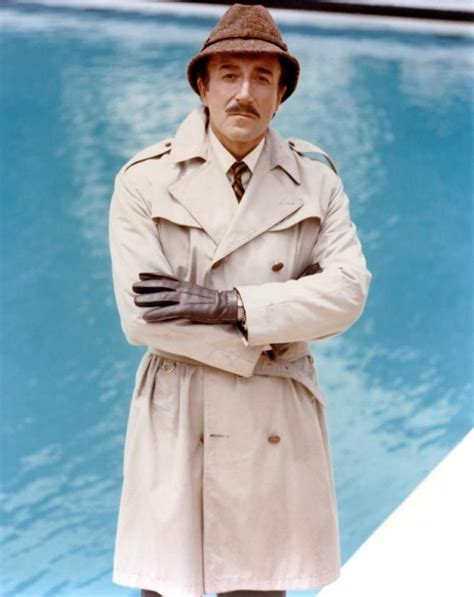
The “nones” are important to reach because the body of Christ can only grow when new members are added to the “church” not just moved around from denomination to denomination. The old Pink Panther movies were a riot and I think Peter Sellers was a comic genius. In one of the scenes of the first Pink Panther movie Inspector Jacques Clouseau is trying to get into a window with another man by standing on his shoulders, but he cannot reach. He says, “Wait, you can stand on my shoulders, you are taller than me.” Well, obviously, that doesn’t change anything at all. That is much like the modern churches. Exchanging members with other neighborhood churches does not increase the size of the Body of Christ. We live in challenging times, and as usual, the answers on how to meet the challenges can be found in the Word. We need to look at how Paul dealt with the problem of recruiting the uninterested because that is a majority of the people we deal with on a daily basis. In the meantime, we can do what Christ, through the Apostle Paul calls us to do… “I urge you to walk in a manner worthy of the calling to which you have been called, with all humility and gentleness, with patience, bearing with one another in love, eager to maintain the unity of the Spirit in the bond of peace.” (Ephesians 4:1-4)

There is no doubt that Bible literacy over the past eighty years has decreased exponentially to the point where the most common Bible themes and teachings elude the average reader. I taught English for many years and there are so many Biblical allusions in classic literature that at least some rudimentary knowledge of the Bible is necessary to understand many of our greatest literary works. Unfortunately, I saw fewer and fewer students who could recognize even the most obvious Biblical connections. Well-known Bible accounts such as Adam and Eve, Noah and the ark, David and Goliath, and others drew blank stares from the students. Every year I had to give more and more Biblical information to the students before I could explain how the allusion fit into the story. We are in a time where over half our population does not know who the vice-president is; do we really expect them to know who Lazarus was? We have to learn from Peter and Paul that the presentation of our message must be fitted to our audience.

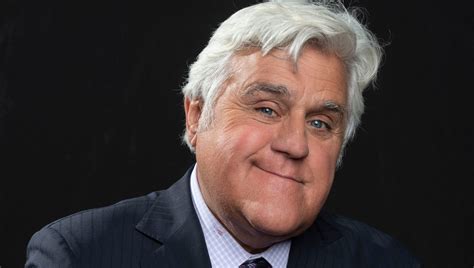
Jay Leno once went into the audience to test their Bible knowledge. Only one person even ventured a guess on one of the Ten Commandments. “God helps them who help themselves?” he said.  Nope, sorry. Not even in the Bible, much less the Ten Commandments.  No one in the audience could name even one apostle, but almost everyone one of them could name the four Beatles.  A  recent Gallup survey found that only two of ten people know who delivered the Sermon on the Mount and typically most people can only name three or four of the Ten Commandments (not good, but beating Leno’s audience decisively).  Remember, we live in a country where over 80% of the people say they are Christian.  There is a simple Bible test that has been circulated among churches over the past few years. The average score is usually somewhere around atrocious. It is thought that practicing Christians should do well on this test, so the poor scores seems to indicate that there are a lot un-practicing Christians out there.  So the stage is set.  We are witnessing to people outside the church who say they are Christians but have no desire to go to church, read the Bible, or know the things of God.

Part of the problem in the U.S. is that Christians set the spiritual bar for the rest of the country.  If Christians are not in the Word, the rest of the population will be in the Word even less.  Would we really expect the average man on the street to know who the prodigal son is if most Christians have no idea.  If we, who claim to know God, don’t care to read His words, why would we expect others to.  In China the people have have little access to Bibles, but find time to read. In America we have unrestricted access to Bibles, but find little time to read- that is called irony.

For many years now many families have relegated their Bible study to an hour of church or Sunday school weekly. During these difficult covid times families are finding out how important it is to have consistent schooling. Education that is hit and miss is not very effective. Distance learning without social interaction has had its negative effect on almost everyone, and that effect has been very noticeable.  Sadly many cannot see the connection between this forced isolation in our country and the voluntary isolation in their spiritual lives.

Most parents realize that their children can’t learn math or science in one hour a week with no homework, but find it fully acceptable for Bible study.  This is a trend that has resulted in Biblically illiterate adults who think Sodom and Gomorrah are two guys with really bad names. Only 16% of Christians say they read the Bible daily. With those few Christians reading the Bible, how much knowledge does the rest of the population have?

When I have a problem with one of my vehicles I take it to my mechanic.  In explaining the issues to me he uses all kinds of terminology that sails over my head.  I smile and nod my head politely, but I am virtually clueless about what he is saying.   I have never studied the workings of a car and my knowledge is just what I have picked up on my occasional breakdowns.   My mechanic is sharing truths with me that he would like me to understand, but  his great deal of knowledge combined with my lack of knowledge makes it a pretty fruitless goal. This experience is similar to what Biblically illiterate people must be thinking when someone approaches them with spiritual ideas.   It is incumbent on us to keep this in mind when we speak to others about the Lord.  Paul understood that and we can learn a lot from his evangelistic methods.

Next week we will look at Paul’s approach in Athens because the people of Athens sound a lot like the people we deal with everyday.

Part 3 next week!

« Older posts Newer posts »

© 2026 HE HAS OUR BACKS

Theme by Anders NorenUp ↑