“For every house is built by someone, but he who built all things is God” (Hebrews 3:4)
Years ago I listened to a discussion between a creationist and an evolutionist and it has really stuck with me. It was very interesting and although both men were very intelligent, my faith was bolstered by the great points made by the creationist. One point that he mentioned really stuck with me. I know that it is probably obvious to everyone else, but for me, well, it was eye opening.. Basically he said it is not logical that the eye could have evolved, and he supported his argument with statements from a variety of evolutionists who basically said the same thing. 
Here was his point: unless the eye is complete and functional, it does not work. Why would something that is so detailed and complex but non-functioning continue to evolve? Why would anything continue evolving which has no use until completion?
The eye is so complex that even Darwin, the godfather of evolution, admitted that the chance it could have evolved was beyond belief. In Darwin’s Origin of Species he wrote “To suppose that the eye with all its inimitable contrivances for adjusting the focus to different distances, for admitting different amounts of light, and for the correction of spherical and chromatic aberration, could have been formed by natural selection, seems, I freely 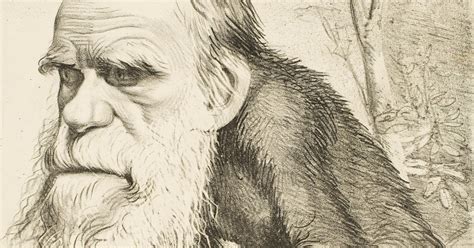 confess, absurd in the highest sense.” Okay, Charles, if I get this right, it is logical for all parts of the body to evolve, except the eye because it is so complex. We then, in theory, should be eyeless beings. I just can’t see it (pardon the pun). Psalms tells us should praise God because “(We) have been remarkably and wonderfully made. (His) works are wonderful, and I know this very well.” (Psalm 139:14) That refers to every part of us, not just our eyes. We are made in God’s image. We are special.
Darwin is not the only evolutionist who struggled with “seeing” the eye as an evolutionary problem. There are mountains of quotes from those who believe in evolution who find the evolution of the eye an almost untenable propostition. The reason stems from its incredible design that defies any logical explanation other than a designer. They, of course, do not admit a designer as a possibility, but just admit that it is a conundrum that they must ignore. But we don’t have to ignore the wonderful design of the eye because we can be  assured there is a designer. “But now, O Lord, you are our Father; we are the clay, and you are our potter; we are all the work of your hand.” Isaiah 64:8
John Blanchard, author and scientist has some interesting information about the eye. It is one fourth-thousandth of our weight, yet we receive 80% of our information about the outside world through the eye. Our retina contains about 130 million rod-shaped cells which detect the intensity of light then one million nerve fibers transmit impulses to brain, while at the same time six million cone-shaped nerves respond to color variations and send those impulses to the brain. Our eyes can handle 500,000 messages simultaneously and are being constantly cleaned by just the right amount of fluid to keep both eyes clean in one five-thousandths of a second. Wow, and guess what. We are not the only ones that have eyes. Thousands of living creatures have eyes. When did these eyes develop in the evolutionary process? It boggles the mind that something so unbelievable just “happened” in thousands of different species, regardless of how many millions of years you add to it. It is much harder to think eyes just developed, rather than came about in a completed fashion.
Some scientists readily accept evolution, even though it is scientific folly, because they refuse to accept any alternatives.  Dr. George Wald (co Nobel Prize winner in Biology and professor of Biology at Harvard) said: “There are only two possibilities as to how life arose: one is spontaneous generation arising to evolution, the other is a supernatural creative act of God; there is no third possibility. Spontaneous generation, that life arose from non-living matter was scientifically disproved 120 years ago by Louis Pasteur and others. That leaves us with only one possible conclusion- that life arose as a creative act of God. I will not accept that philosophically because I to not want to believe in God, therefore I choose to believe in that which I know is scientifically impossible, spontaneous generation arising to evolution.” At least Dr. Wald is honest. He will believe anything, no matter how preposterous, so he will not have to believe in God. What a sad admission. How many other scientists feel the same way but fail to admit it.
When I look at what is around us, I see evidence for God. When  I look at our bodies, I see evidence of God. Paul tells us, “For His invisible attributes, that is, His eternal power and divine nature, have been clearly seen since the creation of the world, being understood through what He has made. As a result, people are without excuse.” (Romans 1:20) If we look at the wonder around us and examine the amazing design of our bodies, earth, and universe, we are without excuse. There will be those who stand before God someday and say that our bodies are amazing and our universe is amazing, but then say they still weren’t sure that He actually existed. I don’t believe that weak agrument will hold water.
GK Chesterson has a great quote that I really like, “It is absurd for the evolutionist to complain that it is unthinkable for an unthinkable God to make everything out of nothing, and then pretend that it is more thinkable that nothing should turn itself into anything.”
To me,  complexity spells out design. In a devotion a few weeks ago I mentioned a cartoon of two scientists saying to each other that if they could just create life in the lab, they could prove that it doesn’t take intelligence to create life. Besides the irony of the statement, I am thinking that if anyone could ever create a telescope that could do what the eye can do, I guess that would prove that it doesn’t take intelligence to create the eye. Ironic, huh?
 “The Lord is not slow to fulfill his promise as some count slowness, but is patient toward (us), not wishing that any should perish, but that all should reach repentance.”
 When I was growing up, I did what my father ask of me, not because I was afraid of him (which I should have been, because he was one tough guy), but because I was afraid to disappoint him. He loved me so much, that I had a hard time seeing him hurt. If we could see how much our Father in heaven loves us, and how much our rebellion hurts Him, we would think twice about our tendency to rebel.
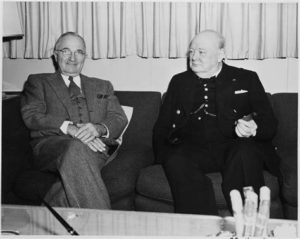 They were in a special car which had the presidential seal hung up on a wall. Truman noticed Churchill studying the seal and he pointed out that he had changed it so that the eagle on the seal was turned toward the olive branch instead of the arrows. “Why not put the eagle’s head on a swivel,” suggested Churchill. “That way
  you could turn it to the right or the left, depending on what the occasion warranted.”
  We sometimes look at the great people of the Bible as super heroes who God enlisted in a task because they were fearless and would do anything they were told unflinchingly and without any hesitation.
 inadequacies and his difficult circumstances, he could not be used of God.
 Jeremiah was not too different from us.
 want to go because God is good and would forgive Jonah’s enemies if they repented.
 actions. First, we deny that we are being neglectful or that we are doing anything wrong. Second, we fall back on the “it’s not my fault” excuse that is always quite handy.
 “The pedestrian had no idea which direction to go, so I ran over him.”




 “And there is salvation in no one else, for there is no other name under heaven given among men by which we must be saved.”
 Paul warns Timothy in I Timothy 6:20: “O Timothy, protect what has been entrusted to you. Avoid the profane chatter and absurdities of so-called ‘knowledge.’”
 approaches God must believe that he exists and that he rewards those who seek him.” (Hebrews 11:6), and thus there is only one way to be saved. “Nor is there salvation in any other, for there is no other name under heaven given among men by which we must be saved.” (Acts 4:12)