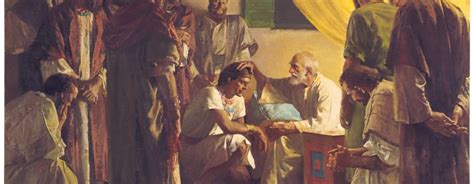
He also said: “A man had two sons. The younger of them said to his father, ‘Father, give me the share of the estate I have coming to me.’ So he distributed the assets to them.” (Luke 15:11-12)
In my morning devotions I once again came across the story of the prodigal son in Luke 15. The more I read, the more I realize that there are a lot of truths packed into a small number of verses. I have usually concentrated on the father in the story, but this time I have noticed some harsh warnings through the actions of the son.
As we can see in verses 11 and 12, the youngest son was unsatisfied with his life and not willing to wait around for his father’s demise (I hope not all children are like that!), and he asks for his inheritance early. Surprisingly, his father grants his request and gives him his portion of the estate early. The son takes the cash and makes a dash for his new life of excitement. In doing so, he leaves us a playbook of destruction that if we follow will result in eventual pain and suffering.
The young son was unhappy with what he had in his normal life and was seeking more. He was much like all of us in different times of our lives. Benjamin Franklin said that, “Discontent makes rich men poor, and contentment makes poor men rich.” I think he had it right.  We often look at the lives of others and envy what they have. Constantly looking at what others have and comparing it to what we have is a dangerous venture. It can lead to pursuits that take us into the wrong places, to meet the wrong people, to experience the wrong pleasures. Often instead of hobnobbing with the princes we end up hog-slopping with the pigs.
“Not many days later, the younger son gathered together all he had and traveled to a distant country,” (Luke 15:13a)
We can notice here that to be involved in a new lifestyle, the son had to go to places where his new lifestyle was accepted. People who want to absent themselves from the things of God, must absent themselves from the places of God. Church is not a very good setting to run a gambling ring (ignoring the Baptist bingo rings here). Most people think it would stink to get skunk-drunk at a Bible study. Telling dirty jokes in a sermon seems a little too….well, dirty.
If we want to replace God in our lives, we must place ourselves in some pretty ungodly places. That is the first thing this young son did. He ran off to a place far away that would not remind him of the things he was avoiding. He took his money and ran to a non-threatening setting where he could be “himself,” surrounded by others who could be “themselves,” in an environment of nonrestricted behavior. It was a nirvana of guilt-free bliss…for awhile.
 I read a story once about a person who took in a raccoon as a pet. Raccoons go through some radical physical changes at about two years old. During this time they can (and most of the time do) become very aggressive. The raccoon owner was repeatedly warned about the danger, but believed that her raccoon would be different and their relationship would overcome the natural tendencies of aggression.
The woman had to go through several surgeries after her pet attacked her and left deep lacerations in the her face and neck. We can develop a relationship with sin and believe that it will never turn on us, but it does. That is the natural way of sin. Sin is a slicked-up escort who comes dressed for an elegant ball and takes us the sewer sock hop instead.
“But when this son of yours came, who has devoured your assets with prostitutes, you slaughtered the fattened calf for him.” (Luke 15:30)
These were the words of the unhappy older brother. Apparently they had some knowledge of the younger son’s behavior in his absence. We can see here that the younger brother had taken another important step in starting a new life without God. He had to replace the people in his life with those who would be complicit in his new lifestyle. We find out that he began running with riotous people and harlots. These people would be enablers more than advisors. They could not condemn his lifestyle without condemning their own.
Years ago a psychology professor performed and experiment in his classroom. He would bring in ten students, nine of which were in on the ruse. They would look at three lines on the board of varying lengths. He asked the group to raise their hands when he pointed to the longest one. The nine students who were in on the ploy raised their hand when he pointed at the medium-length line. The “stooge” would look around and eventually raise his hand.  It happened time and time again, in fact, the unsuspecting “sucker” went along with the group 75% of the time.
There is a saying that many people would rather “be president than be right.” In other words, it is easier to go along with the crowd than to examine the truth. If we surround ourselves with people who will reinforce what we want to believe, like the young boy did, we will not see the flaws in our thinking. We will go along with things that may be wrong and be happy about it.
The son in this story would probably say that he wanted to hang with people who were not judgmental (ever heard that before). He wanted to buddy with those who would not correct him or point out the danger in his decisions. The boy squandered all his money. Did his friends council him away from such. Probably not, because they may have even had a part of the action themselves. After all, maybe they could make up for some of the money they had already squandered. There is a commercial that says, “Friends don’t let friends drive drunk.” Is there an outcry against this commercial because it illustrates intolerance? No, because it is right to warn people of danger and everyone knows it. Is it judgmental to stop people from doing something that is not good for them? I would think it would be evil not to stop them.
“where he squandered his estate in foolish living.” (Luke 15:13b)
 Finally, the young boy had to change his pleasures if he was to truly adopt this new lifestyle to its fullest. He had to immerse himself in activities that left no reminders of his previous commitments. It is doubtful that his pleasures included worship any longer. Pleasures that conflicted with a godless lifestyle would have to be abandoned because he would not want throw a moral monkey wrench into his new and exciting life.
When the son abandoned his family, he had to also abandon any activities that reminded him of the life that was. He had to take on new pleasures that would not give him any tinges of guilt. His pleasures had to help sustain his new life by not reminding him of the old.
Of course, sin only satisfies so long. Sin is like cotton candy. It looks substantial when you buy it. It can be a pink delight twice the size of someone’s head. But it is really just a small amount of sugar and coloring whipped up to look large. As soon as you take a bite, you realize that it melts into nothingness. It is not filling. Can you imagine how many cotton candies it would take to fill us up? More than any of us could afford, I am sure. Sin is that way. It looks satisfying, but will come up short in the long run. It is like the modern bag of chips that is size of a pillow, but consists of air and six chips. After all, Satan is a deceiver. He will not let us be “fulfilled” for too long. He is much like the fickle slot machine that will let a person win just enough to keep him coming back, but lose enough to keep the person broke.
The lesson of the prodigal is a warning for all of us. Most of the time, if we are running from God we will change the places we go, the people we see, and the pleasures we enjoy. If we see ourselves moving away from the things of God we should check our hearts. Often our move away takes place slowly until there seems to be no turning back. Most of us will not change lifestyles in a moment’s time. The young son in Luke 15 did not change overnight. In his heart he started a move away from God, and his feet finally followed.
 Satan won’t let the party last too long. After a little festive celebration, a person will look around and realize his life is a pigpen and the only thing on the menu is slop. It is inevitable. If we want to stay close to God, we need to surround ourselves with God things. We can run, but we can’t hide. He will be wherever we go, but we often try to overwhelm His presence with the things of the world. He stands in the field, checking the horizon, awaiting our return, so He can run to meet us.
We need to do our daily check to see if we are getting closer to or further from God. Where do we frequent? Who do we run with? What do we like to do? If God things play a minor part in these areas, we might want to check the previews of coming distractions. We might not like what we see.
 We have done a lot of cool things with the grandkids over the years, but what I have noticed is that no matter what we do, the kids are ready to do the next thing with great anticipation. We may have just come off setting up a tent, making houses for small animals, or even having milkshakes, but if they hear we are going to something else, they are ready. They are always ready.

 a shout, with the voice of an archangel, and with the trumpet of God. And the dead in Christ will rise first. Then we who are alive and remain shall be caught up together with them in the clouds to meet the Lord in the air. And thus we shall always be with the Lord.” There will be no warning that allows us to go say good bye, gather our things, or even read a couple of quick verses to impress God. We will be gone.
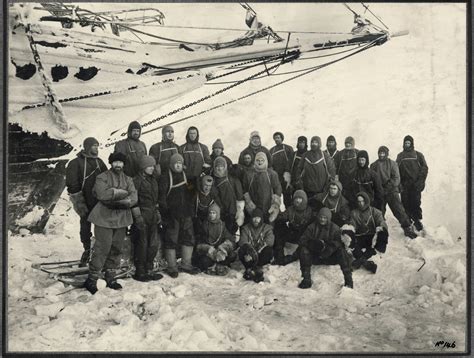 I have read two books on British explorer Sir Ernest Shackleton and they are two of the best I have read. When the expedition’s main boat was crushed by enclosing ice while headed toward the South Pole, Shackleton had to leave part of his crew on Elephant Island while he took the other half to try to reach civilization. He promised the crew that he would return. Later, when he tried to go back to rescue the crew left behind, huge icebergs blocked the way and it looked like the men would perish. But suddenly an avenue opened in the ice and Shackleton was able to get through. His men, ready and waiting, quickly scrambled aboard and no sooner had the ship cleared the island than the ice crashed together behind them. Shackleton said to his men,
 not superhuman. They were human; they were frail; they were sinners; and just like us they needed God’s grace and power- especially if they were going to keep the gospel alive at a time of small numbers and great persecution.




 than any atheistic philosophy I have ever read. The idea that this world, life, and culture are evolving for the better in any way is a pipe dream. Peace on this earth can only be found in one place, and that is in the Lord Jesus Christ. All other peace is fragile, fleeting, and in the long run, fake. In Jeremiah 17:9 we are told, “The heart is more deceitful than all else And is desperately sick; Who can understand it?”Later in Matthew 15:19 we see that man has a heart problem, “For out of the heart come evil thoughts, murders, adulteries, fornications, thefts, false witness, slanders.” These comments on man seem to match what I see in the news a lot more than an atheistic view that we are building societies of peace and justice.
 Until all things become new through Christ, this world will not get better. The bottom line is this: We are created with a knowledge of right and wrong but without the power within ourselves to enforce it. We will continue to ignore what is right until we are filled with He Who is right. That is not evolution of our world, but revolution in our souls. We must go against our natural tendencies for evil and be filled with that which is good. Until then our world’s progression is nothing more than regression.