"God is our refuge and strength, a very present help in times of trouble." Psalm 46:1

Category: Uncategorized (Page 23 of 34)

Meekness is not Weakness…

“The meek also shall increase their joy in the Lord.”  Isaiah 29:19

Meekness is not a momentary decision, but a way of life. It is an intentional daily decision to set our own desires aside and rely on the power of the Holy Spirit within us.  Someone has described biblical meekness as “putting the bit in your own mouth and handing the reigns over to God.” It is an humble attention to and acceptance of the will of God. 

Meekness is not making ourselves part of the Doormat Club.  J. Upton Dickson was a fun-loving fellow who founded a group for submissive people.  It was called the DOORMATS. That stood for “Dependent Organization Of Really Meek And Timid Souls – if there are no objections.”  Their motto was: “The meek shall inherit the earth – if that’s okay with everybody.”  Their symbol was the yellow traffic light! Although this was a tongue-in-cheek mythical club, it shows the way that many people view meekness.

Meekness is often mistaken for weakness, but those two things are much different.  Where weakness is a lack of strength, meekness actually a show of great strength under God’s control.  Meekness without God might very well be weakness, but in God’s hands it is powerful beyond understanding.  Cultures have been often influenced by the meekness of great men and women. Hearts have been changed.  Circumstances have been controlled. Pain has been alleviated.  Meekness in the eyes of the wise will never be seen as anything less than what it is- it is inner strength that leads to gentleness. 

The strongest man to ever walk this earth was Christ, yet His absolute trust in God resulted in the greatest sacrifice anyone has ever given. Meekness is a balm that heals when revenge cannot.  Our flesh will seek our own desires, but the meek will seek the desires of others.  Meekness is great faith, great commitment, and great determination to follow in the steps of Christ. 

Christ did not weakly go to the cross. His trip to the cross was the most courageous act of all time. But He faced it accepting the will of the Father. We too, are required on a daily basis to live a meek life before God.  When God requires sacrifice, meekness trusts completely and gives willingly.  When God demands obedience, meekness ignores selfish desires, crucifies personal ambition, and performs joyfully the good will of God.  When God demands forgiveness we forego our desire to satisfy our deep desires for vengeance.  When we desire to do what would please us, meekness allows us to do what is pleasing to God.

A young Christian from Africa had the opportunity to attend a Christian college and was being shown around the campus by the college president.  When the president asked him where he would like to live, the young man replied, “If there is a room that no one wants, give that room to me.”  That touched the president deeply because after years of showing prospective students around campus, that is the first time he had ever heard those words.  Everyone knows that our treatment of others can be the big bridge between the gospel of Christ and a lost world. 

Our heartfelt actions that put others first are powerful examples of who Christ is and what He can do in our lives.   How would it effect those who don’t know God to hear from those who do know God things like, “If there is a job that no one wants to do, I’ll do that job,” or “If there’s a kid that no one wants to eat lunch with, I’ll eat with him,’” or “If there’s a parking space that’s further out, I’ll park in that space,” or  “If someone needs to stay late to clean-up, I will stay,” or “If there is not enough room, I can just take the next bus.” 

In essence, we are telling the world without bragging or expecting anything back, “If there’s a sacrifice someone needs to make, I’ll make that sacrifice.”  God knows that the joy of the meek will continually increase. Meekness can nourish rather than deplete.  The meek can find comfort in personal circumstances that the weak cannot.  The meek’s happiness is not derived from fleeting popularity; their fulfillment does not come from public success; their pleasure is not obtained in vengeance or revenge. 
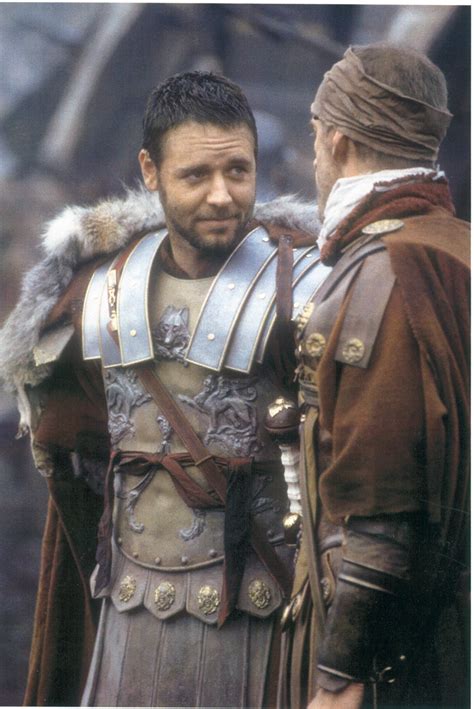
The meek know when to advance and when to step back. The meek will stand strong when they should and not just when it feels good. There’s a scene in the movie Gladiator where the Emperor of Rome, Marcus Aurelius, asks Maximus to be his successor instead of his power-hungry son.  When asked if he would accept this great honor, Maximus says, apologetically, “With all my heart, no.”

“Maximus,” the emperor replies, “that is why it must be you!” Maximus’ humble rejection of power made him the right man for the job. 

The greatest leaders are those who do not seek personal power, but seek to put those around them ahead of them.  Some psychologists think that “power poses” can give us confidence and energy.  When we stand up tall with our chest out and feet spread it is a show of great strength (think of superman) to those around us.  Ironically, one of the most recent well-known poses carried more power than the super hero stance that psychologists talk about.  Tim Tebow affected more people with a pose on bended knee than anyone could with a puffed out chest.  It is not how we stand that sends a message, it is how we live. 

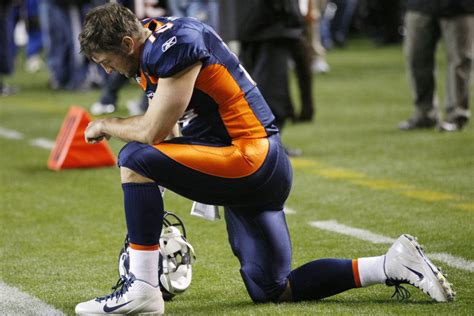
Anyone can stand in a way that conveys a picture of power, but only a few can live in a way that illustrates real power.  God calls us to  “Humble (ourselves), therefore, under God’s mighty hand, that he may lift (us) up in due time” (1 Peter 5:6). Meekness allows us to step aside and to remember that “(we) can do everything through Christ, who gives (us) strength” (Philippians 4:13). 

President Lincoln, a strongly spiritual man, was ridiculed quite often for his appearance, but he took it in stride. Once when he heard that an opponent was calling him “two-faced” Lincoln replied, “if I had two faces, would I be wearing this one!” One of his staunchest opponents was Edwin Stanton, who often referred to Lincoln as a gorilla.  After Lincoln was elected he selected Stanton as Secretary of War over the protests of many.  Lincoln, however, understood Stanton’s brilliant mind and would not allow Stanton’s previous insults to stand in the way of appointing the best man to the job. 

Lincoln had a host of “enemies” that he placed in positions of responsibility because they were the men necessary for the times.  Lincoln did not let petty grudges keep him from doing what was best for the country. That kind of meekness is why Lincoln is considered one of our greatest presidents.

The meek find their joy in The Lord- their trust of The Lord.  As the meek trust God more, the more they have of Him, the more they have of Him, the more they know of Him, the more they know of Him, the more their joy is increased, and the more their joy is increased, the more they understand the difference between weakness and meekness- the more they understand how to be strong but not wrong.

Without Christ we will always be confused about what meekness truly is. Without Christ we will constantly be guessing what to do in any given situation. It is thought by many that meekness robs us of nobility, but I would say that it is the very essence of nobility. Nothing more noble has ever been done than Christ’s humble sacrifice on the cross. Nothing has taken more strength. 

God did not say the weak would inherit the earth, but He did make another promise. 

I think we all know what that was.  Be meek this week.

Our Father, Our Refuge…

“My salvation, my high tower, and my refuge, my savior” 2 Samuel 22:3

David had sought refuge in the mountains countless times while being hunted by King Saul. He knew both the discomfort of being exposed and vulnerable, and the peace of being safely tucked away in a strong fortress. Now David, as an old man remembers the many times God came to his rescue, and he writes a hymn of praise to God. Whether sitting in a cave or a palace, David calls God his salvation, his tower, his refuge.

We need a refuge as well. Most of us will not be hunted by those who want to kill us or probably won’t even find ourselves in life-threatening situations, but what about the battles we face against our own desires? Do we have a safe place to go when we realize that there are things that darken our day both of our own making or the making of others? Do we try to face the daily enemies on our own, or do we turn to God for strength and protection.

David was a very complicated man. When he sought refuge in God, God cared for him. When he tried to do things on his own, God left him on his own. That will happen to us. When David stood before the giant Goliath he stood without any worldly armor. Goliath wore the greatest armor the world had to offer (the biggest as well); yet, David faced him confidently, saying: “Thou comest to me with a sword, and with a spear, and with a shield: but I come to thee in the Name of the Lord of hosts the God of the armies of Israel, whom thou have defied.” David with the armor of God was safe, and Goliath, in his worldly armor, was not. David did not doubt he was in a battle because he stood on a battlefield. What David forgot later on was what we have to remember every day. The world is a battlefield.

When David stood on his rooftop and saw Bathsheba, I am sure he felt that he was not facing an enemy like Goliath. But he was. He did not think of the rooftops as battlefields. But they were. He knew that Goliath was out to destroy him, so David prepared himself. He donned the armor of the Lord and sought strength from His presence. He needed to armor up when he saw Bathsheba as well, but he did not. He did not seek refuge in the Lord, but in his own lusts. In 2 Samuel 11 we see David’s weakness, “One evening David got up from his bed and walked around on the roof of the palace. From the roof he saw a woman bathing. The woman was very beautiful, and David sent someone to find out about her. The man said, “She is Bathsheba, the daughter of Eliam and the wife of Uriah the Hittite.” Then David sent messengers to get her. She came to him, and he slept with her.” (2 Samuel 11:2-3) In the case of Goliath David recognized the battle he was in, but he refused to see the battle with his own lusts, so he went into the battle alone.

When temptations surround us and threaten our life of peace, we need a place of refuge where we can feel the presence God’s strength. But, unfortunately, sometimes we, too, try face our battles on our own. We don’t go to God for our armor, but rely on ourselves and consequently go into our battles naked and vulnerable. We cannot be a refuge for ourselves. David’s strength did not come from the cave in which he hid or slings that he carried. His high tower, his refuge, his strength was in The Lord. Without The Lord no cave could have hidden him and no sling could have protected him.

There is the story of a little boy who was crossing a busy street with his father. The little boy lost his footing and the father just lifted his feet off the ground and continued the last few feet with the boy dangling by one arm. When they finally got to the sidewalk, the little boy said, “I hanged on, Daddy.” Yes, he had, but the key was that the father “hanged on” to him. God hangs on to us. We are too weak on our own and when we need him our grip will tell God that we want Him to hang on to us. On our own, we cannot do it. On our own we will fall. On our own we will fail. In God’s grip we will prevail.

Micah 7:7-8 are wonderful verses. In the first six verses in Micah 7, the author speaks of how bleak everything is, but then he says this: “But as for me, I watch in hope for the Lord, I wait for God my Savior; my God will hear me. Israel Will Rise Do not gloat over me, my enemy! Though I have fallen, I will rise. Though I sit in darkness, the Lord will be my light.” If you have ever seen a Rocky movie, these verses will be at the moment that the music starts to blare and Rocky decides he can win and starts training like a maniac. When we reach the point in our lives when God truly becomes our refuge and strength in times of trial, we will not stay fallen.

Years ago a tale is told of a man who was sitting next to a preacher on a train. The man was bemoaning the fact that in spite of being a Christian things were not going well and he was considering leaving the faith. The preacher took out a pen knife and said he could make it stand on its point on his Bible in the rocking train. The man waited for the man to take his finger away from the knife, but he didn’t. “That is no trick,” he said, “you have not let go of the knife.”

“Of course not,” the preacher replied,”a knife cannot stand on its point on a rocking train without being held.”

The man looked at him for a moment and said, “I see; you mean that I cannot stand unless Christ holds me. Thank you for reminding me.”

We cannot stand on our own. This world is rocking with difficulties and we will not stay upright. We can say we will. We can make promises and try to keep them, but that won’t work. Instead we need something to keep us. That something is the strength of the Lord.

So when we are assailed by an army of difficult circumstances that threaten our peace, we must go to the only One who provides true safety. People have tried other refuges. The world advertises them all the time. But none are lasting, none are effective, none are truly safe. Jesus Christ is a strong tower, a refuge into which we can run and find true armor. He awaits our arrival in times of distress. There is no enemy too big or need too small. He surrounds us with His weapons, His army, His safe haven. No matter how bleak the situation may seem, this refuge will last, this tower will hold, the Savior will save.

It’s essential to know the essentials…

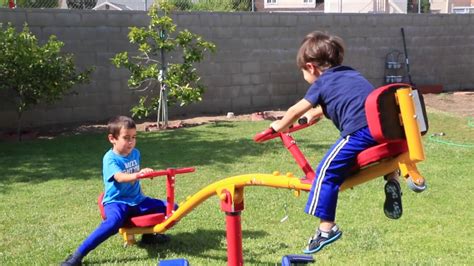
Satan must love the teeter-totter theology of the Christian churches today.  I remember a day last year at Camas when I had to go to the gym and on the way I passed the playground. Two of the little kids were sitting on the teeter-totter trying to balance perfectly.  One would scoot up a little while the other would scoot back.  Try as they might, they just couldn’t get it right.  One of the kids was quite a bit larger and the teeter tottered that direction most of the time.  Watching them try to get the board balanced just right was somewhat comical.  Unfortunately, watching churches trying to get to a balanced theology is not quite as humorous.

The  balance we should be trying to seek is somewhere between essential and non-essential doctrines.  Unfortunately, we have liberal churches that are light on the essentials and conservative churches that are heavy on the non-essentials.  Somewhere between those extremes is the balancing point that Satan hates.  Unfortunately, because churches tend toward theology on far ends of the spectrum, Christians are hard-pressed to find places to worship that are theologically balanced.  

Many churches water down essentials to fill the pews and others wield unessentials like a club to force unnecessary behavior.  Satan gleefully roots for both sides to continue their off-balance teetering and tottering. In Proverbs 11:1 we read,  “A false balance is an abomination to the LORD, But a just weight is His delight.”  In ancient times stones of perfect weight were used on scales to get precise measurements.  When someone would slip a larger stone on the scales it would throw off the legitimacy of the measurement. Churches which add unnecessary weight to the Christian life or ones who take necessary weight away, do an injustice to the gospel.  It is exhausting for most people trying to reach a balance. Those two boys on the playground were pretty tired by the time they were finished and they never did get it right.

There is an old story that has Satan walking with one of his own demons and they see a man stoop down and pick up a shiny object.  The demon asked what it was.  Satan told him that it was a piece of truth.  “Doesn’t that bother you?” the demon asked.

“No,” answered Satan.  I will let him keep it and he will make a religion out of it.”

There are so many religions in the world and all of them pull some truth out of the hat to draw a crowd, but we can set them aside in this discussion.  The real concern is with churches which purport to have the truth and it have muddled it up by building their membership on non-essentials or doctrine-light. There are some essentials that every Christian church needs to embrace and other tenants we need to approach with mercy.  Churches cannot be built on hairstyles any more than they can be built on a wishy-washy Word that stands for little and accepts everything.  In this day and age there is pushback against anyone who sides with truth.  Relativism is becoming a religion on its own and as believers, we need to stand against it.  There are some parts of doctrine that cannot be compromised.  But how do we know what they are?

There is a statement that almost all Christians agree on- “Essentials, unity; non-essentials, liberty; and in all things charity.”  Where they do not agree on is what is essential and non-essential.  Lists of the essentials vary from two to fourteen, so how are we to know what is truly essential?  

First of all,  the essentials must be predicated on salvation.  Many beliefs might be essential for sanctification, but not for salvation.  First Corinthians 10:23 says “Everything is permissible, but not everything is helpful. Everything is permissible, but not everything builds up.”  Although we are positionally sanctified (sometimes called justification) when we accept Christ, we go through the process of sanctification or maturing in the Lord through obedience to the Word. There may be room to move on what many think are the essentials for maturity, but all churches should agree on the essentials for salvation. If they waver there they will waver everywhere.

As Christians we need to know the foundations of our faith.  Unfortunately, we cannot just thumb through the yellow pages and just look under churches any more.  We need to be cautious about churches today and must check into their practices and statements of faith.  If we see a church called the Supernatural Church of the Light or Whole Body Believers or Church of the Mind, we can guess that they are not scriptural.  But even a church as innocent sounding as First Baptist needs to be tested.  More and more often churches are weighing down the teeter-totter with their own agendas.  Before we can tell whether a church is being truthful, we need to know the truth.  That can only come through a study of God’s Word.

So what are the essential doctrines?  We will go into the specific ones next week.  In writer-speak this is called a “cliffhanger.”  I hope your will be able to sleep past the anticipation, but here is a clue to give you some rest.  Romans 10:9-10 “That if thou shalt confess with thy mouth the Lord Jesus, and shalt believe in thine heart that God hath raised him from the dead, thou shalt be saved. For with the heart man believeth unto righteousness; and with the mouth confession is made unto salvation.”
Stick with it…it will be worth it…

I listened to the well-known apologist Norman Geisler on the radio, and he had a really interesting testimony.  He was raised in a home that was not only god-neutral, but god-opposed.  His father was an ex-catholic and his mom was an ex-Lutheran, and both had very adverse feelings toward anything religious due to bad experiences.  As a matter of fact, they refused to be married in a church, due to their negative attitudes toward anything smacking of God.

At the age of nine Norman was invited to a local vacation Bible school and his mom allowed him to go, probably expecting him to get enough negative religion to inoculate him for life.  That was not the case.  It began four hundred straight rides to Sunday school in a van piloted by a husband and wife team who talked about Jesus every single trip.  At the age of 17 he made a decision to follow Christ and when he made his decision known to his mother she told him if he talked any more about Jesus in her house she would kill him.  He quoted  Philippians 1:12: “For to me to live is Christ, and to die is gain.”  His mother realized he was serious about his faith and said no more that day.

His mother could see the inevitable and though neither of his parents agreed with his decision, he went onto Bible college.  He went to college because his church had a strong evangelistic bent and he realized he did not understand his faith well enough to support it.  He graduated from college and his mother’s pride came out when she baked him a cake with  Philippians 1:12 on it.  She wasn’t on board, but she was at least not trying to throw him overboard.

Norman went on to earn two BAs, a PHD, a doctorate and to author over 70 books.  What makes this more amazing was  that he could not read when he left high school.  What is even more amazing was that his mother accepted Christ over 30 years later and his father shortly after.  They were both in their early 80s.

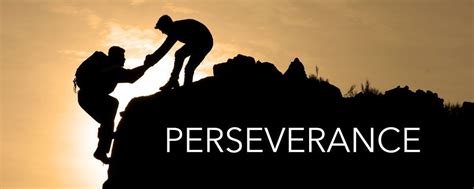
As I listened to these stories something jumped out at me.  Sticktoitiveness.  First of all, I love that word.  Sticktoitiveness (sometimes written stick-to-it-ive-ness)  is defined as dogged perseverance; resolute tenacity.  What a great way to describe the main people in Norman Geisler’s  testimony.  Two Sunday school teachers drove a young man to Sunday school over 400 times in a eight-year period.  A young man who couldn’t read eventually earned four degrees and became a well-known pastor and author.  Finally, a son prayed for unbelieving parents for over 30 years and eventually saw them come to the Lord late in life.  This kind of perseverance and tenacity runs contrary to the milquetoast image that many people have of Christians.  It speaks of the kind of attitudes we should have as believers in the risen Christ.

Paul appeals to us in Colossians 1:11-12 to “be strengthened with all power according to his glorious might so that you may have great endurance and patience and joyfully giving thanks to the Father, who has qualified (us) to share in the inheritance of the saints in the kingdom of light.”   We have power to endure and the power to be patient and the power to be joyfully giving thanks throughout it all. We have this power because of the power which resides within us.  God never asks us to do what he has not equipped us to do and we have been equipped to do what this verse asks us to do.

Ray Kroc, the late founder of McDonalds, knew all about perseverance. “Nothing in this world can take the place of persistence” he once said. “Talent will not; nothing is more common than unsuccessful men with great talent. Genius will not. Un-rewarded genius is almost a proverb. Education will not. The world is full of educated derelicts. Persistence, determination and love are omnipotent.”  Knowing that, there is no one who can equip us with persistence, determination, and love more than the author of these traits.

In 2 Thessalonians 3:13 we are told to “not grow weary in doing right.”  It was right for a couple to give a ride to a young man and for that young man to spend almost 20 years studying the Word of God and for that same young man to pray his parents into the body of Christ.  We need to realize that some things take time.  I have been been praying for certain friends for years.  I have one particular name on my list that has been there for more than 20 years.  If he comes to know the Lord will a few minutes a day for 20 years be worth it.  Certainly.  It was the perseverance of my younger brother’s witness that led me to the Lord.  I will be forever grateful for his persistence.

I do so much less than I should for God’s kingdom, but even in my weakness, God blesses sticktoitiveness.  He says to us “Stick with it.  I see you and I hear you.  Do not grow weary.  Do what is right. I will remain with you.”  Norman Geisler’s life in the Lord began with two tenacious people giving him rides and resulted in two loved ones accepting Christ late in life.  Had anyone given up along the way, who knows how lives would have been different.   God is patient with us and He never gives up.  That is His nature.  His nature should become ours.  As Winston Churchill said in one of his shorter speeches.  “Never, ever, ever, give up.”  I think he stole that line from God.

Discipline with Love…

“I am not writing these things to shame you, but to warn you as my beloved children. For even if you had ten thousand others to teach you about Christ, you have only one spiritual father. For I became your father in Christ Jesus when I preached the Good News to you.   “I urge you, then, be imitators of me. That is why I sent you Timothy, my beloved and faithful child in the Lord, to remind you of my ways in Christ, as I teach them everywhere in every church.”      1 Corinthians 4:14-17

Last week I interrupted a three-part series on fatherly compassion, authenticity, and godly discipline.   Today we will be finishing up the series.  Thank for be patient with me taking the time to write about our late dog Buddy.  I think I had to reflect just a little bit about him after his passing. 

We have seen how important living by example is to Paul, it is not at all surprising then to see what he says in verse 17:  “…For this reason I am sending to you Timothy, my son whom I love, who is faithful in the Lord. He will remind you of my way of life in Christ Jesus, which agrees with what I teach everywhere in every church…”

Paul not only says, “imitate me” but to help them do that, since he can’t personally be there, he sends Timothy because Timothy was a living, breathing example of someone who was already doing what Paul was now instructing the Corinthians to do.  He was imitating Paul. 

God sent Paul as an imitation of Christ and Paul sent Timothy as an imitation of him.  Sometimes we will be sent as well.

One father had a three-year-old daughter who was having trouble sleeping through the night. She’d often wake up several times in the night because she was afraid. Each time as he re-tucked her into bed, he would remind her that Jesus was with her and he would keep her safe.

Several nights in a row, she did this over and over again. Finally, one night, the dad asked her if she had prayed to Jesus to take her fear away and help her fall asleep.   Oh, yes,” she assured him. “I prayed to Jesus… and He told me to go and get you!” 

As imitators of Christ we will be called on often because sometimes people will need someone with skin on.

The third and final thing we are covering today is not only a fatherly compassion, and a fatherly authenticity, but also a father’s loving discipline:

“Some of you have become arrogant, as if I were not coming to you. But I will come to you very soon, if the Lord is willing, and then I will find out not only how these arrogant people are talking, but what power they have. For the kingdom of God is not a matter of talk but of power. What do you prefer? Shall I come to you with a rod, or in love and with a gentle spirit?”

You notice here that Paul is displaying some righteous anger.  Some people don’t understand what that means.  It means being angry at what makes God angry. Not just what makes us angry.   And “righteous anger” is the right word order, because God is not fundamentally angry. He is fundamentally righteous. God’s anger is a byproduct of his righteousness.  Righteousness must precede anger to fulfill the admonition to “Be Angry, but sin not”.   Here Paul, expressing his disappointment and showing that he is not afraid to say and do some hard things – if that becomes necessary.

There is a story about a man is being tailgated by a woman who is in a hurry.  He comes to an intersection, and when the light turns yellow, he hits the brakes.  The woman behind him goes ballistic.  She honks her horn at him; she yells her frustration in no uncertain terms; she rants and gestures.

While she is in mid-rant, someone taps on her window.  She looks up and sees a policeman.  He invites her out of the car and takes her to the station where she is searched and fingerprinted and put in a cell.   After a couple of hours, she is released, and the arresting officer gives her her personal effects, saying, “I’m very sorry for the mistake ma’am.  I pulled up behind your car while you were blowing your horn, using bad gestures and bad language.  

I noticed the ‘What Would Jesus Do?’ bumper sticker, the ‘Choose Life’ license plate holder, the ‘Follow Me to Sunday School’ window sign, the Christian fish emblem on your trunk, and I naturally assumed you had stolen the car.”

The world gets pretty tired of people who have Christian bumper stickers on their cars, Christian fish signs on their trunks, Christian books on their shelves, Christian stations on their radios, Christian jewelry around their necks, Christian videos for their kids, and Christian magazines for their coffee tables but don’t actually have Jesus in their home or the love of Jesus in their hearts.

A person who is angry on the right grounds, against the right persons, in the right manner, at the right moment, and for the right length of time understands righteous anger.

Ephesians 6:4 warns: “Fathers, do not exasperate your children; instead, bring them up in the training and instruction of the Lord.”  And. Colossians 3:21 says Fathers, do not embitter your children, or they will become discouraged.

Anger in itself is not bad, but it should be kept in the back pocket and hard to reach. There is a reason the phrase “slow to anger” is in the Bible 22 times.

Years ago I wrote a devotional entitled “Every home needs a woodshed.” It was not that I was necessarily writing about spanking, but the idea was that parents should not spank at the scene of the crime. If a child does something that requires discipline, if the punishment is handed out right on the spot, emotion not discernment may determine the harshness of the of punishment.  A prayer walk to another location can often bring everything into prospective and maybe the spanking board of education may not even be necessary. 

When I was coaching I would tell my assistants that they must pat a player on the back 10 times before the coach could get into the player’s face.   The coach needed to purchase the right to chastise with  caring currency. 

In these last verses Paul shows his teeth a little bit. He is calling their bluff, by promising that he will come to see them soon. ”I will find out”, says Paul, “not only how these arrogant people are talking, but what power they have.”  You know that old phrase, “Just wait till your father gets home.”  That doesn’t usually mean, “because he has a half-gallon of ice cream for you.”  

Well, some the godly leaders in Corinth might have said after this letter, “Wait until your father Paul get home.”  Paul would be coming to them was to see if they had traded transforming Gospel power for poor worldly substitutes of Gospel power.  If they have, he is prepared to take harsh measures with them. And he is prepared to do that precisely because his love for the Corinthians was real and he was prepared to show it in ways that might cause them pain.

But that’s what love does.  When that time comes, Paul will have prayed himself into a greater understanding of what discipline is needed.  We can tell by the tone of this letter and all the others Paul wrote that his words were based on love.  

There was a young boy who had to go through some excruciating treatments to save his life and his parents and doctors explained that to the little boy.  At the end of the treatment the whimpering boy looked up at the doctor and said, “Thank you, doctor, for the hurting.”

Maybe many of the Corinthians said that to Paul, maybe many of our children will say that to us someday, and maybe many of us will say that to God someday.  Thank you for the hurting.

So, because Paul has a real relationship with the Corinthians, he threatens the “rod” – that is, harsh words and disciplinary actions, but hopes all the while that he will not have to use it.  He knows and we should know that a relationship that cannot endure rebuke is not a relationship, it’s merely an acquaintance, masquerading as a relationship. 

So he gives them the choice between harsh or gentle.  We have a choice as well.  Can we expect that God, who is a more loving Father than Paul, will sit idly by and watch as you and I continue down a wrong path?

Because he loves us, and has sent his son to save us, He will do whatever is necessary to bring us back when we stray.   Sometimes it is with the rod of discipline that brings us back.  And sometimes it is with the mere prospect of discipline, that calls us back. 

And if we respond, we can expect that He will receive us in a spirit of gentleness. 

As we disciple others, whether it is our children or someone else’s, we must partner with our heavenly Father to show compassion, authenticity, and godly discipline.

A LETTER TO DAD (author unknown)

There are so many things I’d like To tell you face to face;  I either lack the words or fail To find the time and place. 

But in this special letter, Dad, You’ll find, at least in part,  The feelings that the passing years Have left within my heart. 

The memories of childhood days And all that you have done,  To make our home a happy place And growing up such fun! 

I still recall the walks we took, The games we often played; Those confidential chats we had While resting in the shade. 

This letter comes to thank you, and, For needed words of praise; The counsel and the guidance, too, That shaped my grown-up days. 

No words of mine can tell you, Dad, The things I really feel;  But you must know my love for you Is lasting, warm and real. 

You made my world a better place, And through the coming years;  I’ll keep these memories of you  As cherished souvenirs. …

If we want to be fathers or mothers or mentors or disciple-makers we must model ourselves after our father in heaven.

« Older posts Newer posts »

© 2026 HE HAS OUR BACKS

Theme by Anders NorenUp ↑