"God is our refuge and strength, a very present help in times of trouble." Psalm 46:1

Category: Uncategorized (Page 28 of 34)

Esteeming others better than ourselves…

In lowliness of mind let each esteem others better than themselves. Look not every man on his own things, but every man also on the things of others.” Philippians 2:3-4

What mindset invariably leads to treating others correctly? Humility. When we see ourselves as undeserving of the least of God’s goodness, then we see other’s weaknesses in a different light. Nothing brings our perspective of others more in line with how God sees them than looking at ourselves first. When God looks at us, he loves us even though He is perfect and we are not. When we look at ourselves first then others, we will realize that they are not perfect, but neither are we.

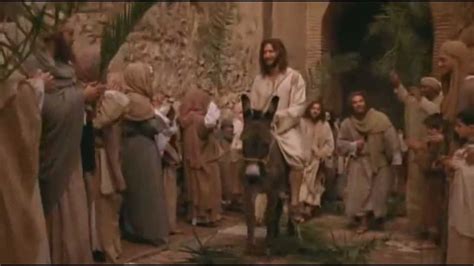
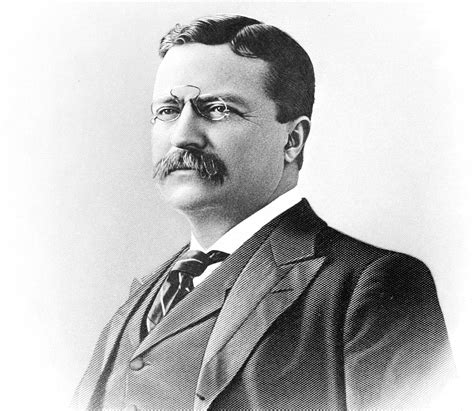
When Christ rode into Jerusalem the people put garments and palm leaves on the ground before Him.  They were not honoring the donkey, but the rider.  When people throw accolades at us, it is easy to be caught up in the adulation, but we must remember that their adoration is probably not for us, but for Him who sits on the throne of our life.  Remembering that can keep pride from enveloping us. Teddy Roosevelt, who had his struggles with arrogance, would ocassionally step outside on a clear night and locate the Spiral Galaxy in Andromeda in the lower left-hand corner of the Great Square of Pegasus.  The Spiral Galaxy is as large as our Milky Way, is just one of millions of galaxies. and consists of one hundred billion suns, all larger than our own.  After a few minutes Roosevelt would say that he felt small enough and would go back inside, his pride set aside for the time being.  The universe can quickly put all things into perspective.  It’s bigness belies any notion that we are much bigger than anyone else in comparison.

When we, in genuine and personal humility, esteem others as we ought, we will cease to look for ways to please ourselves and begin to look for ways to help others. Rather than using others to better ourselves, we will use ourselves to better others. Our concern becomes not how can we fulfill our own desires, but how can help others fulfill their needs. In Ephesians we read, “Be completely humble and gentle; be patient, bearing with one another in love.  (Ephesians 4:2)  The Apostle Paul also gave similar instruction to the church at Philippi.  “Do nothing out of selfish ambition or vain conceit. Rather, in humility value others above yourselves.”  (Philippians 2:3)  Paul was incredibly confident about his message, but he understood he was just an earthen vessel patched together by God.  Of  himself, he said, “I am the least of the apostles.” (1 Corinthians 15:9), “I am the very least of all the saints.” (Ephesians 3:8), and  “I am the foremost of sinners.” 1 ( Timothy 1:15)  On one hand,  Paul told the Corinthians they could model their lives after him and yet here he is confessing his lowliness.  Paul knew that anything great in him was because of God, so to take credit for it would be robbery from God.

How we plan our day, how we use our time, how we spend our money – are all barometers of true humility. We can find great joy and satisfaction in giving up our own pleasures for the sake of others. If Christ would not have been able to do that for us, no one would be saved.  M.R. DeHaan, a great Christian writer, said,  “Humility is something that we should constantly pray for, yet never thank God that we have.”   I heard of a pastor who wanted to do a sermon on humility, but was waiting for a bigger crowd.  I think he missed the point of his own sermon.

I told a story  a few years back at Camas’s Academic Awards night about hearing one of the seniors praying before a football game, asking God to make him humble.  “Unfortunately,” I said, “God thought he said make me fumble…and he did…four times…which, indeed, made him humble.” As soon as we think we have humility, we have lost it.  Pride has a way of bringing us back down to earth, so it is probably best to not elevate ourselves- it makes the trip back down a lot harder.

Assurance (Part 2)

This is part two of a devotion on Assurance.  If you have not done so, you should read Part 1 first…

So why do we doubt?

First of all, I think it is a misunderstanding of the gospel of salvation.

The Gospel is the Good News that Christ died for me and if I believe that I have eternal life.

There are about 40 things that happen at that moment in time when we believe on the Lord Jesus Christ,  none of which are visible on the outside.

These things are automatic.  But there are many things that can happen because of our new power and standing… but those are not automatic.  When things that may hopefully be a result of the gospel are made a part of salvation, that is when we begin to lack assurance.

Listen to these verses.  They are simply stated.

Acts 16:31 says, “believe in the Lord Jesus Christ, and you will be saved.”

Romans 10:13 says, “Everyone who calls upon the name of the Lord shall be saved.

John 3:36 says, “Whoever believes in the Son has eternal life, but whoever rejects the Son will not see life, for God’s wrath remains on him.

Romans 8:1- “there is no condemnation  for those who are in Christ Jesus.”

This is relationship.  This is justification.  This is instaneous.  It is fully realized.

There are other verses that are fellowship.  It is called sanctification.  They are progressive.  They will be realized in different degrees in different lives.

So feelings and experiences come and go, but the Word is forever.  Don’t rely on the world around you for your assurance, but the promise that is within you.

Romans 8:9 tells us, “You, however, are not in the flesh but in the spirit, if in fact the Spirit of God dwells in you.  Anyone who does not have the Spirit of Christ does not belong to Him.”

but if we do have the Spirit,  it tells us in Romans 8:16 that “The Spirit Himself bears witness with our spirit that we are children of God.”  That means saved to eternal life.

In 1 John the words “we know” are used 14 times.  John tends to stress what he is trying to get across in numerical ways.

In gospel of John he uses the verb Pis-te-oh or to believe 99 times.  That is why it is called the belief book.   

In John 1:12 says “to all who received Him, who believed in His name, he gave the power to become children of God.”  To conclude the book of John in chapter 20 and verses 30-31 John records, “And truly Jesus did many other signs in the presence of His disciples, which are not written in this book; but these are written that you may believe that Jesus is the Christ, the Son of God, and that believing you may have life in His name.”

So why do we doubt?  First of all, the fact is that that many do not understand the gospel, and add subjective things to it that cannot be quantified.

They try to use subjective means to evaluate an objective truth.

Believing on Christ is a yes or no proposition, but when we add other things to it, it brings up hundreds of different questions.

One of the salvation tests that people use comes from James- loving the brethren.  Now I have questions…. How much, what ways, how long, and at what point is it not enough and I lose my salvation or prove that I never had it.  Loving people is so subjective and God did not give us a formula to follow.   

So the first place to look for the lack of assurance is adding good works to the salvation mix.

The other night I awoke at about 4 in the morning thinking about this devotion.

I watch a lot of old western shows.  (you know the ones. when guys are shot it make a red blotch but doesn’t make a hole in the shirt) and I got this picture of a train waiting at the station.  It was called Salvation Station destination Heaven.

And the steam engine was called grace.  The cars behind the engine carried our works.  My Sunday school class was in there.  Dave Smith had a few jalopies he had fixed up for some poor families, John Miller had some homeless guys he had shared the gospel with, and John Oltman and Pete had a toolbox the size of a railroad car.

But what I noticed was that none of those cars contributed anything to the trip.  They had no engine, no power, some had lots of cars, some had few, some were loaded, some were almost empty.

The key was the engine.  Without it nothing left the station.  We are like that.  Without the Grace of God through our Lord Jesus Christ, all of our works are fruitless. We would look like those sad railroad yards with loaded or empty cars just sitting. Our works go to heaven for rewards, but they do not contribute in any way to the journey.  That is all in Christ.

Another reason we doubt is because of feelings.  We just don’t feel saved.  Maybe we saw someone’s conversion and they had emotion we never experienced.

They sob or scream or dance a jig or maybe do all three and we didn’t feel that way when we were saved.  Maybe ours was not real.  But even though it looks like those converts got a dose of old-time religion, it really doesn’t mean a thing.  As an old pastor once said, “You can’t tell by the honk of the horn how much gas is in the tank.”

Your conversion experience was your own; don’t measure it against any others. So, our feelings will fluctuate.  Our emotions are unreliable.“Doubt my feelings what they will… Jesus is my savior still.”  We are just as saved when we feel bad as when we feel good.  We not saved because we feel good, we feel good because we are saved.  Why do I know I am saved, because the Bible tells me so.

Another reason we doubt is because we don’t have an incredible testimony like some others.

Some people have a theatrical testimony.  A book or movie just waiting to happen.   They came from a life that we have never experienced.  Maybe we didn’t go from bad boy to good boy, we went from good boy to forgiven boy.  So maybe outwardly we haven’t changed that much.

Believe me, we were every bit as bad as that bad boy in God’s eyes.  We shouldn’t sell ourselves short.  We are professional sinners and the changes that took place in us were just as drastic as the ones that took place in the motorcycle gang leader that came to Christ in a lonely backwoods bar.

Finally, a big part of doubt is not remembering a certain place or time. My assurance does not rest on my ability to remember, it is based on God remembering me.  My memory of what happened does not affect what did happen.

A man goes into the doctor.  “There is something wrong with me.  I can’t remember anything.”  

“Sit down, let’s talk about it.”  

“Talk about what?”

DL Moody once said, “It is not necessary that we should be able to tell where or how we have been converted, but it is important that we should be able to say that we are converted.”

Old Scottish lady who was admonished by her minister for being too certain of her salvation.  She said,  “If I am not saved Christ has more to lose than me.”  Before the indignant preacher could voice his dismay she said, “All I have to lose is my salvation, but Christ will lose His integrity.” She is right, that would make God a liar.  And He cannot lie.

Hebrews 6:18  “So that by two unchangeable things, in which it is impossible for God to lie, we who have fled for refuge might have strong encouragement to hold fast to the hope set before us.”

Titus 1:2  “In the hope of eternal life, which God who never lies, promised before time began.

Romans 3:3-4 “What if some were unfaithful? Does their faithlessness nullify the faithfulness of God? By no means, Let God be true though everyone be a liar, as it is written, “That you may be justified in your words, and prevail when you are judged.”

John 14:6  “I am the way, the truth, and the life.  No one comes to Father but by me.

You know there is an old saying that says, “God said it, I believe it, and that settles it.”  But that is not true.  It should be “God said it and that settles it, whether I believe it or not.”

When Jesus went to the tomb of the late Lazarus,  Martha says to Jesus, “If you would have been here, my brother would not have died, but even now I know that God will give you whatever you wish.”  Jesus said Lazarus will rise again, but Martha thought he was talking about the final resurrection and said she knew that.

Jesus then said, “I am the resurrection and the life.  The one who believes in me will live, even though they die; and whosoever lives by believing in me will never die.”

Then He asked Martha the question that he asks all of us…. “Do you believe this?”

Martha said yes.  “I believe that you are the Messiah, the Son of God, who is come into this world.”

So can we believe Jesus when He says, “ I am the way the truth and the life no one comes to the father but by me, “ And then asks, “Do you believe this?” If we say yes, even though we die we will never die.  Be assured.

Assurance (Part 1)…

I have been fighting a hoarse throat for a few days, so it is a good thing that this is a written devotion.  I often wish that I had a better voice with which to share the gospel, but if I had better voice, I could share  the gospel better, but I could never share a better gospel.

There is no more important message than that of the gospel.  Every sermon that is given in our church is built on the foundation of the gospel.  If someone without Christ hears a sermon without the gospel, it becomes just  a good moral story or practical set of instructions.  There are a lot of self-help books out there, but what we really need are true-books and there is only one of those.

But as wonderful as the gospel message is to share and to hear it is even more important to understand.  As important as we all know salvation is, there are still many who are unsure they have truly received it.

I have talked to many who are uncertain about their salvation. Typically I hear some version of the following.  “Well, I hope so.  I think I am better than most.  God is a good God so I think he will take me.  I have done this and this and this, so I feel pretty good about it.”  And many of those thoughts came from people in the church.

Of course there are many that preach this lack of assurance from the pulpit, so of course there will be many confused people out there.

I spoke to someone this week who says the scariest verse in the Bible to them is Matthew 7:21-23 and it sometimes debilitates them.  I will paraphrase it-  “Not everyone who calls me Lord will enter the Kingdom of heaven and many will say they have done all kinds of thing in my name, but I will send them away because I did not know them.”

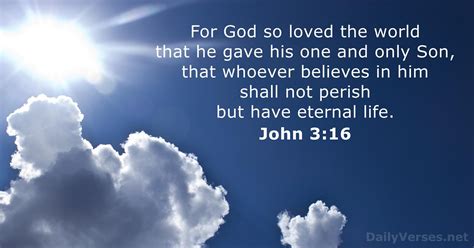
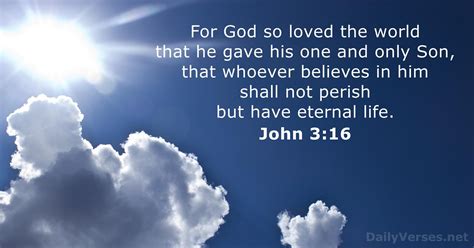
I told her that should not be a scary verse for several reasons, but the main one is John 3:16.  I quoted the verse one line at a time and asked her a question after each one.

“For God so loved the world  (are you part of the world?) yes…  

That He gave his one and only so (do you know who that is?) yes… Jesus  

That whosoever (is that anybody?) yes…

Believes in Him  (do you believe in Him) yes…  

Has eternal life (what kind of life?) Eternal. 

So what do you have?  Eternal life…  

Who needs to be afraid of the verses in Matthew 17.  

Only those who do not have???  Eternal life.  

Is that you.  No.

Don’t be scared…

Someone who can answer the way this woman did ought to be able to say, “Praise God! Glory to God! I know that I’m saved!”  Yet many Christians don’t know they’re saved. They go around with their shoulders all bent over—drooping, wondering, and worrying. They remind me of question marks with their heads bent over, rather than exclamation points standing straight and tall and saying, “I know whom I have believed!”

Rather than being shouting Christians, they’re doubting Christians. Rather than having a “know-so” salvation, they have a “hope-so” salvation. 

Somebody once said, if you could have it and not know it, you could lose it and not miss it. But the truth is, if you have salvation, you know it; and if you have it and know it, you can never lose it.

Please be aware of the powerful word “believe” and the part it plays in our salvation. It is a verb that can change lives and I don’t mean in a Tony Robbins way.

Now there may be some who read this who have had few doubts and others who have many.  Hopefully, what you read over the next couple of weeks can be an encouragement to you or maybe others who struggle with assurance.

If any of us has doubts, we are actually doubting one of two things.  We are not trusting Jesus for our salvation or we are not trusting that the Bible is true.

Some people believe it would be presumptuous to be certain of their salvation.  In fact, part of the reformation movement was backlash against the sin of presumption in the Catholic church.  

But I am not being presumptuous when I say I am certain I am going to heaven. I know I don’t deserve heaven and if I got what I deserve I would be in Hell.  But I am saying I believe what God has said and I am going to rely on it.

So we can bank on these things because God’s Word never changes. Isaiah in 40:8 tells us that “The grass withers, the flowers fade, but the Word of God stands forever.”  and in Matthew we are told that “Heaven and Earth will pass away, but my words shall never pass away.”

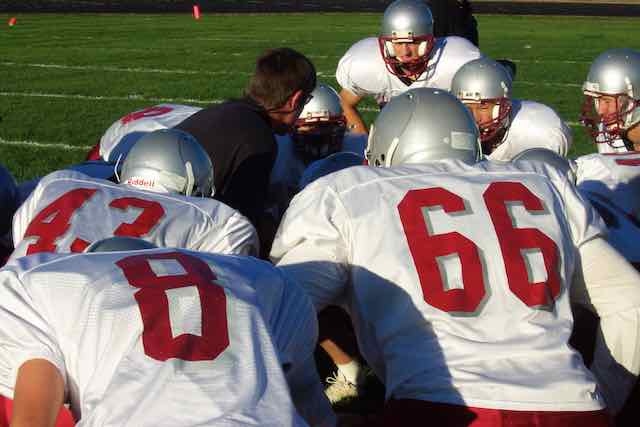
Why do we need to be assured?  Because our service is hampered by our lack of confidence. When I was coaching I told players to learn their assignments well, so well they would not have to think about it. I told them that not knowing made them hesitant. They couldn’t get the job done because they weren’t confident they could get the job done. In the same way, if we lack confidence in our salvation it is hard for us to serve the Lord.

During the building of the Golden Gate Bridge over San Francisco Bay, construction fell badly behind schedule because several workers had accidentally fallen from the scaffolding to their deaths. Engineers and administrators could find no solution to the costly delays. Finally, someone suggested a gigantic net be hung under the bridge to catch any who fell. Finally in spite of the enormous cost, the engineers opted for the net. After it was installed, progress was hardly interrupted. A worker or two fell into the net but all were saved. Ultimately, the time lost to fear was regained by replacing fear with faith in the net. God has given us a safety net to work over as we cross the bridge of life. Our confident understanding of Him allows us to serve unhindered by doubt.

So why do we doubt?

This is part one of a two-part devotion on Assurance…  Stay tuned for next weeks Part 2… Cliffhanger!

Shed the heavy burden of unforgiveness…

“Do not seek revenge or bear a grudge against anyone among your people, but love your neighbor as yourself. I am the Lord.”  (Leviticus 19:18)

Today I would like to talk about the difference between forgiveness and reconciliation. Many people look at these as one of the same, but they are not.  Because there is a misunderstanding of both terms, many see forgiveness as impossible because reconciliation is impossible.  Fortunately for us these actions are not dependent on each other, but are mutually independent.  Satan would like to join them together as two sides of the same coin and the result is often neither forgiveness nor reconciliation.  God’s Word gives us the proper perspective on these two very important aspects of the Christian life.

Holding grudges is not advantageous to anyone.  It is not something that ever leads to healing.  In fact, holding on to grudges leads to one of the most ill-advised attitudes in the Word- bitterness.  A famous comedian once said that he never carries a grudge because while he is carrying a grudge against someone, “they are out dancing.”  This is so true.  The weight of the grudge is carried mainly on the shoulders of one.  Often the grudge-holder is the only one who knows a grudge is being held.  At other times, the grudge-holder is the only one who cares that a grudge is being held.  More often than not, the grudge-holder loses more sleep, energy, and health than the one against whom the grudge is being held.  Yet, with all these thing in mind, we still hold grudges and still get bitter, to our own detriment.

No matter how much we nurse a grudge, it will never get better.  Nursing it makes it worse.  We have a multitude of excuses to keep it going but few reasons.  The Word instructs us to, “Put away all bitterness and wrath and anger and clamor and slander, along with all malice.” (Ephesians 4:31)  Why?  Because it is a useless endeavor.  James says,  “What causes quarrels and what causes fights among you? Is it not this, that your passions are at war within you? (James 4:1)  Our inside battles result in outside ones.  When we war within ourselves because we allow bitterness against others to grow, we cannot grow ourselves.  Bitterness is a weed that chokes out the good growth within us.

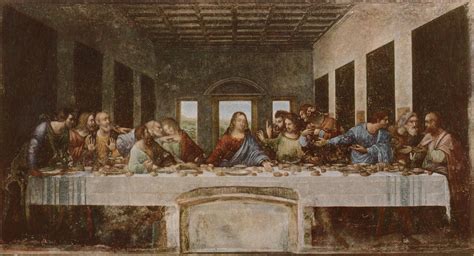
When Leonardo DaVinci painted the last supper he decided to get back at an enemy by making his face the one of Judas.  The last face he had to paint was Jesus, but he could not get it right.  After laboring for weeks, in desperation he went back and changed the face of Judas to someone he did not know.  It was only then he was able to paint the face of Jesus.  Our bitterness against others will keep us from seeing the face of Jesus.  Not surprisingly, while DaVinci labored over the painting, his enemy was totally oblivious to the battle DaVinci was having.  Who then was suffering?  So it is with our grudges. So it is with our bitterness.  DaVinci needed to heed the verses in Hebrews, “Strive for peace with everyone, and for the holiness without which no one will see the Lord. See to it that no one fails to obtain the grace of God; that no “root of bitterness” springs up and causes trouble, and by it many become defiled.” (Hebrews 12:14,15)  We should not let our hate of others keep us from experiencing the love of the Lord.

There is no doubt that bitterness and grudges are heavy loads to carry.  In days past, armies had to carry their cannonballs around with them just in case they came across an enemy.  It made the travel difficult and cumbersome.  However, they felt it necessary to have the cannonballs “just in case.”  The enemy, which was traveling much more light, was often oblivious to the load the other army was carrying.  One army was burdened and slow, the other was unencumbered and fast.  Often when the armies did meet, fatigue of carrying a load made combat difficult and the cannonball-wielding army would lose. So it is with us.  The fatigue of carrying grudges just so we can be on the offensive if the opportunity might arise makes us so weak that we have little strength for anything else.  The other person, often not even knowing we are carrying a grudge, has been traveling through life lightly and is strong while we are frail- eaten away by our own bitterness.

So does forgiveness mean the same thing as reconciliation.  To forgive must we reconcile?  I don’t think those two things are the same things.  “Do not take revenge, my dear friends, but leave room for God’s wrath, for it is written: ‘It is mine to avenge; I will repay,’ says the Lord.” (Romans 12:19)  What God is addressing here is what we are responsible for and what God is responsible for.  We are not God and we cannot be the judge and jury in His stead.  Forgiveness takes only our partnership with God, reconciliation must include another willing party.  That is important to understand.  Just because we have not reconciled with someone does not mean we have not forgiven. But be aware.  Forgiveness as God expresses it, is something deep, something real.  We cannot just say we forgive, we must really forgive. If we cannot be reconciled to another, we must be sure that our forgiveness is complete.  If not, we might think the lack of reconciliation is the other person’s fault when it is really our own attitude standing in the way!

It is important to note that forgiveness of an act is not necessarily acceptance of that act. If we forgive someone for what he or she has done, we are not condoning the behavior.  Forgiveness is for us.  It lifts from us a burden that would otherwise weigh us down.  The other person might not ever care if we do not forgive. They may see their act as justified, no matter how wrong it is.  We cannot change other’s attitudes or actions if they do not want to change.  What forgiveness does is takes away another’s control over us.  It eliminates the knot in our stomach or ache in our head every time we cross their path.  Forgiveness does not necessarily put us in right relationship with the other person, but with God.  By having a right relationship with God, we now have power to put bitterness where it should be- not just buried, but destroyed.

Often times we hold our grudges because we think it is our responsibility to see justice done or at the least, let others know what they have done wrong or at least how much they have hurt us.  But that is a burden we cannot take upon ourselves.  Our chances, as the offended, of causing remorse in the offender, is pretty slim.  More often than not God will have to bring a third party or circumstance into the other person’s life to make any changes.  Our ability to change others is pretty limited and to change others who have offended us is even more difficult.  Usually the only thing we will achieve, will be changing ourselves into unhealthy, bitter, people.

Forgiveness is the condition of our hearts.  Reconciliation is the condition of a relationship.  Our heart condition involves us alone.  Reconciliation involves at least two people.  Any effort that involves more than one person takes some level of cooperation.  Reconciliation takes a right heart from all parties.  Forgiveness frees our hearts, but does not guarantee the heart condition of another.  True reconciliation necessitates a trustworthiness of everyone involved or it will eventually come apart.

When Elizabeth Barrett Browning married Robert Browning her tyrannical father disowned her.  For years Elizabeth never gave up on the relationship and every week wrote letters to her parents.  She never received a reply.  After ten years she received a box with every one of her letters, unopened.  Today those letters are some of the most beautiful writings in English literature.  Had her parents read them maybe their relationship could have been healed.  But the truth is, not even the most beautiful words in English literature can reconcile a heart that is hardened.  Elizabeth Browning had forgiven her father because forgiveness was up to her.  Elizabeth Browning was not reconciled with her father because reconciliation was up to both of them.

So there is a difference between reconciliation and forgiveness. On the cross, Jesus provided for the forgiveness of everyone. But not everyone will be reconciled with Him.  Forgiveness is extended because of who Jesus is, and if reconciliation with Him does not take place, it is because of who we are.   Some of us reject reconciliation with the risen Christ, even though He has done His part.  Christ did not wait for our move for reconciliation before he forgave us.  In the same way, we should not withhold forgiveness waiting for someone to seek reconciliation with us.

The writer of Hebrews tells us, “See to it that no one fails to obtain the grace of God; that no “root of bitterness” springs up and causes trouble, and by it many become defiled.” (Hebrews 12:15)  Instead of sowing bitterness, we should prepare the ground with forgiveness in the hope that someday reconciliation will grow.  We are told to forgive, “Bearing with one another and, if one has a complaint against another, forgiving each other; as the Lord has forgiven you, so you also must forgive,” (Colossians 3:13) so that reconciliation might be possible,  “All this is from God, who through Christ reconciled us to himself and gave us the ministry of reconciliation.” (2 Corinthians 5:18)  Forgiveness on our part might take place without reconciliation, but reconciliation cannot take place without forgiveness.  Take off the heavy pack of unforgiveness and see how much easier it is to travel without it.

Worrisome? Worry less…

“Rejoice in the Lord always; again I will say, Rejoice. Let your reasonableness be known to everyone. The Lord is at hand; do not be anxious about anything, but in everything by prayer and supplication with thanksgiving let your requests be made known to God. And the peace  of God, which surpasses all understanding, will guard your hearts and your minds in Christ Jesus.”  Philippians 4:4-7

Our verses for today are familiar ones, but like many verses, need to be revisited quite often because worry often gives small things a big shadow and that big shadow can blot out today’s sunshine.  Worry is faith in reverse.  Instead of freeing us, it imprisons us, and most often about things that might not even be real.

There was a woman who constantly worried about burglars and never got a night’s sleep anticipating a nightly break-in.  Finally, after her husband had gone downstairs night after night to investigate normal sounds and invisible burglars, he actually came upon a man who had sneaked his way into the house.  “Well, hello there,” the husband exclaimed, “I am pleased to meet you.  Would you mind coming upstairs to meet my wife.  She has been waiting ten years to meet you.”  That is often what worry is all about.  Anticipating what may not happen at the expense at what does.

Worry often extracts interest on trouble before it comes due.  Like someone wise once said, “I’ve had a lot of trouble, most of which never happened!”  God calls us to turn over our cares to Him, but that is easier read than done.  God knows that we will still worry because we are fretters by nature.  Our sin nature has bred worry into us because faith is intentional while anxiety is natural.   Worry is a useless pursuit because it never gets us closer to a goal and on the contrary it slows our progress.

When I used to coach I told the players to learn their assignments so well that they did not have to worry about what they were going to do (that would just slow them down),  and consequently, they could just go out and do.  That is what we should strive to do- turn our worries over to God so that we can just do. David tells us, “When my anxious thoughts multiply within me, Your consolations delight my soul.” (Ps 94:19) If we don’t nip our worries in the bud, they will flourish into a weedy garden that will take all our time to work. We will spend more time on worry than worship and more time being anxious than active.

In these verses, God gives us several commands:  Always rejoice.  Be reasonable.  Never worry.  Come to God with your requests about everything.  These are not empty words like we so often hear from friends in times of need.  “Hang in there,” and “Tomorrow will be a better day,” and “Just put it out of your mind,” are all well-intentioned, but powerless statements.  They give the end without the means.  It is almost like giving someone the infamous Bermuda Triangle of directions, “You can’t miss it.”

How to “hang in there” is just as important as how to “get there.”  The how-to-dos are more important than the what-to-dos.

So God tells us how to negate the worries that assail us.  If we pray, if we rejoice, if we turn our requests over to Him, and if we are thankful, it will be hard to remain anxious.  Somewhere in that process, the worry will begin to melt.  Most of what we worry about is not worth the time investment anyway.

There was a man who decided to make a Worry Wednesday.  He would set aside his worries until Wednesday and worry about them then.  The funny thing was that by the time Wednesday rolled around, most of the worries he had were not worries any longer.

One thing we can do to cut back on worry is to be prepared.  When I give a speech, I don’t worry if I have truly taken the time to prepare (only the people I am speaking to are worried).  It is the same for us in life.  Paul says, “Be watchful, stand firm in the faith, act like men, be strong.”  (1 Corinthians 16:13) If we are in the Word, think upon God, and surround ourselves with godly influences, we will be prepared to handle what others might just worry about.  With preparation we will set aside much of what the world worries about.

We need to eliminate those things that will never happen.  There is an old Scottish saying “What may be, may not be.”  We have a tendency to worry about what might be even though it will, under all measurements, probably never be.  When ebola hit the US, some people spent so much time worrying about the disease, that it probably took more time off their lives than ebola ever could.  The Covid Crisis a few years past presented the same challenge to thousands who might have been “worrying themselves to death.”  That kind of worry is like being afraid to eat food because it might have chemicals in it and then starving to death.  It is said that 40% of what we worry about has no real chance of ever touching us.  Let’s eliminate those first.  We never want to worry too much about things over which we have no control at the expense of things we can control.

The next worry we should get rid of is things that have already past. In coaching I always said that the only important play is the next one.  If we allow the failure on the past play to affect our performance on the next we have given it more power than it deserves.  Here is the scenerio: a pitcher makes a good pitch and we swing, miss, and look silly in the process.  If we don’t shake that off and instead let that pitch affect our next swing, we have given the pitcher credit for what she has not earned.  The previous one pitch controlled us twice.  That should never be.  If we spend time in our daily lives worrying about the past, it will affect our present. We should not give more power to what is gone than what is yet to come.  I am retired now and it seems I am paying taxes on the same money I have already paid taxes on a couple of times before.  When it comes to worry, we should not spend energy on worries that we have already paid on before.

Finally, eliminate those worries about untrue criticism that comes from others.  If it is true criticism, listen to it, make changes, no worries.  If it untrue, ignore it, no worries. Not everything that people bring to our attention is worth keeping there. Some of the things that people criticize us for cannot be changed anyway.  If I worry about people who don’t like how short I am, that is a waste of time.  My last growth spurt was fifty years ago.  I am not holding my breath.  Some criticism is that foolish.

So, once we have eliminated those things that won’t happen, have already happened, or don’t matter if they happen, what do we do with the approximately 8% that is left.  Those are the legitimate worries that we need to take to God as He has instructed and the peace of God which surpasses all understanding will become ours.

Admittedly, it is easier to complain than rejoice, be bitter rather than thankful, and panic than pray, but those are useless endeavors.  In Africa there are people who rely on witch doctors rather than real doctors and we think that is foolish.  But we are doing the same thing if we think complaining, bitterness, and panic are more effective than rejoicing, thankfulness, and prayer.  I had a friend once that complained about always having peanut butter sandwiches for lunch.  I told him that he should have his wife fix something different, but he told me he fixes his own lunches.  Doesn’t make sense to complain about that which we have control over any more than if makes sense to worry about things we shouldn’t.

It is so wonderful that the promises in our verses today are being delivered by a great God.  God welcomes us to bring our worries to Him.  I think it is our responsibility, however, to run them through a strainer first.  We can take every single worry to Him, but some should not be worries in the first place.  Our vice principal was talking to me years ago about how some teachers send him students for not bringing a pencil to class or doodling during a lecture.  Those are not heavy-duty discipline issues.  Those should be handled by the teacher.  Well, God expects us to look at our worries with discernment and take care of some of those before we send them to the office.

A while back I gave a lecture on router use in my shop class.  I said if the machine misbehaves, the first thing they need to do is turn it off.  A student ask me, “Shouldn’t we ask you first?” and I told him that I would just tell him to turn it off, so he can eliminate the middleman and do what I would tell him to do anyway.  If I am worried about my weight, God will probably tell me to exercise and eat right.  I can go right to those things without worry.  If I am worried about the way people see me, maybe I should treat people the way God’s Word instructs.  That might take care of a lot of worry.

Christian author John Blanchard has said it well, “So he supplies perfectly measured grace to meet the needs of the godly. For daily needs there is daily grace; for sudden needs, sudden grace; for overwhelming need, overwhelming grace. God’s grace has given wonderfully, but not wastefully; freely but not foolishly; bountifully but not blindly.”

God said it even better, “Peace I leave with you; my peace I give to you. Not as the world gives do I give to you.  Let not your hearts be troubled, neither let them be afraid.”    (John 14:27)

« Older posts Newer posts »

© 2026 HE HAS OUR BACKS

Theme by Anders NorenUp ↑