HE HAS OUR BACKS

"God is our refuge and strength, a very present help in times of trouble." Psalm 46:1

Page 27 of 37

Prayer is not a one-time thing…

“Devote yourselves to prayer, being watchful and thankful” (Colossians 4:2)

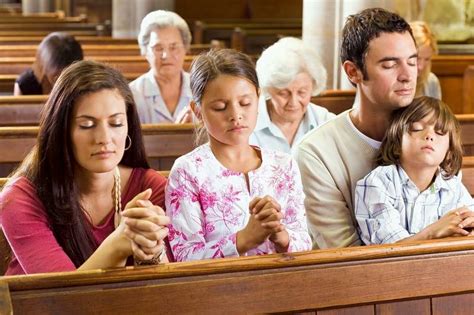
Every year we have the National Day of Prayer. I am glad we have a National Day of Prayer because it makes a statement about our country’s roots. It shows that there is at least enough support left in our country to still have some special “spiritual” days on our federal calendar. I may be in the minority on this as a Christian, but I often wonder if “special days” like this are more symbolic than effective. For example, let’s say for a moment that we have a national day of healthy eating. One day a year the country is bound together by brussel sprouts, salad bars, and tall glasses of ice cold water. It might be a nice statement we are making about good eating habits, but it will do very little for our bodies after that single celebration. If the next day reverts back to pizza and the bottomless french-fry plate, I am not sure we will see anyone from the cover of a Harlequin romance staring back at us from the mirror.

The Colossians verse above does not have an attachment that says “one day a year” preceding the verse. Devoting ourselves to something means to show love, loyalty, or enthusiasm. Devotion seems to indicate an “all the time” activity and not just a “part of the time” activitity. If we only show love for our family members on their birthdays and the rest of the year ignore them, I am not sure they will be that appreciative. It is somewhat like the woman who said to her husband on Sunday morning, “Why don’t we do something different for once. You treat me nice on the way to church, and yell at me once we get there.”

I bet there are a lot people out there who would like to work on Labor Day and take the rest of the year off, but that would be a tough way to make a living. Consequently, I think God would trade our prayerfulness on the National Day of Prayer, for our prayers on the other 364 days of the year.  A “National Day of Prayer” should not be the “Only Day of Prayer” for believers. It is nice to come together on a special day of prayer emphasis, but it will never substitute for a year-long habit of prayer.

I believe it is wonderful to set aside a specific time each day to meet with God. But let’s say that, for whatever reason, it is difficult to find an extended time period to sneak off all alone to read, intercede, or talk to God. First of all, it should not be like brushing our teeth for the full two minutes daily (a tedious venture that often seems like 20 minutes). I will admit, sometimes I stop my toothbrush before the time is up because it just seems to be eating into valuable time. But what would it be like to only brush our teeth once a year because it seems tedious at times.  Prayer should not feel like that kind of task every day, but unfortunately, it can often feel that way.

One of the neatest prayers I ever heard uttered was at a banquet for the Fellowship of Christian Athletes. Bobby Richardson, former New York Yankee second baseman, offered a prayer that is beautiful in its brevity and poignancy: “Dear God, Your will, nothing more, nothing less, nothing else. Amen.” That didn’t take long, but it said it all. It recognized who God is, what He can do, and submits our requests to His will. I think we sometimes think that if we can’t sit down for an hour of prayer, we can’t sit down at all.

The other day I mowed all the lawn at our house.  It went well, but sometimes I don’t start the lawn at all if I can’t get the whole thing finished at one time. That is pretty silly. It is not like a haircut and if the barber stops in the middle it will cause a stir when we leave. But yet, we sometimes think prayer is like that. If we think about starting but can only pray for ten minutes when we have enough prayers for an hour, we decide we shouldn’t start at all. Not starting at all is not the solution. We need to start because nothing is ever done without starting.

We need to prioritize our prayer list just like anything else in our lives. There are certain things we should pray about daily and other things maybe weekly. There are several hundred countries that need prayer everyday, but Operation World and God do not expect us to pray for them all every day. We pick out a couple of countries and bring them before God each day and God listens to our hearts. All prayer is like that. In our own friendship and family circles, we have hundreds of prayers. We need to pray for unbelievers belief and believers strength. We cannot fit them all in daily.

If we have something come to mind while we are praying we can bring it before God. During my prayer time last week I had someone come to my thoughts who hadn’t crossed my mind in months. I prayed for him. Then at our elder’s meeting, his name and situation came up and we were asked to put him in our prayers. I guess God just gave me a heads up a little early. If we need to pray about something, I think it will pass our way and then we need then to act on it.

God has told us ‘If you will call on me and come and pray to me, and I will listen to you.” (Jeremiah 29:12) That is a wonderful promise. We may not be like Praying Hyde who wore the knees out on his pants monthly because he would pray hours a day, every day, but we can give God the respect He deserves by coming before Him often. It takes me 23 minutes to drive out to Camas every day. That does not change unless there is a slow, lumbering truck- behind me honking his horn, and then I speed up. That is 23 minutes I can go to God (I never close my eyes). In that time I can intercede for many. I can always remember my close family and friends and if there are critical prayer needs I can jot them on a paper and clip them to my visor (it is not dangerous, a glance at the paper  takes the same amount of time as glancing at my speedometer- which I do all the time especially when I am approaching 50 mph).  What more important things can we think of on our way to work than prayer? There are none.

I will continue this posting next week, but my thought is this. God would rather we give Him time every day, rather than one day a year. Throughout the day we will get reminders if we open our hearts to it. When I was young everyone around me would remind me to pray. My mom would say, “You better pray that stain comes out,” or at school my friends would say, “You better pray your dad doesn’t find out,” and even my principle would say, “You better pray I won’t decide to tell you parents about this.” Everyone was encouraging me to have a strong prayer life! The truth of the matter is this, we have much to bring before God and we
need to do that wherever and whenever we can.

Psalm 81:10 says, “Open your mouth wide and I will fill it!”  If some of us brushed as little as we pray, it wouldn’t be God saying these words in Psalms, it would be our dentist! Prayer is not a yearly thing; it is a daily thing. Let us pray, every day.

Patience is a Virtue…

Psalm 37:7 “Be still before the Lord and wait patiently for him; fret not yourself over the one who prospers in his way, over the man who carries out evil devices.”

We have all heard the saying, “Give me patience, Lord, and please hurry.” Waiting without worrying is a difficult task for most of us. We tap our feet waiting for God to work and though we ask that His will be done, we also would like His will to be in our time frame. But God has surrounded us with a world that can’t be rushed, as an example of how we should live. Trees grow at their pace, the tides are predictable almost to the minute, the sun rises with the accuracy of a timepiece, and nothing we can do will radically change the processes of nature. God seems to be the great scheduler and the world around us is a constant reminder of that.

In Ecclesiastes 3 we read that “For everything there is an appointed time, and an appropriate time for every activity on earth: A time to be born, and a time to die; a time to plant, and a time to uproot what was planted; A time to kill, and a time to heal; a time to break down, and a time to build up; A time to weep, and a time to laugh; a time to mourn, and a time to dance. A time to throw away stones, and a time to gather stones; a time to embrace, and a time to refrain from embracing; A time to search, and a time to give something up as lost; a time to keep, and a time to throw away; A time to rip, and a time to sew; a time to keep silent, and a time to speak. A time to love, and a time to hate; a time for war, and a time for peace. (Ecclesiastes 3:1-8) God is the great timekeeper. He knows the best times. He has built a world that demands our patience. The farmer should not force the fields, anymore than we should force God to work in our lives before the time is right.

There was once a little girl who tried to help a butterfly out by opening up its cocoon. When the butterfly died, the girl’s father explained that the butterfly actually needed the struggle of leaving the cocoon to prepare it for its life journey ahead. The butterfly died because of the girl’s good intentions. It was not yet strong enough to leave its “womb,” and had been forced into the world too soon. We sometimes wish that God would jump in and give us what we want as soon as we want it. Sadly, that would often leave us unprepared to take on what lies ahead.

I sometimes have students who don’t want to wait long enough to put a second coat of varnish on their projects. They will put the second coat on before the first coat has completely dried. It causes all kinds of problems. Their impatience leads to long sanding sessions and two or three extra coats of varnish. In an attempt to finish things quickly, they actually add two or more days to the project. Of course, they usually only do that once!

We often do the same thing with our lives. We desire the end product before it is ready. My mom used to keep a toothpick with her when she baked. She would open up the stove and stick that toothpick in to check the progress of the cake. She understood the need to wait. If it would have been me, I probably would have been pulling the cake out when it could still be poured! I wanted that cake sooner than it was ready. God keeps a toothpick handy and we don’t. He waits until things are ready, but we won’t.

An old friend of ours, Mildred Bilderback, had a cute saying that she pulled out once in awhile when someone showed impatience. “If we try to fix a fix that God has fixed to fix us, He will have to fix another fix to fix us.” This little tongue-twister has a good message. God knows what lies ahead and wants us to be prepared for it. If we try to shortcut around His path, we will eventually have to get back on His path again and all we will have done is taken the long way around.

Lack of patience can keep us from doing God’s work. Some of the greatest missionaries of history devotedly spread the seed of God’s Word and yet had to wait long periods before seeing the fruit of their efforts. William Carey, for example, labored 7 years before the first Hindu convert was brought to Christ in Burma, and Adoniram Judson toiled 7 years before his faithful preaching was rewarded. In western Africa, it was 14 years before one convert was received into the Christian church. In New Zealand, it took 9 years; and in Tahiti, it was 16 years before the first harvest of souls began. Had these missionaries given up because of impatience, the thousands who eventually came to know Jesus through their ministries may have never become a part of the Body of Christ.

I once heard a story of a mother who was shopping with a crying, demanding three-year-old in the cart. The mother would say, “There are only three more rows, Ellen, and we will be leaving.” The child would demand something else in a loud voice and the mother would softly say, “Only a few more things, Ellen, and we will be checking out.” The girl continued her crying in the checkout line, and the mother said quietly, “We will be in the parking lot in just a minute, Ellen.”

A man happened to hear the whole thing and saw the mother in the parking lot while he was leaving. “I couldn’t help noticing how patient you were with little Ellen in the store,” he said, smiling at the mother.

“Oh, my daughter’s name is Tammy. My name is Ellen.”

Sometimes we need to patiently remind ourselves that the world does not always move at our desired pace. We are told in Thessalonians to “… admonish the idle, encourage the fainthearted, help the weak, be patient with them all.” (1Thessalonians 5:14) God asks us to be patient with people and patient with situations and especially patient with His work in our lives. We can do that if we truly believe that He loves us, He is in control, and He desires the best for us. We live in a world of turmoil around us, it is important that we live lives that have peace within us. We cannot change the world; we can only change ourselves. That power cannot come from us; it can only come from God.

I was sitting at a red light the other day and in front of me was a huge sixteen wheeler and another car. The light turned green, but the truck did not move. The car in front of me started honking (as you know, the only thing faster than the rapture is the honk of the car behind you when the light turns green), and after a few seconds a motorized wheelchair came creeping out from in front of the truck. It was barely moving and apparently did not have time to get across before the light turned. I had to think how foolish the man in front of me felt when the wheelchair finally pulled onto the sidewalk and we started moving. How much are we like that man, though. God can see something that we can’t see and here we are honking our horns of impatience.

“For whatever things were written before were written for our learning, that we through the patience and comfort of the Scriptures might have hope. Now may the God of patience and comfort grant you to be like-minded toward one another, according to Christ Jesus.” (Romans 15:4-5) May the comfort of the Word and the presence of God give us patience today. Like my mom used to say, “You need to trust my toothpick more than your eyes.” Remember God is carrying the toothpick and we will surely reap the rewards- in due time.

Remember the King

“And Joseph knew his brethren, but they knew not him.” Genesis 42:8

“In whom the god of this world hath blinded the minds of them which believe not, lest the light of the glorious gospel of Christ, who is the image of God, should shine unto them.” 2 Corinthians 4:4

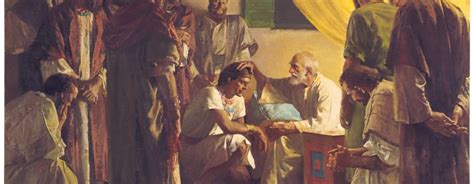
One of my favorite men from the Bible is Joseph. His years with his brothers, their rejection of him, his ascent to the throne, and his eventual forgiveness of his brothers is a wonderful story that closely parallels Christ’s time on the earth. When Joseph became ruler over Egypt, his name was changed, and his identity and appearance was so altered that when his ten brothers arrived in Egypt they had no idea that the prime minister sitting before them was the same brother that they had abandoned in the desert years earlier.

Joseph’s rejection and forgiving heart to those who hurt him would be revisited again centuries later in the person of Christ. Like Joseph the rejection of Jesus resulted in His becoming a savior to a world in need. Joseph met the physical needs of a dying world and Christ met the spiritual needs of a dying world. Christ was so different from the king that the people expected that he became virtually unrecognizable to His own people. Just like Joseph’s brothers who stood before Joseph without recognizing him, Christ stood before his “family” and they knew him not.

In 2007 journalist Gene Weingarten wrote a story that won him a Pulitzer Prize.  On January 12 of that year he went to the L’Enfant Plaza Metro station and chronicled what he saw there.  A man sat at a metro station in Washington DC and started to play the violin and played six Bach pieces for about 45 minutes. During that time, since it was rush hour, it was calculated that 1,100 people went through the station, most of them on their way to work.

Few slowed as they passed by and fewer tossed in a tip as they walked by.  In fact, children were the only ones who tried to stop and listen, but they were all summarily dragged away by their parents who were hurrying off to their destinations.  In the 45 minutes the musician played, only 6 people stopped and stayed for a while. About 20 gave him money, but continued to walk their normal pace. He collected $32. When he finished playing and silence took over, no one noticed it. No one applauded, nor was there any recognition.

No one knew this, but the violinist was Joshua Bell, one of the most talented musicians in the world. He had just played one of the most intricate pieces ever written, on a violin worth $3.5 million dollars. Two days before his playing in the subway, Joshua Bell had played to a sold out crowd in Boston where the seats averaged $100 each. Weingarten reported that the violinist himself, usually accustomed to the highest of praise and applause for his efforts, admitted that this little social experiment, to which he readily agreed, was not all together comfortable for him.

This is an example of how easy it is to overlook greatness when it appears in an unexpected place. Jesus was born in an indescript village, in an inglorious way, to seemingly unqualified parents. Who would look for greatness in such a situation. Joseph, the outcast brother, was sitting on a throne, overseeing a kingdom, saving a nation.  These stories were not too dissimilar to the story of Joshua Bell that was not recognized as a maestro because his setting was unusual. Hundreds were blind to his greatness because their daily activities overshadowed what he had to offer.

Many pass by Jesus without recognizing what he has to offer because they are hurrying through their lives, caught up in the hecticness of it all.  It is not much different that the prophecies that spoke of his coming reception by the prophet Isaiah.  “Who has believed our message and to whom has the arm of the Lord been revealed? He grew up before him like a tender shoot, and like a root out of dry ground. He had no beauty or majesty to attract us to him, nothing in his appearance that we should desire him. He was despised and rejected by men, a man of sorrows, and familiar with suffering. Like one from whom men hide their faces he was despised, and we esteemed him not.” (Isaiah 53:1-3).

Today we are surrounded by those who do not recognize Jesus. Jesus, like Joseph, has the keys to the future. Joseph would provide bread to his brothers during a famine and Christ can be the bread of life to those who are in spiritual famine. Jesus, like Joseph, sits ready to forgive, to extend mercy and accept those who have previously rejected Him. Jesus and Joseph both desired mercy over justice, both were willing to give the good things that are not deserved to those who do not deserve them. Both Jesus and Joseph found themselves in a position to turn their backs on those who had hurt them, but instead both reached out to meet the needs of their “enemies.”

On November 30, 1991 fierce winds from a freakish dust storm triggered a massive freeway pileup along Interstate 5 near Coalinga, California. At least 14 people died and dozens more were injured as topsoil whipped by 50 mile-per-hour winds reduced visibility to zero. The afternoon disaster left a three-mile trail of twisted and burning vehicles, some stacked on top of one another 100 yards off the side of the freeway. Unable to see their way, dozens of motorists drove blindly ahead into disaster.  Like these drivers we have people around us who do not know where to turn.  They cannot slow, speed-up or turn without meeting disaster.  But there is one refuge, and that is in Christ.  He is the safe place if we can just look to Him.

We are surrounded by so many who need to know the Christ who sits on the right hand of God mediating for those who love Him. Let us point a blind world to the Light of the world.  Let us live lives as people of sight, so that we can lead others to Him. Let us do all we can to reveal Jesus to the entire world. Let us stop to hear the music of the maestro who orchestrates life, so others will stop as well.  Every time Jesus is truly revealed, another one of “Joseph’s brothers” can weep with joy, gratitude and amazement, that the humble Suffering Servant who they rejected has forgiven them and is now their great and glorious King!

Our Lives Should Point to Christ (part 2)

“Do not be conformed to this world, but be transformed by the renewal of your mind, that by testing you may discern what is the will of God, what is good and acceptable and perfect.” (Romans 12:2).

(This devotion is continued from last week’s, so you may want to read it first if you have not.)

There is a saying that states, “Be not angry that you cannot make others as you wish them to be, since you cannot make yourself as you wish to be.” There is a positive selfishness that needs to take place in our relationship with Christ. In all cases but one we should put others first. However, in our Christian walk we should not be examining the walk of others before our own. It was once said that a sermon is the “wise words of God for the fellow sitting next to me.” Before we make complaints about those around us who do not live a godly life, we should look within ourselves to see if we are living the lives we should be living.

I sympathize with Roger from our “unconversion” story of last week. He is right to say there are many people who profess Christ but do not illustrate Christ. However, he is wrong when he says that there are no people who illustrate Christ in their lives. The Christ transformation should not be just barely noticeable, but striking. Do the adjectives godly, loving, kind, and generous jump the forefront of people’s minds when they try to describe us? Do the words “very spiritual” find their way into the conversation on our behalf? They probably should… we are in league with the Creator of the universe. He desires a personal relationship with us.  There is no other relationship like it. We should live lives that reflect that incredible uniqueness.

In 1987 George Gallup, famous pollster, found the following: “There’s little difference in ethical behavior between the churched and the unchurched. There’s as much pilferage and dishonesty among the churched as the unchurched. And I’m afraid that applies pretty much across the board: religion, per se, is not really life changing. People cite it as important, for instance, in overcoming depression–but it doesn’t have primacy in determining behavior.”

This sad conclusion is probably even worse now. In essence, what Gallup’s findings show is that the churched are as unethical as unchurched, but seem to feel less stressed about it. It is not only our feelings that should change when we are indwelled by Christ, but also our behavior. After all, it is our behavior that others see, not our feelings.

There was once a man who went into therapy because he would just walk up to people and hit them for no reason and feel terrible about it. After a few weeks with the therapist someone ask the man if the treatment was working and he enthusiastically replied yes.

“Oh, so you don’t hit people anymore?”

“Oh, no, the man replied. I still hit them, but I don’t feel bad about it anymore.

Unfortunately, that may be the attitude of many Christians. They continue their bad behavior but through the therapy of the church they accept it more. Church therapy gives them a change that is not realized in their behavior. That kind of artificial change in behavior was why Roger did not see enough differences in Christians and the world to keep him in the faith.

Of course, the differences Roger should have really looked for should have been inside himself, not others. Unfortunately, the truth of the matter is that people’s views of other Christians will influence the views they have of Christ. Our verse in Romans gives instruction on how our lives can and should change after we are filled with the Holy Spirit. Conforming means to take on the appearance of another and transforming is an inside change that is not dependent on surroundings.Only when indwelled with the Holy Spirit can we discern “the good, acceptable, perfect will of God.” That is how transformation takes place. If we accept Christ but live our lives separate from Him, we will not look like Him and Roger’s criticisms of the Christian faith will seem valid. Anyone can be conformed to this world, but only a Christian can be truly transformed.

I have witnessed transformed lives and have read hundreds of stories of those who have testimonies of God’s life-changing powers in their lives. On the flip side, I have also heard horror stories of people who purport to have Christ and live like the devil. How can it be that in some parts of this world there are Christians on their knees receiving the sword because they will not deny Jesus, and in other parts of the world there are Christians who avoid any behavior associated with Him. The Apostle Paul tell us in 2 Corinthians 5:17 “Therefore if any man be in Christ, he is a new creature: old things are passed away; behold, all things are become new.” Why should we live like an old dying creature when we have become a new living one? Let us live lives that will not hinder the spread of the gospel.

I grew up in the sixties when being a radical was an honorable pursuit to many. That kind of radicalism had ends that were very debatable, but we could use some radicals today. We need those who will radically display the transformation that Christ can make in people’s lives. Raymond Williams, who was a writer-thinker and certainly not spiritual once said, “To be truly radical is to make hope possible rather than despair convincing.” Without him realizing it, he spoke to the Christian experience.

We live in a world that is permeated with despair. Christ gives hope and our portrayal of that hope is instrumental in its spread. Today as we go through our day, we might ask ourselves, “Do my actions coincide with my position? Do people want what I have or do they see me and continue their search somewhere else?” No one will confuse the butterfly with the caterpillar from which it came. No one should confuse our new life with the old one from which we came. John said it best, “whoever says he abides in him ought to walk in the same way in which he walked.” (1 John 2:6) Let’s watch our walk today.

Our lives should point toward Christ…

“Do not be conformed to this world, but be transformed by the renewal of your mind, that by testing you may discern what is the will of God, what is good and acceptable and perfect.” (Romans 12:2)

Recently I listened to an “unconversion” story. A man, whose name is Roger, accepted (or felt he did) Christ when he was 16, married a woman who was a Christian (or felt she was) when in their 20’s, got involved in the church, went through some marital problems, rejected their faith, and became atheists. It was a sad story, but one I am sure happens with some frequency and for the same reasons that Roger mentioned as he told his story.

I would say that it boiled down to two main reasons for him. The main reason was that he had never met anyone who seemed to live as though he or she had a personal relationship with the Creator of the universe. Secondly, he just could not reconcile the idea of a loving God and the violence that exists in the world and in the Bible. Both are common objections, but today I would like to share some thoughts on the first. The second will come up unexpectedly in a future devotion, I am sure.

The Apostle Paul left us the admonition in Romans 12:2 and it leaves little doubt that our lives should change once we are filled with the Holy Spirit. In Roger’s “unconversion” story  said that he had never met a “transformed” Christian.  He believed that there were good Christians and bad Christians, good atheists and bad atheists, and a whole bunch of good and bad people in between. He said he had never seen a Christian who lived like he or she had a personal relationship with the great God of the Bible. He had never seen “miracles” that could not be naturally explained or seen lives that were radically different because of a spiritual relationship with Christ. Even though he had spent almost 30 years in the church, he had always had his doubts and finally gave up on ever finding convincing evidence that Christianity had any advantages over any other life choice.

It was sad to listen to him. It was sad for him because so much of what he experienced was not my experiences in the church.  But I was also sad because at times I understood what he was saying.  If, as Christians, we do have a personal relationship with the Creator of the universe, our lives should be radically different, not only from what they used to be before we knew Christ, but from the rest of the world. Too often- they are not. When the Apostle Paul addressed the Christians in Rome he was encouraging them to not only act different but to be different. Conforming and transforming are totally different concepts and until we, as believers, get a hold of this principle of a Christ-filled life, many more will leave the faith for lack of evidence in individuals who call themselves Christians.

On the CRU site (formerly Campus Crusade) there is a wonderful page of testimonies (http://www.cru.org/how-to-know-god/my-story-a-life-changed.html) from people who have had their lives changed by Christ. Some of the stories are incredibly moving and others very dramatic, but all tell of lives left behind in exchange for new ones. The Roger in our story would say that he doesn’t deny that some people change, but that the same things happen in all kinds of religions, clubs, and groups. He believes that Christianity doesn’t have a corner on the “changed life” market. His belief is that if someone is changed by Christ and someone is changed by being in the Lion’s Club there should be a difference between the two. One involves the great Creator and the other involves a bunch of guys that do good deeds for needy children. Yet, he says, being involved in groups seems to be as an effective life changer as being a Christian. He is right- in part.

There was once a man who had a very important meeting and needed some last minute cleaning done with his suit.  He went to a store that said, “One-Hour Dry Cleaners.”

“I need this in an hour,” he told the clerk.

She said, “I can’t get this back to you until Thursday.”

“I thought you did dry cleaning in an hour?”

“No,” she replied, “That’s just the name of the store.”

Too often “Christian” is just a name to believers, not a way of life.   They might wear the signs of Christianity: crosses, gospel hats, Bible verse t-shirts, but once you step inside their lives you find out that these are signs only. Not reality. Midway through the book of Acts believers took on the name Christian so they might be identified with the one they identified with.

Alexander the Great, one of the greatest military generals who ever lived, conquered almost the entire known world with his vast army. One night during a campaign, he couldn’t sleep and left his tent to walk around the campgrounds. As he was walking he came across a soldier asleep on guard duty – a serious offense. The penalty for falling asleep on guard duty was, in some cases, instant death; the commanding officer sometimes poured kerosene on the sleeping soldier and lit it.

The soldier began to wake up as Alexander the Great approached him. Recognizing who was standing in front of him, the young man feared for his life. “Do you know what the penalty is for falling asleep on guard duty?” Alexander the Great asked the soldier.

“Yes, sir,” the soldier responded in a quivering voice.

“Soldier, what’s your name?” demanded Alexander the Great.

“Alexander, sir.”

Alexander the Great repeated the question: “What is your name?”

“My name is Alexander, sir,” the soldier repeated.

A third time and more loudly Alexander the Great asked, “What is your name?”

A third time the soldier meekly said, “My name is Alexander, sir.”

Alexander the Great then looked the young soldier straight in the eye. “Soldier,” he said with intensity, “either change your behavior or change your name.”

We are Christians and there may be times that God is calling us to change our behavior or change our names.  If our behavior leads men like Roger to flee the faith, we should reconsider what our behavior is.

There should be a difference between Christians and the rest of the world. I disagree, however, that no one lives that transformed life. I know many people who illustrate a renewed life, but Roger is right- it is not as typical as it should be.

Next week we will continue our discussion of Roger’s “unconversion” and how we can live lives that point others to Christ rather than to the world.  Stay tuned!

« Older posts Newer posts »

© 2026 HE HAS OUR BACKS

Theme by Anders NorenUp ↑