HE HAS OUR BACKS

"God is our refuge and strength, a very present help in times of trouble." Psalm 46:1

Page 7 of 37

Consider others more important than yourselves…

  • “I am crucified with Christ: nevertheless I live; yet not I, but Christ liveth in me: and the life which I now live in the flesh I live by the faith of the Son of God, who loved me, and gave himself for me.” (Galatians 2:20)

Most of us will not be called on to put our lives on the line for others, but it happens every day in hundreds of ways throughout the world. The person who dives into icy water to save someone from drowning, the soldier who throws  his body on a grenade to protect his buddies, the fireman who rushes into a blazing building to save a child, a bystander that confronts a gang to extricate
an innocent person from their midst.  These are all real-life examples of people who put someone else’s safety above their own.  We like to think that we are all like this, willing to put


 thoughts of self out of the way for a moment in time, so that we can save another.

When I was attending Redwood School in Grants Pass, probably in fourth or fifth grade, the circus came to town.  As I sat in class I noticed the flag hanging in the front of the room and the small spear-like pole with a sharp tip which supported it.  I happened to be wearing my cub scout uniform that day, so I was in an especially gallant mood and started daydreaming about a lion escaping from the circus and terrorizing the school.  I saw myself jump on a desk, scale a bookcase, and pull the flag pole from its holder.  I took the flag off the pole and folded it neatly like any good soldier, oops, scout, would.  I took the pole outside and approached the lion.  Remembering lion fighting from several Tarzan shows I had seen, I held the lion at bay with the small spear.  When it became apparent the lion was going to charge, I broke the spear over my knee and jammed the longer part of the spear in the lion’s open mouth!  About that time the teacher interrupted my heroics by asking me a question.  I hadn’t heard  the question, since I was busily saving 400 kids and teachers, so I could not answer. My teacher then made the mistake of saying that since I was apparently thinking about something other than Columbus, maybe I would like to share it with the class.  That was probably a mistake on her part. Since I was saving the school, I said sure, and hustled up front to tell the tale standing straight and tall in my Cub Scout uniform.  The story went over really well with the whole class and opened the door for me to tell stories the rest of the year when we had a little extra time in class.  I don’t think was the outcome my teacher had hoped for.

Why, you might be asking, did I take this trip down memory lane and kidnap you along the way?  Well, besides the fact that I am telling a story of me saving the entire school, I am using it to illustrate that we have probably all dreamed of helping others with some heroic act during our lifetime (some of us might still be doing it!).  Seldom, however, do we picture ourselves doing something in a cowardly way. We never see ourselves as the chicken scrambling faster than his three little brothers just fresh out of the shell; or the whimpering child lying in the middle of the floor in the midst of danger sucking his thumb like a newborn, or on a sinking ship pointing out a fake Clint Eastwood to a little old lady so we can steal her life jacket.  No, we seldom say we want to grow up to be a coward someday, but in spite of this courage seems to be lacking today.  So many tend to wilt under the smallest of pressure.  We don’t like to take stands unless they are safe and we don’t speak up unless we are preaching to the choir.  Plainly speaking, in most cases, we are a bunch of weenies.

We are so concerned with our own happiness, our own wants, our own pleasures that even if we have a chance to help someone else, we probably won’t even notice him.  Eyes that are turned inward will seldom be aware of the things that are outward.  We like to believe that we would step up if needed- that we would the one in the crowd that would rush to the crashed car or the crumpled woman or the fleeing purse snatcher.  But the truth of the matter is that we have trouble even handling the smallest of deed needs- the person who needs an encouraging word, the neighbor who desperately needs prayer, the co-worker who needs to hear about Jesus, the friend who is caught up in sin, are all challenges that we seem to struggle with as much as pulling a tiny tot from the path of the oncoming train.  Thankfully, Christ did not hesitate to step it up for us.  He went to the cross knowing the pain that He would bear, but did it anyway.  He knew that He would be beaten beyond recognition, but He did it anyway.  He knew that he would face an excruciating physical death and the weight of all our sins in just a few hours span, but He did it anyway.  Why? So that we would not have to.  He went where we deserved to go, so we would not have to.  He went so that we could, in turn, have courage to do what is right- to stand in the face of great odds- to never give up and to sacrifice for others regardless of the cost.

One of the saddest but most compelling stories from WWII was about a group of about 20 prisoners under an especially cruel guard. Each day they would be required to take a shovel and go out into the prison yard and dig. At the end of each day the prisoners would come back to their barracks and line up their shovels against the wall for the guard to count. On this particular day when the guard counted, he only counted 19 shovels. “Who lost their shovel?” the guard shouted. “If the man who lost his shovel does not step forward I’m going to kill five of you at a time until he does step forward!”

It was at this point that a young 19-year-old POW stepped forward taking the blame for having lost his shovel. The evil, blood-thirsty guard immediately took out his revolver put it to the boy’s head and pulled the trigger killing him instantly. As the teenager’s dead body lay crumpled on the ground his fellow prisoners were aghast because of what had just happened.  But they didn’t know the half of it.

By mistake or on purpose, no one really knows for sure, the guard had miscounted the shovels. Twenty shovels were leaning against that barracks wall.  That 19-year-old POW knew that when he stepped forward, he was offering his life as a sacrifice for his fellow prisoners, but he did it anyway.  Nineteen years old, hundreds of miles from home, dying for something he did not do, to save men who would not be able to thank him, just a few weeks before the war’s end.  Some would call that stupid.  I would call that Christ-like.

If we were to prioritize things in our lives, how high up would our concern for others be.  Paul tells us to,  “Do nothing out of selfish ambition or vain conceit, but in humility consider others better than yourselves. Each of you should look not only to your own interests, but also to the interests of others.”  Philippians 2:3-4  When we follow our own selfish desires to the detriment of others, and then say we are brave enough save someone else, we are fooling ourselves.

We are like the man who is asked, “If you had two houses, would you give one to the poor?”

The man replies, “Yes.”

The man is asked, “If you had four cars, would give two to the poor?”

Again he replies, “Yes.”

He is finally is asked, “If you had two shirts, would you give one to the poor?”

The man quickly says, “No.”

“You will give houses and cars, but won’t give shirts. Why not?” he is asked.

“Because I have two shirts,” he replies.

We can say that we will do all kinds of things, but the truth of what we would do in tough times is probably previewed in the way we live our daily lives.  If we live our lives for ourselves in times of leisure how can we say would sacrifice in times of danger?  It is like the man who says he would die to protect his family, but can’t take the time to talk to his kids about their day.  It doesn’t make sense. If we are Christ-like, our world will not revolve around us, but Christ.  And as our world revolves around Him we will notice others needs before our own. And finally, we will be able live a life that is not obsessed with “numero uno.”  And finally we will find the contentment we have always searched for.

Impress them on your children…

“Hear, O Israel: The Lord our God, the Lord is one. Love the Lord your God with all your heart and with all your soul and with all your strength. These commandments that I give you today are to be on your hearts. Impress them on your children. Talk about them when you sit at home and when you walk along the road, when you lie down and when you get up. Tie them as symbols on your hands and bind them on your foreheads. Write them on the doorframes of your houses and on your gates.”  Deuteronomy 6:4-9

This portion of scripture is known quite well to the Jewish people as Shema which means “hear” in Hebrew. It is very important in Jewish family tradition.  It should be equally important to us, especially in these times when young people are being hijacked from the faith daily. But the Jews look at this passage much differently than we do, so to appropriately apply the verse to us today, we must first understand the verse.The Jews use the phrase “the Lord is one” to prove that Jesus can’t be God, but they don’t realize that this phrase actually supports our belief that Jesus is God.  We are not worshipping three Gods in God the Father, Christ, and the Holy Spirit, but one God.  In Corinthians 8:6 it says, “yet for us there is one God.”  This is important because the rest of the verses are teaching us to pass this truth down (along with the others in the Word) to those who are younger, so that they can continue to hand the truths down to those who are younger than they.  It does us no good to pass down misinformation about the Word to our younger generations.  When I was coaching I always felt it was harder to undo something wrong that players had been taught than to  take players who knew nothing and teach them what was correct.  If we are going to teach, we should teach truth.

Our first step in continuing a line of knowledge about God down through time is take seriously the admonition to “Love the Lord your God with all your heart and with all your soul and with all your strength.”  If we do not love the Lord completely and without reservation, our endorsement of Him will be suspect.  If we never speak of Him or pray to Him or converse with Him and then turn around and say that He is the most important person in our lives, few will believe it, especially those who are younger.  The most important step in sharing Him is loving Him with all our being. A model is a representation of the real thing.  We are supposed to be models of Christ.  Young people around us are getting their impression of who Christ is by who we are.  I had a portly old grandpa tell me once, “we are supposed to be role models, not just models with rolls.”  That is true.

The things of God then must be “impressed in our hearts,” not just present in our heads.  They must be etched deep within us. Our knowledge of God is not enough; it must be deeply seated in our soul.  It must be the inescapable truth that we base our lives on and then we can “impress them on our children.”  We cannot impress on others what is not impressed on us.  It would be like trying to mold jello without a mould.  When the verse mentions children, it might be speaking primarily of our own children if we have them, but it also means secondarily any children we have influence over.  It can mean nephews, nieces, grandchildren, neighbors, or even children of acquaintances.  We need to take every opportunity to share the “hope which lies within us.”

When do we share?  I think Moses covered pretty much all the time when he said, “when you sit at home and when you walk along the road, when you lie down and when you get up.”  So in the home and out of the home, at your leisure and on the job, we are to look for chances pass our love of the wonderful Triune God on to the younger set.  It only took two generations for the people of Israel to have forgotten the wonderful miracles in the desert.  How much more quickly can a love of God disappear when it is not accompanied by incredible signs and wonders, if we don’t “intentionally” keep it alive?

As the Jews always seemed to do, they took the line, “tie them as symbols on your hands and bind them on your foreheads” quite literally.  Many would wear phylacteries which were small boxes containing scriptures on their hands and foreheads.  Jesus condemned this ostentatious display of false religiosity.  The phrase above meant that our love for God and our desire to pass that love on to others should not be hidden, but should be apparent in everything we do. Somewhere between a hidden love for Christ and a thirty pound cross some wear to look spiritual is the truth of what God wants from us.  God wants a love for Christ that can’t be hidden, but not a love that slaps people it their faces with its heavy-handed hypocrisy.  Ironically, the anti-christ will someday test loyalty with marks on the forehead or hands, Christ never asks that of us.  For Him, it’s what’s inside that counts.

The Jews took the words, “Write them on the doorframes of your houses and on your gates” literally again, and it led to the Jewish practice of the mezuzah which was nailing a small container holding a passage of Scripture to a doorpost. But we must remember that hanging scripture on the wall does not make our houses Christ-homes any more than wearing a Christian t-shirt fills us with Christ. It is all about the trueness of what lies within.  The verse above has been the flagship verse for hundreds of children’s ministries and even more so, families. 

That is all well and good, but sayings on a wall do not make God’s truth reality.  We cannot pass on what we do not know.  What this verse is really telling us is, love the Word, learn the Word, live the Word and share the Word, especially to the young we have contact with.  Children are like wet cement waiting to have an impression left in them.  If we don’t leave the impression, something else or someone else will. If we love God, we must pass it on. If we do not pass Him along, He will go the route of the false gods of the past and his reality will be lost until He returns again to an unsuspecting world.  We must do all we can to protect our younger generation from that.

God is Sovereign… God listens to our prayers…

“Do not be anxious about anything, but in everything, by prayer and petition, with thanksgiving, present your requests to God. And the peace of God, which passes all understanding, will guard your hearts and your minds in Christ Jesus.”    Philippians 4:6-7

I believe the Bible gives us preventative tools more than curative tools.  Unfortunately we too often use the words in the Word only when things get really bad and we are throwing darts at the problem-solving dart board.  God happens to be on the board with a host of other possible cures.  We wait until the flames are licking at our heals, head for the fire extinguishers and if the closest one happens to be prayer, we pull it down and pull the pin.  In this passage the Apostle Paul writes that we should present all things to Him, not just all big things.  After all, most of our big worries started as smaller ones.  We just usually don’t worry about praying until we start sweating a lot.  Typically, we try to handle things on our own first and then when our alternatives are all exhausted, we turn to God.  After all, why bring God in to sweat the small things?  He has enough on His plate.

Don’t ask me how, but God is the magnificent multitasker. We can’t overwhelm Him or bother Him. The instruction Paul gives us here is to take any request, concern, or worry to our Father, who is willing to listen and to give us peace.  Paul knew what he was talking about.  He wrote most of the New Testament not knowing whether the next day would be his last.  Essentially every day he spent in prison was on death row.  At someone’s instruction or even whim, he might have been taken out and executed. This eventually happened, but in the meantime, Paul wrote some of the most uplifting, encouraging, and beautiful words ever penned.  So as he wrote to the Philippians “to be anxious for nothing” and by extension is telling us “to be anxious for nothing,” he was illustrating the principle in his own life.

How do we present our concerns for ourselves or others to the Lord?  By prayer with thanksgiving.  If we present with thanksgiving, that reveals our trust in the Father.  We are thanking Him for whatever He will do, knowing that His will is perfect.  We don’t know what God will do.  Some prayers He cannot answer the way we might hope because there is an overall plan that cannot be thwarted  or it goes against His nature.  Some say that God can do anything, but that is not true.  He cannot lie or go against His nature. He cannot make a triangle with four sides, because that goes against His natural law. But within His plans there are many things that can be, and will be, adjusted according to our asking.  There are two major camps of thoughts out there when it comes to prayer, but I think both of them miss the point of the Philippians verse.  One group says the God is sovereign and everything  is planned out, so we puny humans have no say because we cannot change God’s mind.  The other group puts man in charge and if we request something, God must deliver because if we ask, He is bound by promise, to give us what we want.  In other words, on one side God is in charge and we don’t matter and in the other man is charge and God just waits for our instruction.  If these scenerios seem a little too simplified, they are, but they are, in essence, what many believe.  I believe neither of these extremes.

I believe that God is sovereign, because He is.  I believe prayer matters, because He says it does.  So the truth is our human understanding cannot understand what seems to be two diametrically opposed truths.  Since God never lies, these truths must be merged in such a way that both are true.  I believe there is a way that is actually understandable (somewhat) by our limited minds, but to go into that here would take much longer than a simple devotion (although I know some of these are very long!).  In one of the books that the apostle John gave us, he wraps up the sovereign nature of God and God’s desire to hear and meet our needs in one verse, “Ye have not chosen me, but I have chosen you, and ordained you, that ye should go and bring forth fruit, and [that] your fruit should remain: that whatsoever ye shall ask of the Father in my name, he may give it you” (John 15:16)  See, God is in control, but He still listens to our requests.

The second part of today’s Philippians verse is so beautiful.  He will give us a  peace that passes all understanding.  When we go through trials God can give us the peace of knowing that He is there and that nothing escapes His sight.  The peace He gives is what the world can’t give.  All the self-help books, Dr. Phils and Oprahs can’t give that peace. True peace can only come through our Lord Jesus Christ. It is wonderful that the verse says He shall shall keep our hearts and minds. People today will say to follow our hearts or trust in our minds. But God’s peace shall keep them both at rest so that we may walk in truth not guided by them, but by the Word. In an earlier devotion I wrote that we cannot trust our hearts or minds because they will lead us astray, but instead we must be led by God’s Word.  With His peace through His truth we can be assured that we are not walking on our own whims or thoughts, but instead trusting in our Shepherd to “lead us by still waters.” (Psalm 23:2 ).

We need not worry because He is there for us.  The song says, “don’t worry, be happy,” but more fittingly is God’s Word that says, “Don’t worry, be content.”  I may not be happy about all things, but I can be at peace with all things because God says He will supply that peace- and I believe Him.

Old things become new…

Recently I listened to an “unconversion” story. A man, whose name is Paul, accepted (or felt he did) Christ when he was 16, married a woman who was a Christian (or felt she was) when in their 20’s, got involved in the church, went through some marital problems, rejected their faith, and became atheists. It was a sad story, but one I am sure happens with some frequency and for the same reasons that Paul mentioned as he told his story. I would say that it boiled down to two main reasons for him. The main reason was that he had never met anyone who seemed to live as though he or she had a personal relationship with the Creator of the universe. Secondly, he just could not reconcile the idea of a loving God and the violence that exists in the world and in the Bible. Both are common objections, but today I would like to share some thoughts on the first. The second will come up unexpectedly in a future devotion, I am sure.

“Do not be conformed to this world, but be transformed by the renewal of your mind, that by testing you may discern what is the will of God, what is good and acceptable and perfect.” (Romans 12:2)

The Apostle Paul left us this admonition in Romans and it leaves little doubt that our lives should change once we are filled with the Holy Spirit. The Paul from the story I was listening to said that he had never met a “transformed” Christian.  He believed that there were good Christians and bad Christians, good atheists and bad atheists, and a whole bunch of good and bad people in between. He said he had never seen a Christian who lived like he or she had a personal relationship with the great God of the Bible. He had never seen “miracles” that could not be naturally explained or seen lives that were radically different because of a spiritual relationship with Christ. Even though he had spent almost 30 years in the church, he had always had his doubts and finally gave up on ever finding convincing evidence that Christianity had any advantages over any other life choice.

It was sad to listen to him. It was sad for him because so much of what he experienced was not my experiences in the church.  But I was also sad because at times I understood what he was saying.  If, as Christians, we do have a personal relationship with the Creator of the universe, our lives should be radically different, not only from what they used to be before we knew Christ, but from the rest of the world. Too often- they are not. When the Apostle Paul addressed the Christians in Rome he was encouraging them to not only act different but to be different. Conforming and transforming are totally different concepts and until we, as believers, get a hold of this principle of a Christ-filled life, many more will leave the faith for lack of evidence in individuals who call themselves Christians.

On the CRU site (formerly Campus Crusade) there is a wonderful page of testimonies  (http://www.cru.org/how-to-know-god/my-story-a-life-changed.html) from people who have had their lives changed by Christ. Some of the stories are incredibly moving and others very dramatic, but all tell of lives left behind in exchange for new ones. The Paul in our story would say that he doesn’t deny that some people change, but that the same things happen in all kinds of religions, clubs, and groups. He believes that Christianity doesn’t have a corner on the “changed life” market. His belief is that if someone is changed by Christ and someone is changed by being in the Lion’s Club there should be a difference between the two. One involves the great Creator and the other involves a bunch of guys that do good deeds for needy children. Yet, he says, being involved in groups seems to be as an effective life changer as being a Christian. He is right- in part. There should be a difference between Christians and the rest of the world. I disagree, however, that no one lives that transformed life. I know many people who illustrate a renewed life, but Paul is right- it is not as typical as it should be.

There is a saying that states, “Be not angry that you cannot make others as you wish them to be, since you cannot make yourself as you wish to be.”  There is a positive selfishness that needs to take place in our relationship with Christ. In all cases but one we should put others first. However, in our Christian walk we should not be examining the walk of others before our own. It was once said that a sermon is the “wise words of God for the fellow sitting next to me.” Before we make complaints about those around us who do not live a godly life, we should look within ourselves to see if we are living the lives we should be living. I sympathize with Paul. He is right to say there are many people who profess Christ but do not illustrate Christ. However, he is wrong when he says that there are no people who illustrate Christ in their lives. The Christ transformation should not be just barely noticeable, but striking. Should the adjectives godly, loving, kind, and generous jump the forefront of people’s minds when they try to describe us? Do the words “very spiritual” find their way into the conversation on our behalf? They probably should… we are in league with the Creator of the universe. He desires a personal relationship with us. There is no other relationship like it. We should live lives that reflect that incredible uniqueness.

In 1987 George Gallup, famous pollster, found the following: “There’s little difference in ethical behavior between the churched and the unchurched. There’s as much pilferage and dishonesty among the churched as the unchurched. And I’m afraid that applies pretty much across the board: religion, per se, is not really life changing. People cite it as important, for instance, in overcoming depression–but it doesn’t have primacy in determining behavior.” This sad conclusion is probably even worse now. In essence, what Gallup’s findings show is that the churched are as unethical as unchurched, but seem to feel less stressed about it. It is not only our feelings that should change when we are indwelled by Christ, but also our behavior. After all, it is our behavior that others see, not our feelings.

Unfortunately, Paul (not to be confused with the Apostle Paul) did not see enough differences in the behavior of Christians to keep him in the faith. Of course, the differences he should have really looked for should have been inside himself, not others. But we cannot deny the fact that views people have of Christians will influence the views people have of Christ. Our verse for today gives instruction on how our lives can change after we are filled with the Holy Spirit. Conforming means to take on the appearance of another and transforming is an inside change that is not dependent on surroundings. Only when indwelled with the Holy Spirit can we discern the good, acceptable, perfect will of God. That is how transformation takes place. If we accept Christ but live our lives separate from Him, we will not look like Him and Paul’s criticisms of the Christian faith will seem valid.

I have witnessed transformed lives and have read hundreds of stories of those who have testimonies of God’s life-changing powers in their lives. On the flip side, I have also heard horror stories of people who purport to have Christ and live like the devil. How can it be that in some parts of this world there are Christians on their knees receiving the sword because they will not deny Jesus, and in other parts of the world there are Christians who avoid any behavior associated with Him. The Apostle Paul tell us in 2 Corinthians 5:17 “Therefore if any man be in Christ, he is a new creature: old things are passed away; behold, all things are become new.” Why should we live like an old dying creature when we have become a new living one? Let us live lives that will not hinder the spread of the gospel.


I grew up in the sixties when being a radical was honorable pursuit to many. That kind of radicalism had ends that were very debatable. We need radicals today. We need those who will radically display the transformation that Christ can make in people’s lives. Raymond Williams, who was a writer-thinker and certainly not spiritual once said, “To be truly radical is to make hope possible rather than despair convincing.” Without him realizing it, he spoke to the Christian experience. We live in a world that is permeated with despair. Christ gives hope and our portrayal of that hope is instrumental in its spread. Today as we go through our day, we might ask ourselves, “Do my actions coincide with my position? Do people want what I have or do they see me and continue their search?” No one will confuse the butterfly with the caterpillar from which it came. No one should confuse our new life with the old one from which we came. John said it best, “whoever says he abides in him ought to walk in the same way in which he walked.” (1 John 2:6) Let’s watch our walk today.


God will make a way of escape…

“Therefore let him who thinks he stands take heed lest he fall. No temptation has overtaken you except such as is common to man; but God is faithful, who will not allow you to be tempted beyond what you are able, but with the temptation will also make the way of escape, that you may be able to bear it.”   (1 Corinthians 10:12,13)

We are tempted every day.  Our whole marketing system is based on temptation.  Every sales pitch places a seed of dissatisfaction which then dangles a tempting solution in front of us.  Temptation is something that we must always be on the alert for or it will catch us with our guard down.  It is especially effective on those who think they are beyond temptation.  Those who think they are exempt are those who are most likely to take a fall.  The builders of the Titanic were not prepared for disaster, because they didn’t think disaster could befall them.  The tragedy was that they were not prepared for tragedy, and it resulted in an even greater tragedy.

The thought that we will be faced with temptation might be depressing, but today’s verse can prepare us and encourage us for what will be the inevitable.  Of course, being tempted is not the same as falling to temptation.  Jesus was tempted in the desert and in the garden and he remained strong. What he did with the temptation is what we are to do.  We are not to succumb to it, but defeat it.  It is a war within us, but it is a war that can be won.

I am reading a civil war series by the great historian Shelby Foote. He tells of a soldier who was wounded at the battle of Shiloh and was ordered to go to the rear. The fighting was fierce and within minutes he returned to his commanding officer. “Captain, give me a gun!” he shouted. “This fight ain’t got no rear!” The fight against temptation has no rear, no matter where we go it rages on and we must be aware and we must prepare.

First of all, Paul tells us in today’s verse that whatever we are tempted with, it is common to man. As much as we would like to say our situation is different, it is not.  We will not be the first to be tempted in that way and we will not be the last. Satan uses the feeling that our situation is different, to lure us in.  We arrive at the conclusion that our situation is unique, that no one else can possibly understand our plight. We believe that no one else has the excuses that we have to explain our behavior.  But excuses  are not reasons. If our spouse puts on a couple of pounds, it does not make it legitimate to look around at others a little more slowly.   There is a story about a man and wife who were walking through the mall and a shapely young woman in a short, form-fitting dress strolled by.  The man’s eyes followed her.  Without looking up from the item she was examining, the wife asked, “Was the stare worth the trouble you’re in?”  Never is giving into temptation worth the trouble it will get us into.  If we realize we are not alone in temptation, we will be strengthened and will also feel more free to ask others for help in the dilemma.  Remember, we are not alone in our struggles.

Secondly, God is faithful. The Greek word, “pistos” which is translated as “faithful” in the verse above means “worthy to be believed, trustworthy.”  So God is trustworthy. We can believe that He will do what He says He will.  There may be many ways to fight the battle of temptation, but one of the best might be cowardice.  Not cowardice in the way we usually interpret it, but cowardice in that we flee from temptation just like Joseph did. When we flee from it, we should not leave a forwarding address. Instead, we need to enlist God in our battle of temptation. If we think we are strong enough to handle it on our own, we will fail. Only with God’s help can we win.  He sits immediately behind us waiting to be pulled to the front to take on the enemy with His power and strength. It is tag-team match and once we let Him in the ring, He will not tag out to us. He is there to stay.

The third thing we should notice from today’s verse is that we will not be tempted beyond what we can bear. God knows us better than we know us.  He knows how much testing we can take.  It is said that when we are in the oven, God watches us with one hand on the temperature gauge and one hand on the timer.  He knows how much we can take and how long we can take it.  He will never give us more than we can bear.  Sometimes we might break, but that is not because it it too much, but because we fought too little.  We are all temptable, but only when we allow ourselves to fall for the con, will we become contemptable.

Fourth, with every temptation, God will provide a way out. We have an escape route for every conceivable temptation we could ever possibly experience. Sometimes He has provided an escape that we don’t even know about.  He saves us in spite of ourselves. In other cases, he will have an exit door with a flashing sign above it making the escape very clear.  There is an old joke I have used several times in my long career.   If someone says he has broken his arm in two places.  I tell them not to go to those places.  One of the best things we can do to keep God from having to give us exits, is not to go certain places in the first place. Avoiding temptation is our way of making God’s job easier.  It is easier to suppress the first desire than to fulfill all those which follow it.

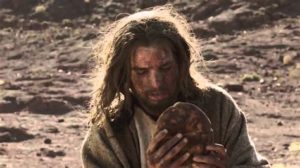
The most encouraging thing is that God is on our side. He wants us to walkin victory over sin and temptation, and he is there, ready and willing to assist us. We will be tempted, but we need not lose.  God will guide us, help us and protect us if we allow Him to. He has withstood temptations and He will stand with us against them, as well.

« Older posts Newer posts »

© 2026 HE HAS OUR BACKS

Theme by Anders Noren — Up ↑