"God is our refuge and strength, a very present help in times of trouble." Psalm 46:1

Author: Rick (Page 36 of 37)

Complacency: satisfaction through inaction…

Proverbs 1:32  “For simpletons turn away from me—to death. Fools are destroyed by their own complacency.”

Last week I talked a bit about apathy, but today I would like to talk a little bit about its not too distant cousin, complacency.  Apathy is being disengaged with the surrounding world and circumstances whereas complacency is being satisfied with less than the surrounding  world and circumstances have to offer.  

Complacency is settling for less than what we should because we have a false sense of contentment.  It makes us sit back on our hands instead of forging ahead in our spiritual lives.  Unfortunately, complacency is the disease that everyone denies having.  As we all know, however, the first step in getting well is admitting we have a problem.

Complacent Christians have the idea that they have arrived.  In America this is an especially easy state of mind to fall into.  We have it pretty easy compared to the rest of the world.  Why should we get callouses on our knees praying when we have almost all we want and more.  Unfortunately, when we lack any feeling of need or desperation, we get sloppy in our worship.   

Barna Research reports that since the nineties, Americans have become more spiritually complacent. 40% of born again Christians do not attend church or read the Bible in a typical week, 30% are not “absolutely committed to the Christian faith” and 70% are not involved in a small group that meets for spiritual purposes. The percentage of adults who can be classified as “born again” rose from 35% from the early 90s to 41% in the early 2000s. However, participation in 4 key behaviors declined and have continued to decline in this century; Bible reading (down from 45% to 37%); church attendance (from 49% to 42%); volunteering at church (from 27% to 20%); and adult Sunday school attendance (from 23% to 19%).   The recent Covid scare has not helped matters.  It is predicted that many of the people who have gotten in the habit of not attending due to Covid will not attend after Covid.   

There is a story of a tool company that manufactured drill bits. Faced with financial losses, company executives gathered to discuss the problem: a declining demand for drill bits. The CEO challenged his men: “How can we revive the bit market?” After an embarrassing silence, one member of the team dispelled the fog: “Sir, the market isn’t for bits–its for holes!” This simple truth illustrates what the church needs to recognize.  Complacent people feel fulfilled because they don’t feel needy. People are not in the market for spiritual activity because they don’t see a need for spiritual activity.     When someone needs to drill a hole he will think about buying a drill bit and when someone needs to fill a hole in his life he will look for a place to fill it.   In this time the church needs to be that place for unbelievers and believers alike.

There is the story of three demons who were exchanging ideas to bring about the downfall of man.  The first said, “Let’s tell them there is no God.”  The second said, “Let’s tell them there is no Hell.”  The third said, “Let’s tell them that there is no hurry.”  It seems to me that they settled on the third suggestion.

Revelation warns us about this complacency in the future.  I know your deeds, that you are neither cold nor hot; I wish that you were cold or hot. So because you are lukewarm, and neither hot nor cold, I will spit you out of My mouth. Because you say, ‘I am rich, and have become wealthy, and have need of nothing,’ and you do not know that you are wretched and miserable and poor and blind and naked,”  (Revelation 3:15-17)  Is that the future or has the future arrived?   God warns us of being lukewarm because it is more dangerous than being hot or cold.  It has just enough heat to make us believe that we are okay.  That kind of deception is a favorite ploy of Satan and many in the church seem to be falling for it.

There is a great story about the famous, fiery English pastor, A.J. Gordon, who became the pastor at a large, well-established, but cold Boston church.  After just a few weeks many of the senior members of the congregation moved to oust him because of his bold condemnation of the lifelessness of the church.  After about a month, right before the axe was about to fall he gave a sermon called “The funeral of the Church.”  It was a no-holds-barred, tell-it-the-way-it-is, God’s-Word-is-His-Word sermon.   The theme was that the church was a casket and like a casket there was no room for converts because coffins are built for only the dead.  He warned them of impending disaster if they did not repent.  It was an hour of truth.  Toward the end of the sermon the doors in the back of the church swung open and six solemn-faced pall bearers carried a casket up to the front.  Pastor Gordon lifted the lid and challenged the congregation to file past the coffin to view the deceased on the way out.  In the coffin, you guessed it, a giant mirror.

It seems to me that too many of us today need to look in the mirror to see if our complacency is leading unto death.  Paul tells us,  “Test yourselves to see if you are in the faith; examine yourselves! Or do you not recognize this about yourselves, that Jesus Christ is in you–unless indeed you fail the test?”  (2 Corinthians 13:5)   It is hard to change others, but we can start with ourselves.  Have we become “fat and sassy” in our christian lives?  Are we going through the motions because that is all it takes anymore?  Do we put more time into the needless and neglect the needful?   We need to be cautious so that we don’t fall into the trap that Paul warns us of in Corinthians,   “Therefore let him who thinks he stands take heed that he does not fall.”  (1 Corinthians 10:1)

So it is time for the church put on its big-boy pants.  It is hard to put pants on someone else, so we should worry about our own legs first, but we shouldn’t be shy about pointing out lack of fervor in the Body of Christ.  It is time to take our spiritual lives seriously even if things are going so well that it seems we don’t need God.  That is, of course, facetious.  No matter how it seems, we need God.  We should not be fooled.  The demons have lied.  There is a hurry and those around us could use our hurriedness on their behalf.

Good Guilt; Bad Guilt

“Therefore, no condemnation now exists for those in Christ Jesus.” Romans 8:1

Last week I wrote about guilt and pointed out that guilt can be like pain.  It can alert us to a problem that needs to be taken care of.  Many see guilt as bad because it can cause psychological problems like insecurity and tension and physical problems like headaches and weight loss or gain.  But the sense of guilt needs to be examined because some guilt is false and harmful and some guilt is real and helpful.  In the last devotion  I talked about guilt that was helpful.  I mentioned the guilt that is pointing out a wrong in our life that needs to be dealt with.  If Satan had his druthers, he would have us ignore real guilt and dwell on false guilt.  If that is what Satan wants, that is what we should not do.  The key is, how do we tell the difference between good guilt and bad.

Recognizing our real guilt is what leads us to Christ. If we do not understand real guilt, we would never come to a saving faith in Jesus.  One of the first steps in receiving the gift of salvation is understanding that we are sinful people separated from a Holy God.  If we ignore those feelings of guilt, we will never take the step of receiving the sacrifice of Christ and would never experience a new life in Him.  The guilt is not the problem.  Sin is the problem.  Guilt points us to the solution.  In that way, guilt is sometimes very good because is saves us from a terrible consequence that will take place if we do not change course.  False guilt, however, does not lead to freedom, but to imprisonment.  That is why we need to be able to tell the difference.

For everything that is real, there is a counterfeit.  Expensive clothes, jewelry, and even electronics all have their cheap knockoffs.  There is hardly a name brand that doesn’t have is its generic step-sibling.  Sometimes the fakery goes beyond products.  One man made over a half-million dollars in three years selling fake diplomas and medical certificates to people who went on to the medical field.  Things can be counterfeit, people can be counterfeit, so it stands to reason that feelings can be counterfeit.  Many of us can carry around a false sense of guilt that holds us back.  We assume that if we feel guilty, we must be guilty.  That guilt becomes destructive when it keeps us dwelling on the wrong things and prevents us from experiencing the right things.

There is a sad short story called “The Necklace.”  It is about a young woman, Mathilde, who is dissatisfied with her life and looks longingly at the lives of the “upper crust” women around her.  Her husband returns from work one day with an invitation to a gala ball and she cries because she has nothing to wear.  The husband, then, uses up personal savings to buy her a dress, but she is still distraught.  She has no nice jewelry.  The husband knows he can’t afford anything, so he suggests that Mathilde go to friend who is rich and borrow something.  She picks out a wonderful necklace, attends the ball, and leaves her husband on the sidelines while she dances her heart away.

Finally, Mathilde and her husband head for home and when they arrive, she realizes she has lost the necklace.  Distraught she goes to a local jeweler, picks out a necklace exactly the same, and returns that one to the owner who was non-the wiser.  Unfortunately, the necklace costs more than her husband can make in a lifetime.  So they take out loans from unscrupulous characters, and to pay them off, they sell their modest home and move to tiny apartment, both take on two jobs, and work their fingers to the bone.  Working night and day, the couple age rapidly and one day Mathilde’s path crosses with the original owner of the necklace.  The rich woman does not even recognize Mathilde because she has changed so much.  The woman makes a comment about it and Mathilde says her terrible condition is the woman’s fault.  Mathilde goes on to tell her the story of losing the necklace, the the subsequent loans, jobs, and poverty that resulted from replacing the necklace.

The woman clasps Mathilde’s hands and tells her
the necklace was imitation and not worth anything.  It was one of the saddest endings to any of the short stories I taught through the years. Believing the false is real can only lead to disaster.

We need to examine our guilt and get to the bottom of it.  When I coached and received criticism, I always listened.  After I listened I did one of two things.  If it was legitimate, I took it as advice and made the necessary changes.  If it was not legitimate, I forgot about it.  That is what we should do with guilt.  Guilt is criticizing something in our life.  If it exposes truth, we should make changes.  If it is built on a
falsehood, we should ignore it and go on. Sometimes we feel guilty over something that doesn’t violate God’s standards, but fails to to meet our own or other people’s expectations. God’s standards are important.  They will always be higher than man’s standards.  If we concern ourselves only about what God thinks, we will not have to worry much about what man thinks.  Guilt because we cannot reach others standards is often false guilt and eats us up from the inside.  We need to believe God more than our feelings.  He is a lot more reliable.

Another false feeling of guilt that plagues many is dwelling on past sins that God has already forgiven. True guilt exposes present sins, false guilt constantly reminds of past sins.  If we have taken care of those sins, we don’t need to constantly scratch at the old wound to keep it fresh.  A woman once broke an expensive vase of a friend.  She took the vase with her to repair, but it was unrepairable.  Her friend visited her and noticed the vase cracked and ugly sitting on a desk and asked her why it was there.  She replied that it was to remind her of her transgression.  The woman walked over, grabbed the vase, dropped it in the garbage and said she had forgiven her long ago and it was time she forgave herself.  We sometimes like to leave our past mistakes on display so we can be reminded of them.  If we have cleaned up our mess and truly confessed, it is time to remember what God says, not what Satan says.  Satan will condemn us but Romans 8:1 says: “Therefore, there is now no condemnation for those who are in Christ Jesus.” Whenever we feel condemned, we need to recognize it as the malevolence of the enemy who is trying to rob us of the peace that is ours through Christ.

The Holy Spirit convicts us and Satan condemns us.  Condemnation is not the same as conviction.  Satan helps us to ignore actual wrongdoing. The key for us is to discern between the guilt that our flesh, Satan, and the world heaps on us and the necessary guilt that can lead to healing.  We need to praise God that He has forgiven our sins.  If we don’t understand God’s great mercy, we will still be shackled by chains that have been unlocked.  We need to take a stand and refuse to accept guilt for that which has been forgiven.  Reading the Word, surrounding ourselves with believers, listening to worshipful music, staying in the Word, and listening to instructional sermons can all help us to discern where our feelings originate.

There are many things we feel guilty about, but another burden
Satan puts on us is our inability to fix all things.  We cannot make everything right.  We cannot undo things that have been done.  We can’t make someone be who God wishes them to be.  There are restrictions on what we can do in this life and we cannot allow the guilt about not being fixers of all woes make us feel guilty.  A favorite saying of mine is, “I cannot do all things, but I can do some things.  Those things that I can do, I should do.  Those things that I should do, by God’s grace, I will do.”  We cannot carry around guilt about pasts we cannot change, people we cannot mold, or promises we cannot keep.  Some things just will be, regardless of how hard we try to change the outcome.  We need to concentrate on the Lord and identify with the words of Mary in Luke “and my spirit has begun to rejoice in God my Savior,”  If we look to His adequacy, we will look less at our own inadequacies.

We should not let the false chains of guilt to hold us back, but if our guilt is real, we should confess the sin, turn from it, and not let Satan accuse us of it again. We have a “glorious freedom (as) the children of God” (Rom. 8:21), and we should live in that glory.    Psalm 32:5 reminds us, “Then I acknowledged my sin to you . . .and you forgave the guilt of my sin.”   True repentance takes away the guilt of our sin and this brings true freedom from our sin.  We need to hold onto and believe what God says in Romans 8:31-35 “. . . who can separate us from the love of Christ?”  Satan can’t, the world can’t, our flesh can’t, and false guilt can’t.  When we step from the prison of sin, it is time to change clothes.  Ephesians 4 tells us “You were taught with reference to your former way of life to lay aside the old man who is being corrupted in accordance with deceitful desires, to be renewed in the spirit of your mind, and to put on the new man who has been created in God’s image—in righteousness and holiness that comes from truth.”  Why should we wear the uniform of our prison life any longer.  We should put on the new clothes of salvation.  Why should we look or act like prisoners any longer.  True guilt leads us to the keys of the prison; false guilt leads takes us back.  Let’s learn to recognize the difference between the exit and entrance.

Looking at Guilt Properly…

“Repent of your wickedness and pray to the Lord. Perhaps he will forgive your evil thoughts,” (Acts 8:22)

There is much said on guilt by psychoanalysts, psychiatrists, ministers, hairdressers, and even bartenders.  They have all heard their share of guilt stories and most of the time guilt is looked upon as a bad thing.  A quick google search will reveal a lot more information about the destructiveness of guilt than its value.  Guilt is almost always looked at as a negative, but if we look at guilt as a negative, it is easy to miss positives that true guilt can play in our lives.

The dictionary calls guilt “the act or state of having done a wrong or committed an offense.”  This is pretty straight forward.  Guilt is an indicator something going wrong. It is the negative feeling that accompanies a negative behavior.  Guilt in itself is not wrong.  It is the warning light on the dash board of our car.  In society today, we are basically told to cover up that light.  We are told it is wrong to feel guilty and so we are told, in essence, to deal with the symptoms of guilt rather than the causes the guilt.

Guilt originated in the garden.  Adam and Eve ate of the one thing that was forbidden and they hid.  They were not experiencing some sort of false guilt planted by Satan.  They were facing the real feelings of guilt after the real trespass of God’s commands.  After they presented themselves to God, God did not tell them to wipe out those evil guilt feelings from their mind.  He was not angry for their guilty feelings, but for their rebellious actions.  Guilt was not the wrong.  It was an indicator of wrong.  Because of the trespasses in the garden we know that “all have sinned, and come short of the glory of God” (Romans 3:23)  So sin is with us always, regardless of the message the world tries to give.

Later in the New Testament, Jesus used the hypocrisy of men to save an adulterous woman from stoning.  After all the would-be “stoners” walked away, Jesus did not tell the woman to go and not feel guilty any longer because she had a reason to feel guilty.  He asked her who was there to condemn her.  “She replied, ‘No one, Lord.’ And Jesus said, ‘I do not condemn you either. Go, and from now on do not sin any more.'” (John 8:31)   He told her to go and sin no more. He did not deal with the symptom of sin, but the act of sin.  He told her to stop the action that led to guilt.  To often today we stir real guilt and false guilt both in the same pot and make the feelings the same.  The consequence of this is a lot of people not dealing with root causes of their sinfulness.  John tells us in 1 John 2:1 “My little children, these things write I unto you, that ye sin not. And if any man sin, we have an advocate with the Father, Jesus Christ the righteous.”  We need to deal with the sin, not just the feelings of sin.

I have told the story many times about the man who would just walk up and hit people for no reason.  He felt terribly guilty about it and went to therapy.  After months of therapy, he finally felt cured and shared his relief with a friend.  “I still  hit people for no reason, but I don’t I don’t feel guilty any more.”  A humorous story, but all too true today.  We are told not to feel guilty about acts that we should feel guilty about. If we remove the guilt, we will not deal with the acts.  Guilt is often the vehicle that transports us to a place of healing so we should not ignore it.

Down deep we know when we are guilty, and we don’t want to face reality, so dealing with the surface feelings becomes much easier than dealing with the deeper truths.  Two men were on trial for armed robbery. An eyewitness took the stand, and the prosecutor slowly moved to what would be his climatic conclusion of questioning. “So, you say you were at the scene when the robbery took place?”

“Yes,” the witness answered.

“And you saw a vehicle leave at a high rate of speed?”

“Yes,” the witness answered again.

“And did you observe the occupants?”

“Yes, two men.”

“And,” the prosecutor boomed, “are those two men present in court today?” He turned and faced the defendants.  At this point the two defendants sealed their fate. They raised their hands.  We know when we are guilty, we often just need to come clean.

If we would just test our guilt feelings, we would realize that many of them have a legitimate basis.  There was an NFL player back in the day who had terrible pain in his knees.  He would just have them shot up with pain killers and play the games anyway.  After years of doing this, he retired and his knees were beyond repair.  He was virtually a cripple.  The pain in his knees was an indicator that there was something wrong that needed to be dealt with.  Covering up the pain was like us covering up our guilt; it keeps us from dealing with the root problem and it will just continue to get worse.  Soon it will cripple us.  Guilt is often a warning sign, flashing away, letting us know there is a malfunction and we must take the time to look at problem and deal with it.

As is the way of the world, everything is topsy-turvy.  Legitimate guilt is made to seem false, and false guilt is made to seem legitimate.  We are told we shouldn’t feel guilty about acts of sin, but we should feel guilty about acts of righteousness.  We are told that any guilt we might carry inside our hearts by being separated by our savior is illegitimate.  But we are also told that if we shake the forbidden fruit from the tree and eat, we should shake off the guilty feelings that will follow.  There is only one way to shake off the guilt and Dr. Luke tells us how in Acts, “Repent ye therefore, and be converted, that your sins may be blotted out, when the times of refreshing shall come from the presence of the Lord.” (Acts 3:19)  You notice he doesn’t say, “just don’t feel bad anymore.”  That just doesn’t work.

There is a lot more authentic and necessary guilt out there that are signposts pointing to disaster than there are bouts of false guilt.  We must not fear guilt any more than we fear the burglar alarm going off on the back porch.  We should not fear the alarm, but the burglar. We should not fear the guilty feelings but the actions that set them off.  Of course, there is such a thing as false guilt and the key is how do we distinguish between good guilt and bad guilt.  Next week I will get into how we tell the difference. Until then have a great week…

Know others better by knowing the Word…

Part 2

If you have not read last week’s devotion, you might want to check it out (or review it).  This is a continuation of the same theme and it might not make sense without a quick revisiting of last week…

…So the only way to properly look at ourselves and the world around us is by looking at the Word before looking at ourselves and others.  If we know the Word, we will not put things in it that are not there.  We will not take our pet peeves and create verses to support them.  We will be able to see what things are breaking God’s Word and what things are just breaking our hearts.  We won’t let irritations become foundations to our beliefs.  Secondly, we need to check our own behavior to see if it could adversely affect others.  Is what we are doing so important that we would risk another person in the process?  If our actions can hurt others who are less mature in the faith, maybe the deed is not worth doing.  Lastly, we should be slow to judge others.  When we impose our list of personal dislikes onto others in relation to spirituality, it is wrong.

Can we look at murder and say that it is spiritually wrong?  Yes, scripture plainly states that it is.  Can we say that playing electric guitar for worship songs is spiritually wrong?  No, I am pretty sure that is not in the Bible.  Can we not like certain things? Sure, but we can’t build false doctrines on these things.  We can’t condemn someone to eternal fire because they don’t do everything we do.  We should not stumble ourselves or others, bottom line.

I heard a story one time about a man, we will call him Ed, who hated long hair on a man, so much so, he questioned whether a man with long hair could even be saved.  While out of town he visited a church and met a man in the lobby that had his hair pulled back into a long pony tail.  He had an immediate dislike for the man, who he had assumed was immature in the Lord (if he was in the Lord at all).  When the service began, the pastor called the man with long hair forward and thanked him for playing Jesus in the Easter play the week before.  Ed squirmed a little in his seat. The pastor then spoke of how the man had lost his sister to cancer and had agreed to grow out his hair for the play if people would pledge so much per inch for the local cancer center.  The pastor had him lean his head back and measured his hair.  It was 14 inches long.  With all the pledges from the church and community, the man raised almost $15,000 for the center.  That day Ed was changed.  Whenever he found himself judging others for inconsequential things, he would close his eyes and picture the man with his head tilted back, hair being measured, and instead of being critical Ed would measure his own actions against the Word of God.

So let’s not make doctrinal mountains out of spiritual molehills.  There have been church splits  and even family splits over things that don’t matter.  We get upset at little things and turn our backs on the big.  That seems to be the norm in every part of the world right now.  We pick and choose what to be enraged about and what to be accepting of, and we most often choose wrong.  Look at some of our own country’s stances on world issues.  We picket because of a single shooting of an individual, but accept the killing of thousands of innocents in the womb.  We change laws to give women in our country free birth control, but ignore that over 90% of women in some countries go through forced mutilation.  We get all bent out of shape if we don’t give more than equal rights to homosexuals, but in some countries that we support homosexuals are being executed daily.  I could go on and on to show the unbalanced views that exist in this world.

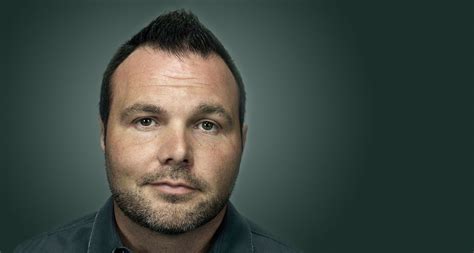
Unfortunately, we do much of the same in the church.  We get upset at the attire that someone wears to our church and then listen with glee to a dynamic pastor on TV who blasphemes the Word of God but does it with charisma.  There is a pastor named Mark Driscoll who started what was called the Mars Church about ten years ago.  He is a good speaker and I listened to a few of his sermons quite a few years back.  I even subscribed to his podcast which was one of the most popular on iTunes.  One day while driving I listened to a sermon on his thoughts on sanctification and I was blown away by what he said.  As soon as I got home, I unsubscribed to his podcast and erased everything I had by him on my iPod.  What he said was completely unbiblical and crass on top of that.  Yet he had and continued to have a loyal following of thousands and had hundreds of churches in his network.  That was until a few years ago when it all came tumbling down. A whole lot of his weak theological beliefs, questionable personal decisions, shady economic moves, and unethical behaviors  were exposed and he was  asked to step down under a very dark cloud.  Yet, he still has his followers.  Many have jumped on the anti-bandwagon, but many of those are the same ones who accepted his teaching for years and just didn’t listen to it.  Pastor Driscoll once told one of his elders to step down because his “fatness” embarrassed him and the church.  He was worried about the “fatness” of others rather than the “leanness” of his preaching.

Here is the point of this.  Pastor Driscoll has been way off from the beginning, but he snookered even well-known pastors into supporting his efforts because his efforts were “cool.”  He was a hip new pastor who was bringing in numbers.  His church growth and church planting was on fire.  Unfortunately, much of what he said about the word needed to be tossed in the fire.  Yet, people flocked behind him.  Many of those people probably had really strong feelings about the stilted services of the past.  Their new approach to worship was the “right way” and the funky ways of old were not only passé, but probably unbiblical.  His was the new blue-jean worship leader that brought in enthusiasm and fervor.  So people accepted him and rejected the Word.  Now everyone is in repair mode.  My point?  We should spend more time worrying about truth than we do about peripherals that mean little in the kingdom.

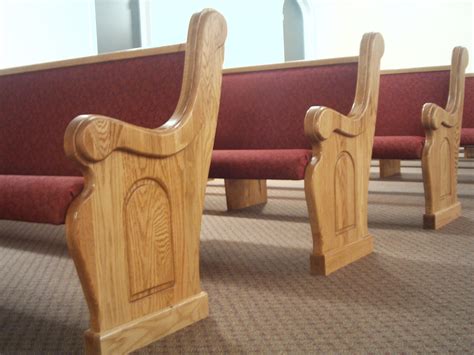
So let’s not get our spiritual undies in a knot over what doesn’t even matter at the expense of what really does matter.  The truth of God’s word matters.  There was a Methodist church that split over the color of the pews.  A Methodist church which accepts every liberal cause and slant in today’s society.  A Methodist church which has homosexual pastors and will not allow the blood to mentioned in their hymnals.  A Methodist church which is on the cutting edge of every anti-spiritual activist cause and has founder John Wesley spinning in his grave.  That same Methodist church is worried about the color of its pews.

We need to prioritize our lives and especially our spiritual lives.  2 Timothy 3:16 tells us that,  “All Scripture is God-breathed and is useful for teaching, rebuking, correcting and training in righteousness.”  Only the scripture should be our standard for how we look at the world.  When we get caught up in the petty it will almost always be at the cost of the important.  As Christians we should take stands for Truth and Christ is Truth.   It is too exhausting to get caught up in the minor and we won’t have enough strength to take on the major.

Free Gift of a Free Gift

I belong to a great gospel giving group called the Pocket Testament League.  This group is dedicated to presenting the gospel to the world through devotionals and the Gospel of John.

Here is an example of the contents of one of their booklets.  Enjoy!

The World’s Greatest Message

« Older posts Newer posts »

© 2026 HE HAS OUR BACKS

Theme by Anders NorenUp ↑