"God is our refuge and strength, a very present help in times of trouble." Psalm 46:1

Category: Uncategorized (Page 33 of 35)

Nothing has ever occurred to God…

“Declaring the end from the beginning…saying, My counsel shall stand, and I will do all my pleasure.” Isaiah 46:10

What can we rely on during these unsteady times? The financial world is a roller coaster, violence dominates the news, family breakdowns are more frequent than not, COVID is wreaking havoc on businesses and schools, and and even churches are not immune to friction and fracture. It is not just institutions that are disintegrating, but people as well. Politicians, sports figures, celebrities, and professionals all take turns falling out of their places of respect. People look around desperately for something or someone to rely on but to no avail- or at least it seems that way.

We need someone who is constant in this inconsistent world. That kind of unchanging rock solid foundation can only be found in God. Deuteronomy 32:4 says the Lord is “The Rock! His work is perfect, For all His ways are just; A God of faithfulness and without injustice, Righteous and upright is He,” and in 1 Samuel 2:2 we are told,  “There is no one holy like the LORD, Indeed, there is no one besides You, Nor is there any rock like our God.”  God can be a refuge because He is the “same yesterday, today, and forever.”

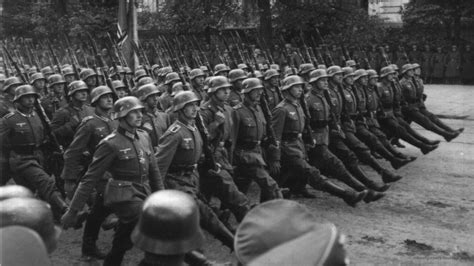
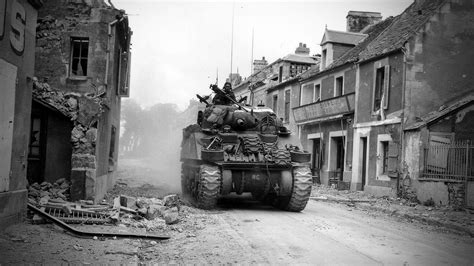
We need to put someone in charge of our lives Who does not fluctuate with every change of wind- Someone whose every decision is based on rightness. Someone who actually has a plan for our lives. There is a famous military motto: “No plan of war survives first contact with the enemy.” This holds true in every human conflict because it is impossible to know for certain how one’s enemy will react or what circumstances may intervene to change any planned course of action, but this is not true of God.

God does not wonder what the future holds and we can be assured that God does not worry about his purposes coming to fruition.  Has it ever occurred to you that nothing has ever occurred to God?

He has never said, “Huh, I never thought of that, I’m glad you brought that to my attention.”  Because He knows all things, God’s plans are never frustrated, foiled, or even hindered. His word declares His purposes, His designs, and His works. He does not just describe the things that will come to pass, He has declared them and designed them. We will do our best to throw monkey wrenches in God’s plans, but ultimately He brings things into alignment with His will. He takes our wanderings and turns them into detours.

The guillemot is a small arctic sea bird that lives on the rocky cliffs of northern coastal regions. These birds flock together by the thousands in comparatively small areas. Because of the crowded conditions, hundreds of females lay their pear-shaped eggs side by side on a narrow ledge in a long row. Since the eggs all look alike, it is incredible that a mother bird can identify those that belong to her. Yet studies show that she knows her own eggs so well that when even one is moved, she finds it and returns it to its original location. 

Scripture tells us that God is also intimately acquainted with each of his children. He knows our every thought and emotion, every decision we must make and problem we are going through. Therefore, an understanding  of God’s omniscience should both evoke praise and bring comfort to believers.

The Word tells us that God’s great plans cannot be thwarted. He may allow fluctuation in the way they come about, but they will come about. Since He is the holder of the map, it would seem that He should be the one leading our lives. Ironically, we think we know more than the One who knows all. We will try in all sorts of ways to free ourselves from the captivities of this life, but only God has the keys to freedom.

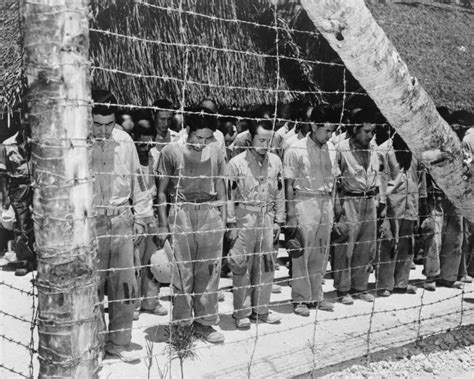
There was once a prisoner who tried to escape prison by hiding in a truck. After an uncomfortable ride the truck stopped, he crawled out, and found himself in another prison just a short drive away. That is what we do if we try to escape the confinements of this life on our own. We will just travel from one prison to another attempting to right our life, always believing the next plan will work. There is only one who has the right plans for escape. Ironically, we build the prison, but He holds the keys.

We are enclosed by a wicked world, but God’s counsel shall stand. He will ultimately overrule wickedness for the good of his people and the glory of His name. His plans are not changed with first contact with the enemy because nothing surprises Him. He is the kind of  leader we want to put our faith in, to trust our lives to, and to follow wherever He might lead for only he knows the path to freedom.  Follow Him.

Shed the heavy burden of unforgiveness…

“Do not seek revenge or bear a grudge against anyone among your people, but love your neighbor as yourself. I am the Lord.”  (Leviticus 19:18)

Today I would like to talk about the difference between forgiveness and reconciliation. Many people look at these as one of the same, but they are not.  Because there is a misunderstanding of both terms, many see forgiveness as impossible because reconciliation is impossible.  Fortunately for us these actions are not dependent on each other, but are mutually independent.  Satan would like to join them together as two sides of the same coin and the result is often neither forgiveness nor reconciliation.  God’s Word gives us the proper perspective on these two very important aspects of the Christian life.

Holding grudges is not advantageous to anyone.  It is not something that ever leads to healing.  In fact, holding on to grudges leads to one of the most ill-advised attitudes in the Word- bitterness.  A famous comedian once said that he never carries a grudge because while he is carrying a grudge against someone, “they are out dancing.”  This is so true.  The weight of the grudge is carried mainly on the shoulders of one.  Often the grudge-holder is the only one who knows a grudge is being held.  At other times, the grudge-holder is the only one who cares that a grudge is being held.  More often than not, the grudge-holder loses more sleep, energy, and health than the one against whom the grudge is being held.  Yet, with all these thing in mind, we still hold grudges and still get bitter, to our own detriment.

No matter how much we nurse a grudge, it will never get better.  Nursing it makes it worse.  We have a multitude of excuses to keep it going but few reasons.  The Word instructs us to, “Put away all bitterness and wrath and anger and clamor and slander, along with all malice.” (Ephesians 4:31)  Why?  Because it is a useless endeavor.  James says,  “What causes quarrels and what causes fights among you? Is it not this, that your passions are at war within you? (James 4:1)  Our inside battles result in outside ones.  When we war within ourselves because we allow bitterness against others to grow, we cannot grow ourselves.  Bitterness is a weed that chokes out the good growth within us.

When Leonardo DaVinci painted the last supper he decided to get back at an enemy by making his face the one of Judas.  The last face he had to paint was Jesus, but he could not get it right.  After laboring for weeks, in desperation he went back and changed the face of Judas to someone he did not know.  It was only then he was able to paint the face of Jesus.  Our bitterness against others will keep us from seeing the face of Jesus.  Not surprisingly, while DaVinci labored over the painting, his enemy was totally oblivious to the battle DaVinci was having.  Who then was suffering?  So it is with our grudges. So it is with our bitterness.  DaVinci needed to heed the verses in Hebrews, “Strive for peace with everyone, and for the holiness without which no one will see the Lord. See to it that no one fails to obtain the grace of God; that no “root of bitterness” springs up and causes trouble, and by it many become defiled.” (Hebrews 12:14,15)  We should not let our hate of others keep us from experiencing the love of the Lord.

There is no doubt that bitterness and grudges are heavy loads to carry.  In days past, armies had to carry their cannonballs around with them just in case they came across an enemy.  It made the travel difficult and cumbersome.  However, they felt it necessary to have the cannonballs “just in case.”  The enemy, which was traveling much more light, was often oblivious to the load the other army was carrying.  One army was burdened and slow, the other was unencumbered and fast.  Often when the armies did meet, fatigue of carrying a load made combat difficult and the cannonball-wielding army would lose. So it is with us.  The fatigue of carrying grudges just so we can be on the offensive if the opportunity might arise makes us so weak that we have little strength for anything else.  The other person, often not even knowing we are carrying a grudge, has been traveling through life lightly and is strong while we are frail- eaten away by our own bitterness.

So does forgiveness mean the same thing as reconciliation.  To forgive must we reconcile?  I don’t think those two things are the same things.  “Do not take revenge, my dear friends, but leave room for God’s wrath, for it is written: ‘It is mine to avenge; I will repay,’ says the Lord.” (Romans 12:19)  What God is addressing here is what we are responsible for and what God is responsible for.  We are not God and we cannot be the judge and jury in His stead.  Forgiveness takes only our partnership with God, reconciliation must include another willing party.  That is important to understand.  Just because we have not reconciled with someone does not mean we have not forgiven. But be aware.  Forgiveness as God expresses it, is something deep, something real.  We cannot just say we forgive, we must really forgive. If we cannot be reconciled to another, we must be sure that our forgiveness is complete.  If not, we might think the lack of reconciliation is the other person’s fault when it is really our own attitude standing in the way!

It is important to note that forgiveness of an act is not necessarily acceptance of that act. If we forgive someone for what he or she has done, we are not condoning the behavior.  Forgiveness is for us.  It lifts from us a burden that would otherwise weigh us down.  The other person might not ever care if we do not forgive. They may see their act as justified, no matter how wrong it is.  We cannot change other’s attitudes or actions if they do not want to change.  What forgiveness does is takes away another’s control over us.  It eliminates the knot in our stomach or ache in our head every time we cross their path.  Forgiveness does not necessarily put us in right relationship with the other person, but with God.  By having a right relationship with God, we now have power to put bitterness where it should be- not just buried, but destroyed.

Often times we hold our grudges because we think it is our responsibility to see justice done or at the least, let others know what they have done wrong or at least how much they have hurt us.  But that is a burden we cannot take upon ourselves.  Our chances, as the offended, of causing remorse in the offender, is pretty slim.  More often than not God will have to bring a third party or circumstance into the other person’s life to make any changes.  Our ability to change others is pretty limited and to change others who have offended us is even more difficult.  Usually the only thing we will achieve, will be changing ourselves into unhealthy, bitter, people.

Forgiveness is the condition of our hearts.  Reconciliation is the condition of a relationship.  Our heart condition involves us alone.  Reconciliation involves at least two people.  Any effort that involves more than one person takes some level of cooperation.  Reconciliation takes a right heart from all parties.  Forgiveness frees our hearts, but does not guarantee the heart condition of another.  True reconciliation necessitates a trustworthiness of everyone involved or it will eventually come apart.

When Elizabeth Barrett Browning married Robert Browning her tyrannical father disowned her.  For years Elizabeth never gave up on the relationship and every week wrote letters to her parents.  She never received a reply.  After ten years she received a box with every one of her letters, unopened.  Today those letters are some of the most beautiful writings in English literature.  Had her parents read them maybe their relationship could have been healed.  But the truth is, not even the most beautiful words in English literature can reconcile a heart that is hardened.  Elizabeth Browning had forgiven her father because forgiveness was up to her.  Elizabeth Browning was not reconciled with her father because reconciliation was up to both of them.

So there is a difference between reconciliation and forgiveness. On the cross, Jesus provided for the forgiveness of everyone. But not everyone will be reconciled with Him.  Forgiveness is extended because of who Jesus is, and if reconciliation with Him does not take place, it is because of who we are.   Some of us reject reconciliation with the risen Christ, even though He has done His part.  Christ did not wait for our move for reconciliation before he forgave us.  In the same way, we should not withhold forgiveness waiting for someone to seek reconciliation with us.

The writer of Hebrews tells us, “See to it that no one fails to obtain the grace of God; that no “root of bitterness” springs up and causes trouble, and by it many become defiled.” (Hebrews 12:15)  Instead of sowing bitterness, we should prepare the ground with forgiveness in the hope that someday reconciliation will grow.  We are told to forgive, “Bearing with one another and, if one has a complaint against another, forgiving each other; as the Lord has forgiven you, so you also must forgive,” (Colossians 3:13) so that reconciliation might be possible,  “All this is from God, who through Christ reconciled us to himself and gave us the ministry of reconciliation.” (2 Corinthians 5:18)  Forgiveness on our part might take place without reconciliation, but reconciliation cannot take place without forgiveness.  Take off the heavy pack of unforgiveness and see how much easier it is to travel without it.

Worrisome? Worry less…

“Rejoice in the Lord always; again I will say, Rejoice. Let your reasonableness be known to everyone. The Lord is at hand; do not be anxious about anything, but in everything by prayer and supplication with thanksgiving let your requests be made known to God. And the peace  of God, which surpasses all understanding, will guard your hearts and your minds in Christ Jesus.”  Philippians 4:4-7

Our verses for today are familiar ones, but like many verses, need to be revisited quite often because worry often gives small things a big shadow and that big shadow can blot out today’s sunshine.  Worry is faith in reverse.  Instead of freeing us, it imprisons us, and most often about things that might not even be real.

There was a woman who constantly worried about burglars and never got a night’s sleep anticipating a nightly break-in.  Finally, after her husband had gone downstairs night after night to investigate normal sounds and invisible burglars, he actually came upon a man who had sneaked his way into the house.  “Well, hello there,” the husband exclaimed, “I am pleased to meet you.  Would you mind coming upstairs to meet my wife.  She has been waiting ten years to meet you.”  That is often what worry is all about.  Anticipating what may not happen at the expense at what does.

Worry often extracts interest on trouble before it comes due.  Like someone wise once said, “I’ve had a lot of trouble, most of which never happened!”  God calls us to turn over our cares to Him, but that is easier read than done.  God knows that we will still worry because we are fretters by nature.  Our sin nature has bred worry into us because faith is intentional while anxiety is natural.   Worry is a useless pursuit because it never gets us closer to a goal and on the contrary it slows our progress.

When I used to coach I told the players to learn their assignments so well that they did not have to worry about what they were going to do (that would just slow them down),  and consequently, they could just go out and do.  That is what we should strive to do- turn our worries over to God so that we can just do. David tells us, “When my anxious thoughts multiply within me, Your consolations delight my soul.” (Ps 94:19) If we don’t nip our worries in the bud, they will flourish into a weedy garden that will take all our time to work. We will spend more time on worry than worship and more time being anxious than active.

In these verses, God gives us several commands:  Always rejoice.  Be reasonable.  Never worry.  Come to God with your requests about everything.  These are not empty words like we so often hear from friends in times of need.  “Hang in there,” and “Tomorrow will be a better day,” and “Just put it out of your mind,” are all well-intentioned, but powerless statements.  They give the end without the means.  It is almost like giving someone the infamous Bermuda Triangle of directions, “You can’t miss it.”

How to “hang in there” is just as important as how to “get there.”  The how-to-dos are more important than the what-to-dos.

So God tells us how to negate the worries that assail us.  If we pray, if we rejoice, if we turn our requests over to Him, and if we are thankful, it will be hard to remain anxious.  Somewhere in that process, the worry will begin to melt.  Most of what we worry about is not worth the time investment anyway.

There was a man who decided to make a Worry Wednesday.  He would set aside his worries until Wednesday and worry about them then.  The funny thing was that by the time Wednesday rolled around, most of the worries he had were not worries any longer.

One thing we can do to cut back on worry is to be prepared.  When I give a speech, I don’t worry if I have truly taken the time to prepare (only the people I am speaking to are worried).  It is the same for us in life.  Paul says, “Be watchful, stand firm in the faith, act like men, be strong.”  (1 Corinthians 16:13) If we are in the Word, think upon God, and surround ourselves with godly influences, we will be prepared to handle what others might just worry about.  With preparation we will set aside much of what the world worries about.

We need to eliminate those things that will never happen.  There is an old Scottish saying “What may be, may not be.”  We have a tendency to worry about what might be even though it will, under all measurements, probably never be.  When ebola hit the US, some people spent so much time worrying about the disease, that it probably took more time off their lives than ebola ever could.  The Covid Crisis a few years past presented the same challenge to thousands who might have been “worrying themselves to death.”  That kind of worry is like being afraid to eat food because it might have chemicals in it and then starving to death.  It is said that 40% of what we worry about has no real chance of ever touching us.  Let’s eliminate those first.  We never want to worry too much about things over which we have no control at the expense of things we can control.

The next worry we should get rid of is things that have already past. In coaching I always said that the only important play is the next one.  If we allow the failure on the past play to affect our performance on the next we have given it more power than it deserves.  Here is the scenerio: a pitcher makes a good pitch and we swing, miss, and look silly in the process.  If we don’t shake that off and instead let that pitch affect our next swing, we have given the pitcher credit for what she has not earned.  The previous one pitch controlled us twice.  That should never be.  If we spend time in our daily lives worrying about the past, it will affect our present. We should not give more power to what is gone than what is yet to come.  I am retired now and it seems I am paying taxes on the same money I have already paid taxes on a couple of times before.  When it comes to worry, we should not spend energy on worries that we have already paid on before.

Finally, eliminate those worries about untrue criticism that comes from others.  If it is true criticism, listen to it, make changes, no worries.  If it untrue, ignore it, no worries. Not everything that people bring to our attention is worth keeping there. Some of the things that people criticize us for cannot be changed anyway.  If I worry about people who don’t like how short I am, that is a waste of time.  My last growth spurt was fifty years ago.  I am not holding my breath.  Some criticism is that foolish.

So, once we have eliminated those things that won’t happen, have already happened, or don’t matter if they happen, what do we do with the approximately 8% that is left.  Those are the legitimate worries that we need to take to God as He has instructed and the peace of God which surpasses all understanding will become ours.

Admittedly, it is easier to complain than rejoice, be bitter rather than thankful, and panic than pray, but those are useless endeavors.  In Africa there are people who rely on witch doctors rather than real doctors and we think that is foolish.  But we are doing the same thing if we think complaining, bitterness, and panic are more effective than rejoicing, thankfulness, and prayer.  I had a friend once that complained about always having peanut butter sandwiches for lunch.  I told him that he should have his wife fix something different, but he told me he fixes his own lunches.  Doesn’t make sense to complain about that which we have control over any more than if makes sense to worry about things we shouldn’t.

It is so wonderful that the promises in our verses today are being delivered by a great God.  God welcomes us to bring our worries to Him.  I think it is our responsibility, however, to run them through a strainer first.  We can take every single worry to Him, but some should not be worries in the first place.  Our vice principal was talking to me years ago about how some teachers send him students for not bringing a pencil to class or doodling during a lecture.  Those are not heavy-duty discipline issues.  Those should be handled by the teacher.  Well, God expects us to look at our worries with discernment and take care of some of those before we send them to the office.

A while back I gave a lecture on router use in my shop class.  I said if the machine misbehaves, the first thing they need to do is turn it off.  A student ask me, “Shouldn’t we ask you first?” and I told him that I would just tell him to turn it off, so he can eliminate the middleman and do what I would tell him to do anyway.  If I am worried about my weight, God will probably tell me to exercise and eat right.  I can go right to those things without worry.  If I am worried about the way people see me, maybe I should treat people the way God’s Word instructs.  That might take care of a lot of worry.

Christian author John Blanchard has said it well, “So he supplies perfectly measured grace to meet the needs of the godly. For daily needs there is daily grace; for sudden needs, sudden grace; for overwhelming need, overwhelming grace. God’s grace has given wonderfully, but not wastefully; freely but not foolishly; bountifully but not blindly.”

God said it even better, “Peace I leave with you; my peace I give to you. Not as the world gives do I give to you.  Let not your hearts be troubled, neither let them be afraid.”    (John 14:27)

Complacency: satisfaction through inaction…

Proverbs 1:32  “For simpletons turn away from me—to death. Fools are destroyed by their own complacency.”

Last week I talked a bit about apathy, but today I would like to talk a little bit about its not too distant cousin, complacency.  Apathy is being disengaged with the surrounding world and circumstances whereas complacency is being satisfied with less than the surrounding  world and circumstances have to offer.  

Complacency is settling for less than what we should because we have a false sense of contentment.  It makes us sit back on our hands instead of forging ahead in our spiritual lives.  Unfortunately, complacency is the disease that everyone denies having.  As we all know, however, the first step in getting well is admitting we have a problem.

Complacent Christians have the idea that they have arrived.  In America this is an especially easy state of mind to fall into.  We have it pretty easy compared to the rest of the world.  Why should we get callouses on our knees praying when we have almost all we want and more.  Unfortunately, when we lack any feeling of need or desperation, we get sloppy in our worship.   

Barna Research reports that since the nineties, Americans have become more spiritually complacent. 40% of born again Christians do not attend church or read the Bible in a typical week, 30% are not “absolutely committed to the Christian faith” and 70% are not involved in a small group that meets for spiritual purposes. The percentage of adults who can be classified as “born again” rose from 35% from the early 90s to 41% in the early 2000s. However, participation in 4 key behaviors declined and have continued to decline in this century; Bible reading (down from 45% to 37%); church attendance (from 49% to 42%); volunteering at church (from 27% to 20%); and adult Sunday school attendance (from 23% to 19%).   The recent Covid scare has not helped matters.  It is predicted that many of the people who have gotten in the habit of not attending due to Covid will not attend after Covid.   

There is a story of a tool company that manufactured drill bits. Faced with financial losses, company executives gathered to discuss the problem: a declining demand for drill bits. The CEO challenged his men: “How can we revive the bit market?” After an embarrassing silence, one member of the team dispelled the fog: “Sir, the market isn’t for bits–its for holes!” This simple truth illustrates what the church needs to recognize.  Complacent people feel fulfilled because they don’t feel needy. People are not in the market for spiritual activity because they don’t see a need for spiritual activity.     When someone needs to drill a hole he will think about buying a drill bit and when someone needs to fill a hole in his life he will look for a place to fill it.   In this time the church needs to be that place for unbelievers and believers alike.

There is the story of three demons who were exchanging ideas to bring about the downfall of man.  The first said, “Let’s tell them there is no God.”  The second said, “Let’s tell them there is no Hell.”  The third said, “Let’s tell them that there is no hurry.”  It seems to me that they settled on the third suggestion.

Revelation warns us about this complacency in the future.  I know your deeds, that you are neither cold nor hot; I wish that you were cold or hot. So because you are lukewarm, and neither hot nor cold, I will spit you out of My mouth. Because you say, ‘I am rich, and have become wealthy, and have need of nothing,’ and you do not know that you are wretched and miserable and poor and blind and naked,”  (Revelation 3:15-17)  Is that the future or has the future arrived?   God warns us of being lukewarm because it is more dangerous than being hot or cold.  It has just enough heat to make us believe that we are okay.  That kind of deception is a favorite ploy of Satan and many in the church seem to be falling for it.

There is a great story about the famous, fiery English pastor, A.J. Gordon, who became the pastor at a large, well-established, but cold Boston church.  After just a few weeks many of the senior members of the congregation moved to oust him because of his bold condemnation of the lifelessness of the church.  After about a month, right before the axe was about to fall he gave a sermon called “The funeral of the Church.”  It was a no-holds-barred, tell-it-the-way-it-is, God’s-Word-is-His-Word sermon.   The theme was that the church was a casket and like a casket there was no room for converts because coffins are built for only the dead.  He warned them of impending disaster if they did not repent.  It was an hour of truth.  Toward the end of the sermon the doors in the back of the church swung open and six solemn-faced pall bearers carried a casket up to the front.  Pastor Gordon lifted the lid and challenged the congregation to file past the coffin to view the deceased on the way out.  In the coffin, you guessed it, a giant mirror.

It seems to me that too many of us today need to look in the mirror to see if our complacency is leading unto death.  Paul tells us,  “Test yourselves to see if you are in the faith; examine yourselves! Or do you not recognize this about yourselves, that Jesus Christ is in you–unless indeed you fail the test?”  (2 Corinthians 13:5)   It is hard to change others, but we can start with ourselves.  Have we become “fat and sassy” in our christian lives?  Are we going through the motions because that is all it takes anymore?  Do we put more time into the needless and neglect the needful?   We need to be cautious so that we don’t fall into the trap that Paul warns us of in Corinthians,   “Therefore let him who thinks he stands take heed that he does not fall.”  (1 Corinthians 10:1)

So it is time for the church put on its big-boy pants.  It is hard to put pants on someone else, so we should worry about our own legs first, but we shouldn’t be shy about pointing out lack of fervor in the Body of Christ.  It is time to take our spiritual lives seriously even if things are going so well that it seems we don’t need God.  That is, of course, facetious.  No matter how it seems, we need God.  We should not be fooled.  The demons have lied.  There is a hurry and those around us could use our hurriedness on their behalf.

Good Guilt; Bad Guilt

“Therefore, no condemnation now exists for those in Christ Jesus.” Romans 8:1

Last week I wrote about guilt and pointed out that guilt can be like pain.  It can alert us to a problem that needs to be taken care of.  Many see guilt as bad because it can cause psychological problems like insecurity and tension and physical problems like headaches and weight loss or gain.  But the sense of guilt needs to be examined because some guilt is false and harmful and some guilt is real and helpful.  In the last devotion  I talked about guilt that was helpful.  I mentioned the guilt that is pointing out a wrong in our life that needs to be dealt with.  If Satan had his druthers, he would have us ignore real guilt and dwell on false guilt.  If that is what Satan wants, that is what we should not do.  The key is, how do we tell the difference between good guilt and bad.

Recognizing our real guilt is what leads us to Christ. If we do not understand real guilt, we would never come to a saving faith in Jesus.  One of the first steps in receiving the gift of salvation is understanding that we are sinful people separated from a Holy God.  If we ignore those feelings of guilt, we will never take the step of receiving the sacrifice of Christ and would never experience a new life in Him.  The guilt is not the problem.  Sin is the problem.  Guilt points us to the solution.  In that way, guilt is sometimes very good because is saves us from a terrible consequence that will take place if we do not change course.  False guilt, however, does not lead to freedom, but to imprisonment.  That is why we need to be able to tell the difference.

For everything that is real, there is a counterfeit.  Expensive clothes, jewelry, and even electronics all have their cheap knockoffs.  There is hardly a name brand that doesn’t have is its generic step-sibling.  Sometimes the fakery goes beyond products.  One man made over a half-million dollars in three years selling fake diplomas and medical certificates to people who went on to the medical field.  Things can be counterfeit, people can be counterfeit, so it stands to reason that feelings can be counterfeit.  Many of us can carry around a false sense of guilt that holds us back.  We assume that if we feel guilty, we must be guilty.  That guilt becomes destructive when it keeps us dwelling on the wrong things and prevents us from experiencing the right things.

There is a sad short story called “The Necklace.”  It is about a young woman, Mathilde, who is dissatisfied with her life and looks longingly at the lives of the “upper crust” women around her.  Her husband returns from work one day with an invitation to a gala ball and she cries because she has nothing to wear.  The husband, then, uses up personal savings to buy her a dress, but she is still distraught.  She has no nice jewelry.  The husband knows he can’t afford anything, so he suggests that Mathilde go to friend who is rich and borrow something.  She picks out a wonderful necklace, attends the ball, and leaves her husband on the sidelines while she dances her heart away.

Finally, Mathilde and her husband head for home and when they arrive, she realizes she has lost the necklace.  Distraught she goes to a local jeweler, picks out a necklace exactly the same, and returns that one to the owner who was non-the wiser.  Unfortunately, the necklace costs more than her husband can make in a lifetime.  So they take out loans from unscrupulous characters, and to pay them off, they sell their modest home and move to tiny apartment, both take on two jobs, and work their fingers to the bone.  Working night and day, the couple age rapidly and one day Mathilde’s path crosses with the original owner of the necklace.  The rich woman does not even recognize Mathilde because she has changed so much.  The woman makes a comment about it and Mathilde says her terrible condition is the woman’s fault.  Mathilde goes on to tell her the story of losing the necklace, the the subsequent loans, jobs, and poverty that resulted from replacing the necklace.

The woman clasps Mathilde’s hands and tells her
the necklace was imitation and not worth anything.  It was one of the saddest endings to any of the short stories I taught through the years. Believing the false is real can only lead to disaster.

We need to examine our guilt and get to the bottom of it.  When I coached and received criticism, I always listened.  After I listened I did one of two things.  If it was legitimate, I took it as advice and made the necessary changes.  If it was not legitimate, I forgot about it.  That is what we should do with guilt.  Guilt is criticizing something in our life.  If it exposes truth, we should make changes.  If it is built on a
falsehood, we should ignore it and go on. Sometimes we feel guilty over something that doesn’t violate God’s standards, but fails to to meet our own or other people’s expectations. God’s standards are important.  They will always be higher than man’s standards.  If we concern ourselves only about what God thinks, we will not have to worry much about what man thinks.  Guilt because we cannot reach others standards is often false guilt and eats us up from the inside.  We need to believe God more than our feelings.  He is a lot more reliable.

Another false feeling of guilt that plagues many is dwelling on past sins that God has already forgiven. True guilt exposes present sins, false guilt constantly reminds of past sins.  If we have taken care of those sins, we don’t need to constantly scratch at the old wound to keep it fresh.  A woman once broke an expensive vase of a friend.  She took the vase with her to repair, but it was unrepairable.  Her friend visited her and noticed the vase cracked and ugly sitting on a desk and asked her why it was there.  She replied that it was to remind her of her transgression.  The woman walked over, grabbed the vase, dropped it in the garbage and said she had forgiven her long ago and it was time she forgave herself.  We sometimes like to leave our past mistakes on display so we can be reminded of them.  If we have cleaned up our mess and truly confessed, it is time to remember what God says, not what Satan says.  Satan will condemn us but Romans 8:1 says: “Therefore, there is now no condemnation for those who are in Christ Jesus.” Whenever we feel condemned, we need to recognize it as the malevolence of the enemy who is trying to rob us of the peace that is ours through Christ.

The Holy Spirit convicts us and Satan condemns us.  Condemnation is not the same as conviction.  Satan helps us to ignore actual wrongdoing. The key for us is to discern between the guilt that our flesh, Satan, and the world heaps on us and the necessary guilt that can lead to healing.  We need to praise God that He has forgiven our sins.  If we don’t understand God’s great mercy, we will still be shackled by chains that have been unlocked.  We need to take a stand and refuse to accept guilt for that which has been forgiven.  Reading the Word, surrounding ourselves with believers, listening to worshipful music, staying in the Word, and listening to instructional sermons can all help us to discern where our feelings originate.

There are many things we feel guilty about, but another burden
Satan puts on us is our inability to fix all things.  We cannot make everything right.  We cannot undo things that have been done.  We can’t make someone be who God wishes them to be.  There are restrictions on what we can do in this life and we cannot allow the guilt about not being fixers of all woes make us feel guilty.  A favorite saying of mine is, “I cannot do all things, but I can do some things.  Those things that I can do, I should do.  Those things that I should do, by God’s grace, I will do.”  We cannot carry around guilt about pasts we cannot change, people we cannot mold, or promises we cannot keep.  Some things just will be, regardless of how hard we try to change the outcome.  We need to concentrate on the Lord and identify with the words of Mary in Luke “and my spirit has begun to rejoice in God my Savior,”  If we look to His adequacy, we will look less at our own inadequacies.

We should not let the false chains of guilt to hold us back, but if our guilt is real, we should confess the sin, turn from it, and not let Satan accuse us of it again. We have a “glorious freedom (as) the children of God” (Rom. 8:21), and we should live in that glory.    Psalm 32:5 reminds us, “Then I acknowledged my sin to you . . .and you forgave the guilt of my sin.”   True repentance takes away the guilt of our sin and this brings true freedom from our sin.  We need to hold onto and believe what God says in Romans 8:31-35 “. . . who can separate us from the love of Christ?”  Satan can’t, the world can’t, our flesh can’t, and false guilt can’t.  When we step from the prison of sin, it is time to change clothes.  Ephesians 4 tells us “You were taught with reference to your former way of life to lay aside the old man who is being corrupted in accordance with deceitful desires, to be renewed in the spirit of your mind, and to put on the new man who has been created in God’s image—in righteousness and holiness that comes from truth.”  Why should we wear the uniform of our prison life any longer.  We should put on the new clothes of salvation.  Why should we look or act like prisoners any longer.  True guilt leads us to the keys of the prison; false guilt leads takes us back.  Let’s learn to recognize the difference between the exit and entrance.

« Older posts Newer posts »

© 2026 HE HAS OUR BACKS

Theme by Anders NorenUp ↑