HE HAS OUR BACKS

"God is our refuge and strength, a very present help in times of trouble." Psalm 46:1

Page 28 of 36

The Rise of the Nones…

Author/Pastor James Emery White wrote a book a few years back called The Rise of the Nones.  Fortunately, you can see by the spelling in the title that it is not a book about gangs of black and white clad ladies overrunning the streets with rosary-bead num-chucks. The book, instead, covers a rapidly growing segment of the US and UK population. On almost every census form we see a list of various denominations followed by the category “none.”  In 1940 five percent of the US population marked none, meaning they had “no religious affiliation.” Fifty years later in 1990 it had risen to eight percent which is a very modest increase. Fast-forward eighteen years to 2008 and in that same U.S. study the number became 15 percent. After the next four years in the Pew Forum on Religion and Public Life’s 2012 study it became 19.3 percent. That’s one in five Americans who do not affiliate themselves with a church. Unfortunately, this rapid increase does not seem to be slowing down any time soon.

The challenge for churches (and consequently for us as individuals) is multifaceted, and though answers are hard to come by, one thing is for sure- the church as we know it is in crisis, and we cannot ignore the problem and hope that it will go away. White says that one of the main reasons churches are struggling is because they are using an Acts 2 model with an Acts 17 culture. He believes that until we change that mindset, the church will continue to decline as more and more people check the “none of the above” box. As we look around the world the US and European countries lead the way for the ever-increasing number of “nones.” Britain has reached the twenty-five percent mark and Scotland leads the disintegration at thirty-five percent. Surprisingly, many African, Middle Eastern, and Asian countries are seeing an explosion of Christian growth. Why the disparity?
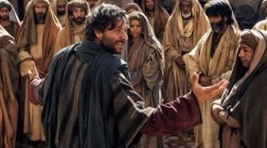
In Acts 2 when the disciples experienced the coming of the Holy Spirit at Pentecost, the onlookers supposed they were drunk because of their babblings and actions. But Peter set them straight when he said, “But this is that which was spoken by the prophet Joel; And it shall come to pass in the last days, saith God, I will pour out of my Spirit upon all flesh: and your sons and your daughters shall prophesy, and your young men shall see visions, and your old men shall dream dreams: (Acts 2:16-17) He went on to quote
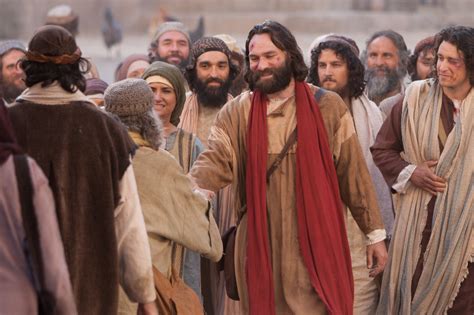
more of the Old Testament regarding the prophecied day of Pentecost. Why is that significant? Because he was quoting the Old Testament without explanation. The people he was speaking to knew what he was talking about. They all had a deep belief in the God of the Old Testament. Paul was using scripture that they understood- that they cared about. They were deeply religious and had, since youth, been exposed the stories, prophecies, and people of the Word as it was constructed to that point. When Peter quotes Joel and later in the chapter takes words from Psalm 16, he does not have to explain those verses to his audience. Peter used scripture that the people around him already knew as a springboard to Jesus.
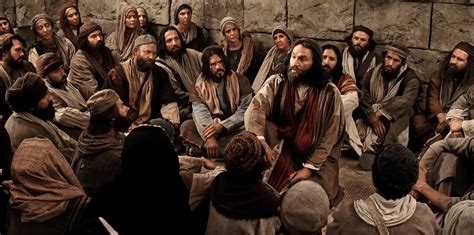
After he sets the table with Old Testament scriptures, he serves them up these hard words: “Men of Israel, hear these words: Jesus of Nazareth, a man attested to you by God with mighty works and wonders and signs that God did through him in your midst, as you yourselves know— this Jesus, delivered up according to the definite plan and foreknowledge of God, you crucified and killed by the hands of lawless men. God raised him up, loosing the pangs of death, because it was not possible for him to be held by it.” (Acts 2:22-24) Peter, who denied Christ three times, hid himself from authorities, and made plans to go back to fishing, stood in the open boldly proclaiming the Messiahship of Christ, accusing the peoples of his death, and revealing His resurrection. Notice that there was a minimum of explanation because the people he was speaking to and would speak to in the rest of Acts, already knew where he was coming from. They were a monotheistic people who valued the Word and knew what Peter was saying because he built his argument on knowledge they already had.

Today we address those outside the church as though they have at least a rudimentary understanding of the Word, but this is a mistake. We are in a country where few have the most basic knowledge of politics and those stories are on the news, in the paper, and on the internet daily. Can we really assume that those around us have an understanding of scripture, that they all believe in one God,
and that they care about spiritual things? If we do, we are sadly mistaken. Peter knew that those around him knew who Joel was, who David was, and who the other prophets were. He used what his audience knew already to convey his message. Unfortunately, that is not the way the world is around us. If Peter would have walked into a gentile square with that same message, they would have stared at him like he was from Mars (if they knew where Mars was). Unfortunately, when we talk about the things of God to most people now, we are talking Martian to them and it has minimal impact.

The mega-churches in the 90’s and first decade of the two-thousands were based on what they called “seekers.” Unfortunately, we are having fewer and fewer “seekers” in our culture. The “nones” are not people who are seeking, but people who are just turned off by churches and other religious organizations. They are not necessarily agnostic or atheists, but just unchurched and happy to stay that way. They don’t see any draw to the modern church and have hardly any knowledge or background that we can tap into while talking to them about spiritual things. When many Christians think Joan of arc was Noah’s wife, how can we expect non-Christians to have a point of reference built on the Bible. Most of the seekers now are actually already Christians who are seeking a church where

they feel comfortable. We have very few converts in the church today, but a whole lot of transfers. Who then are we really trying to reach? The unsaved unbeliever or the disgruntled believer? What do we do to bring unbelievers from the chaos of the streets to the comfort of the church? Before anyone gets the idea that I am all for blue jeans, rock bands, and a watered-down inoffensive gospel that rewrites the scripture with the pen of political correctness, that is not what I am talking about. Too often we actually do fish for men like we fish for fish. Our bait (coffee bars, modern music, a parade of programs, nifty seating) gets them in the door, but what happens from there? When we catch a fish we don’t keep feeding it when
it is in the boat. It is caught and we can go on to the next fish. We need to make sure that we are not worrying only about the catching or only the about the caught, but both.

So if the Acts 2 model is not best for today, what is best? In our next devotion (this is called a cliffhanger) we will take a look at Acts 17 and Paul’s different approach to a different audience.


We should all be ready…

“For the Lord himself will descend from heaven with a shout of command, with the voice of the archangel and with the trumpet of God, and the dead in Christ will rise first. Then we who are alive, who remain, will be snatched away at the same time together with them in the clouds for a meeting with the Lord in the air, and thus we will be together with the Lord always. Therefore comfort one another with these words.” (1 Thessalonians 4:16-18)

“Behold, I shew you a mystery; We shall not all sleep, but we shall all be changed, In a moment, in the twinkling of an eye, at the last trump: for the trumpet shall sound, and the dead shall be raised incorruptible, and we shall be changed. For this corruptible must put on incorruption, and this mortal [must] put on immortality” (1 Cor. 15:51-53).

These are very remarkable verses that describe the snatching away of the church to meet Christ in the air. This event is imminent, meaning that it could come at any time. It is unlike the second coming of Christ which needs certain events to take place before it can take place.

It is important to remember that the rapture and second coming are similar but separate events. Both involve Jesus’ returning. Both are end-times events. The rapture is the return of Christ in the clouds to remove all believers from the earth before the time of God’s wrath. The second coming is the return of Christ to the earth to bring the tribulation to an end and to defeat the Antichrist and his evil world empire.

That is a very brief summary of two cataclysmic end-time events, but the above verses have a very important place in our lives today. Even though the rapture will come on us without warning and takes place at the beginning of the seven-year tribulation (some disagree, but since this is my devotion, I will tell you what I think.  Others can disagree in their own devotions!), there are things that are going on in our world that give us hints that the rapture could be soon upon us.

The word “maranatha” is a Syriac expression that means: “our Lord comes.” It was used as a greeting in the early church. When believers gathered or parted, they didn’t say “hello” or “goodbye” but “Maranatha!”  Similiarily, Aloha in the Hawaiian language can mean hello or goodbye. Aloha also means love and affection.  However, there is no word that can express love more than Maranatha.  Christ promised His return and because he loves us, He will return.

It is too bad that Christians don’t have more of an upward look today. How it would change the church if we all looked at the return of Christ with certainty and conviction. How differently would we look at all those around us? I have a friend who says, “See you here, there (pointing upward), or in air,” instead of goodbye. It is really the three choices believers have- we will see each other on this earth, or in heaven, or in transit. A neat way to add the “where” in “till we meet again.”

It is true that certain things must take place before the second-coming at the end of the tribulation but many of those things have already happened or are happening right now. The stage must be set for the tribulation and anyone who has even the slightest interest in prophesy and current events can see that the table is being set for the end times. For instance, the nation of Israel was scattered across the face of the earth, but yet just fewer than 70 years ago was brought back together and is today one of the most powerful nations in the world. That process of scattering a people then reestablishing them has never taken place before. That had to take place as a prerequisite before all the other events could occur.

So, why worry (oops, I mean think) about all this? Because we never know when The Lord will come again. It is important that we are looking for opportunities to share with those who do not know The Lord because the instant Christ comes the chance to be part of the body of Christ will be lost forever. In fact, if you share with someone and that person accepts Christ, look up, because the word says that the rapture will not happen until the body of Christ is filled. That person that you just shared with might be the last one to fill it and so we all might be leaving right then!

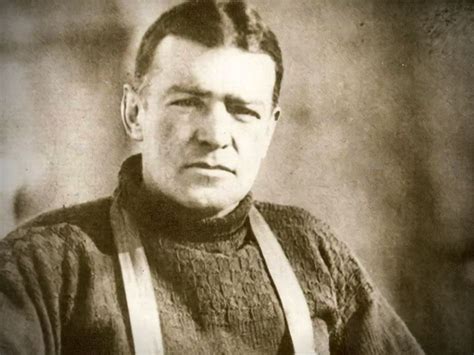
One of my favorite men of courage is the British explorer Ernest Shackleton. I have read several books chronicling his incredible voyages to the South Pole. While on one of the voyages he had to leave a few men on Elephant Island because their ship was crushed and there was not enough room for the entire crew on the lifeboats. He promised them that he would return. Later, when he tried to go back, huge icebergs blocked the way. But suddenly, as if by a miracle, the huge icebergs shifted and a channel opened in the ice and Shackleton was able to get through. His men, ready and waiting, quickly scrambled aboard. No sooner had the ship cleared the island than the ice crashed together behind them. Contemplating their narrow escape, Shackleton said to his men, “It was fortunate you were all packed and ready to go!”

They replied, “We never gave up hope. Whenever the sea was clear of ice, we rolled up our sleeping bags and reminded each other, ‘The boss may come today.’” That is the same attitude that we should have!

We should not fear the coming of The Lord because it will be a glorious event, but unlike Elephant Island, we do know that there will be many “left behind.” We should do all we can to make sure that our friends and family are not part of that number by living our lives for Christ and sharing Him in word and deed. What incredible verses Paul left for us to remind us of the spectacular transfer of believers from this world to glorious presence of Christ. Let’s just make sure we are rapture ready and let’s encourage those around us to be ready as well! Like the men on Elephant Island we should be packed and ready to go. The “Boss” may come today.

The God of Conviction and Compassion…

“All things are naked and opened unto the eyes of Him.”    Hebrews 4:13

God knows all things that are, have been, and will be. There are no secrets from Him. Those things that we have kept from all others are not kept from Him. This is (and should be) both convicting and comforting. Convicting because our lives are an open book and “all our iniquities are set before Him” and comforting because those same sins He sees are paid for on the cross of Jesus Christ. How wonderful it is to know that He sees all we have done and will do, yet covers those sins with Christ’s blood.

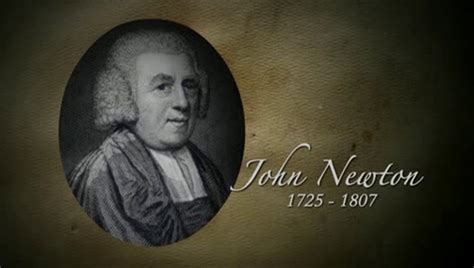
John Newton, the ex-slave trader and writer of Amazing Grace, once said that there were two things about Christianity that stood out to him. He said, “I am a great sinner and Christ is a great Savior.”  What wonderful words.  That we are sinners is convicting, that Christ is a great Savior is comforting. Newton summarized the gospel in that one short sentence.  It is a wonder that God can see the deepest, darkest parts of our lives, but yet still loves us and reaches out with a hand of mercy.  However, we need to be cautious that we don’t allow God’s great comfort to blind us to conviction. We can’t continue in great sin comfortably just because God is the Great Forgiver.  It is true that God is merciful, but He is also just.  A just God cannot ignore sin, so we must not wave the comfort card every time we feel conviction in our hearts.  A shallow apology that follows sin and precedes the same sin is not the right response to conviction.

If we believe that God sees all things and that He sent Christ to atone for our sins it should affect the way we walk.  If we don’t live lives that show comfort and conviction, we should do one of two things. First, We should check our hearts to see if we have truly accepted the life, death, burial, and resurrection of Christ on our behalf. In other words, we need to ask if we have stepped from death to life by believing on the Lord Jesus Christ. If not, we need to do so, “for today is the appointed time.”  If we continue in sin without concern, we might have to ask ourselves if the One who convicts (the Holy Spirit) dwells in us. If He does, He will not allow us to be involved in constant sin without repercussions.  We certainly tend to evaluate others in that way.  “How could that person be a Christian?” is a phrase that is often heard about someone who is living contrary to the Word.  If we abridge God’s Word constantly and consistently, we should examine ourselves at least to the same degree that we examine others.

On the other hand, if we have made a heartfelt decision for Christ, but still lead a unconvicted, uncomforted life, we need to bring our lives into alignment with Christ. If we don’t, we might still have eternal life, but we will not have a peaceful life and will have to face the natural consequences
of our actions. Those who accept Christ and think they can live like the devil do not understand the wonderful eminence of God. God accompanies us, seeing, hearing, and knowing all we do. If we drag Him into sinful places, sinful acts, and sinful speech, it would seem as though we don’t believe He is the omniscient, omnipresent God.   But He is. In Jeremiah 23:24 God asks us, “Can a man hide himself in secret places so that I cannot see him? Do I not fill heaven and earth?”  The answers are no and yes, in that order.  When we walk through our day we should walk as though God is with us; because He is.

A well-known professional golfer was playing in a tournament with President Gerald Ford, fellow pro Jack Nicklaus, and Billy Graham. Afterwards, one of the other pros asked what it was like playing with that elite group. The pro said with disgust, “I don’t need Billy Graham stuffing religion down my throat!” With that he headed for the practice tee. After the golfer had pounded out his fury on a bucket of golf balls, his friend asked, “Was Billy a little rough on you out there?” The pro sighed and said with embarrassment, “No, he didn’t even mention religion.” Billy Graham had said nothing about religion, yet the pro felt an overwhelming guilt.  This man felt conviction, not because of what Billy Graham said, but because of what the golfer felt in his own heart.

If we have the Holy Spirit, He will convict us of our sin and comfort us in our need.   A thermometer that indicates a fever is not a problem in itself, it is the indicator of a problem.  Conviction, like guilt, is a symptom of something that needs to be dealt with.  We should not ignore it.  Jesus said He would leave us with a comforter and He did. If the indwelling Holy Spirit convicts, and we confess,  show contrition, then He will comfort.  This sad cycle is a necessary one if we are to mature.  This is how God can “Create in (us) a clean heart and renew a right spirit within (us).”  (Psalm 51:10) Don’t fear conviction, but don’t fail to act on it or comfort will not follow.  Be comforted today.

We can all evangelize…

Part 2 (if you have not yet read part 1 below, you might want to do so first)

Secondly, our greatest motivation for giving the gospel should be love.  It will taint our message if we are motivated by anything other than love.  We should not give the gospel so we can check that off our daily list or so we can put another notch in our belt or so we can report to others our great successes.  We need to look at others the way that God sees them- spiritually emaciated and needing sustanance.  Paul writes, in 1 Thessalonians 2:8, “Having so fond an affection for you, we were well-pleased to impart to you not only the gospel of God but also our own lives, because you had become very dear to us.”  If we love others and see a need we should be want to fill it.  If the need is the gospel, the want should be urgent.

Thirdly we need to be honest, even if we are asked something we do not know.  Our message does not have to be one of perfection because our message is about the One Who is Perfect.   The substance is more important than the delivery.  A signpost might be old and ragged or bright and new.  It doesn’t matter what it looks like as long as it gives a truthful direction.  The same goes with us.  If we point true, we will have more success than if we look good but point wrong.  If we don’t have an answer, we are better saying that we don’t. rather than making something up.  Trying to fool people makes us fools and few fools can positively affect other peoples’ lives in a positive way.  Paul reminds us that the message of truth is what seals us in the spirit, so it does us no good to be anything but honest.  “In Him, you also, after listening to the message of truth, the gospel of your salvation–having also believed, you were sealed in Him with the Holy Spirit of promise,” (Ephesians 1:13)

Fourthly, we need to be humble.  In Proverbs we see that humility will result in success and pride results in defeat.  When giving the gospel, we must set aside pride.  “A man’s pride will bring him low, But a humble spirit will obtain honor.” (Proverbs 29:23 ) As much as we like to think it, we do not have a handle on everything.  One of the main reasons we should be patient with the foolish or angry or prideful or doubting is because we have, sometime during our lives, been those same people.  We should  empathize with those who are not saved because we were once not saved.   We need not talk down to people because any heights we have reached are because of Christ, not our own intellect or efforts.  When we think we are superior to others, they will sense it and be incensed.   Everyone we talk to about Jesus can teach us something, so every encounter should be a positive one- even if it seems not to be. If we look at who we are, who they are, and who God is, we will do the right things, for the right reasons, at the right time.

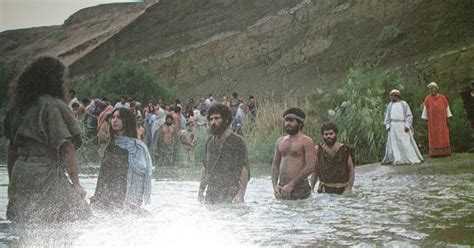
Finally, it is very important for us to be respectful.  Some people feel that evangelizing is yelling, pointing fingers, or holding up condemning signs.  Even John the Baptist, as fiery as he was, spoke to those who came to him.  He was tough on his listeners, but he did not accost them.  He told the truth.  Truthfully, however, we are not John the Baptist.  His approach was unique and in our case it might be if we tone it down, our words can be heard better.  Too many evangelizers are so obnoxious that the people they turn off may not tune into the message for a long, long time, if ever.

The Good News is too important to the world for us to keep it to ourselves.  But we can never forget the key to evangelism which can be summarized in one word-  Jesus.   If we tell people who He is, in humility with love, others will want to become His.  Although presenting Jesus is our greatest duty, it is also our greatest privilege.  We cannot neglect it or deflect it.   We just need to point to Jesus and He will take it from there.


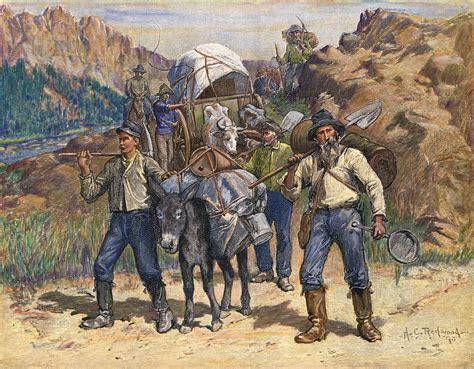
I read once about some miners who found a great vein of gold.  They promised not to tell a soul and went into town to get more supplies.  By the time they returned their camp was overrun with miners.  One of the men asked one of the invaders whohad squealed.  “No one,” he said.”  Your faces showed it!”  That should be us.  We have discovered a richness more precious than gold and our faces should show it.  Our steps should reflect it.  Our voices reveal it.  When we can reveal Christ without any words at all it is the first step in helping others to find the rich vein that now belongs to us.


We are not all evangelists, but…

Part 1

“For I am not ashamed of the gospel, for it is the power of God for salvation to everyone who believes.” (Romans 1:16a)

We are not all evangelists, but we can all evangelize.  Evangelism has gotten its share of negative press, especially in recent years.  Opposition to Christianity has gotten more and more vehement, and as a consequence, those who openly profess Christ are more openly ridiculed.  As a matter of self-preservation in an unforgiving society, more and more Christians lie low in spiritual foxholes, popping out when only friendlies are approaching.  We may not all be evangelists, but we are all witnesses and ambassadors.  We have an obligation to walk in the Word daily and be quick to share the Word when our actions provoke others to ask about the Word.

I recently read an article that outlined many of the mistakes that gospel-givers make in the world today.  If we can avoid these stumbles, we will find ourselves in a better position to present the gospel when the opportunity occurs.  It is easy for us to become offensive to others and even easier to be defensive, but the true key is that we be responsive.  We need to lead a life that says the words we cannot say until the time is right.  Our gospel-giving actions can start immediately after meeting someone, the words may need to wait- but not too long. Peter tells us to, “Keep your behavior excellent among the Gentiles, so that in the thing in which they slander you as evildoers, they may because of your good deeds, as they observe them, glorify God in the day of visitation.” (  1 Peter 2:12)

Evangelism should not be a hammer that hurts, scares, or shames someone into belief.  On the other hand, evangelism should not bribe, manipulate, or trick someone into belief.   Bad evangelism is worse than no evangelism.  Well over half of hard-core atheists purport to have had a close relationship with the church earlier in their lives.  The meaning of the word “close” is up for interpretation, but for argument sake, let’s take it at face value.  If many atheists have spiritual backgrounds, what went wrong along the way?  There can be a lot of different reasons, as many there are “apostates,” but we need only to be concerned with reasons that we might be guilty of ourselves.

I do not appreciate the ministry of the Jehovah Witnesses that come to my door.  I truly believe they are propagating a false message.  I also do not enjoy their approach.  I am uncomfortable with them (even though I do converse with them) because they preconceive my “wrongness” and it is apparent from their very first words.  They are not excited about their faith and seem more excited about my faithlessness.  In all honesty, they are not especially concerned about my relationship with God, but my relationship with their religion.  If I show excitement about my faith and relationship with God, they are disappointed and vamoose pretty quickly.  I think I should avoid treating others in the ways that I see JWs treating me.  I think they miss the point of what John was saying about John the Baptist (and us) when it comes to evangelism.  Jesus should be the key.    “There came a man sent from God, whose name was John. He came as a witness, to testify about the Light, so that all might believe through him. He was not the Light, but he came to testify about the Light.”  (John 1:6-8)

Here are a few things I think would be good for us to do that our tie-clad door-to-door friends are not doing.  First of all, our delivery should not make God secondary to anything.  We don’t want to promote our church, our denomination, ourselves, or even our pet doctrines.  We are not salesmen whose smooth words promote themselves more than the product. It needs to be all about Jesus.  It doesn’t even need to be about every theological question regarding Christ.  We don’t need to bring up the deep questions that even mature Christians disagree on or sideline arguments that play no role in salvation.  We need to focus on the person of Christ.  It is Him and Him alone that salvation lies…we should try not to get sidetracked on issues that are for another time.  Jesus is for now, those will be for later.

Part 2 next week

« Older posts Newer posts »

© 2026 HE HAS OUR BACKS

Theme by Anders NorenUp ↑